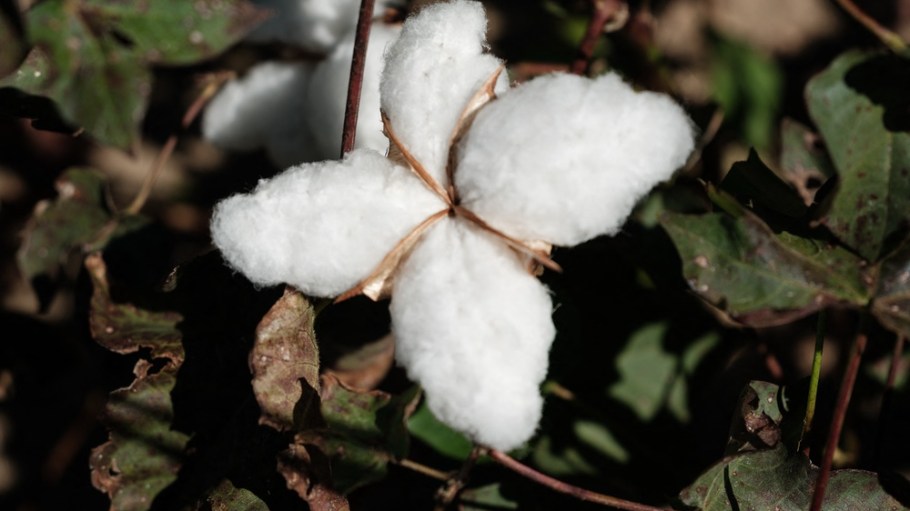
A bipartisan group of U.S. lawmakers is introducing a bill to help land-grant universities develop new technologies for American farmers in cotton-growing states such as Georgia and Florida.
Senators Jon Ossoff and Raphael Warnock, Democrats from Georgia, and Ashley Moody and Rick Scott, Republicans from Florida, said Thursday that the Land Grant Research Prioritization Act of 2026 would boost R&D for advanced agricultural innovations, including mechanization.
The legislation would direct the U.S. Department of Agriculture to prioritize research grants for land-grant universities such as the University of Georgia and Fort Valley State University, supporting precision agriculture research to help farmers cut input costs and raise yields through greater efficiency.
Related Stories
Droughts, freezes and hurricanes have beset farmers in the United States. Compounding these climate challenges is a persistent profitability gap stemming from ballooning production expenses and elevated interest rates on loans for equipment and operations.
According to the National Cotton Council’s 45th annual Early Season Planting Intentions Survey, U.S. cotton growers plan to plant 9 million acres in 2026—a 3.2 percent drop from the previous year that the organization said reflects growers’ harsh economic realities.
Georgia growers expect to plant 805,000 acres—nearly 3.6 percent less than 2025’s 835,000 acres, the lowest since 1993 and only the fourth time in 30 years the state’s producers planted fewer than 1.1 million cotton acres. In Florida, respondents reported planting 11.1 percent less cotton.
“Georgia growers have told me clearly: precision agriculture technology is key to Georgia’s agricultural future,” Ossoff said in a statement.
Congressmen Scott Franklin, a Republican from Florida, and Sanford D. Bishop, Jr., a Democrat from Georgia, introduced companion legislation in the House of Representatives.
In its March 13 outlook, the USDA projected U.S. cotton demand for 2025/26 at 13.6 million bales—same as the previous two seasons and the lowest since 2015/16. U.S. cotton mill use, it added, is forecast at only 1.6 million bales for 2025/26—100,000 bales below last season and the lowest in more than 145 years.
Despite expectations for increased import demand from countries like Bangladesh—which pledged to purchase roughly $3.5 billion in U.S. agricultural products, including a significant amount of U.S. cotton, under a reciprocal trade agreement in February—the USDA still sees the U.S. share of the global cotton trade hovering at 28 percent, down from a 39 percent peak in 2016.
This comes as China has dramatically reduced its reliance on U.S. cotton, with purchases plummeting 85 percent over the past year as it doubles down on domestic stockpiles and South American imports. For the first time, Brazil is expected to outpace the United States as the world’s leading cotton exporter during the 2025/26 marketing year.
Ossoff recently co-sponsored the Buying American Cotton Act of 2025, another bipartisan bill, to incentivize retailers to sell products made with U.S. cotton and buoy demand for the crop. Georgia’s cotton growers, he said, are essential to the Peach State’s economy.
Earlier this month, Ossoff and Warnock announced that $531 million in federal aid is finally being released to Georgia farmers for losses from Hurricane Helene in September 2024. The Georgia Cotton Commission estimated cotton yield losses ranging from 35 percent to total loss, along with damaged farm structures, equipment and infrastructure.
“This announcement is welcome news for the Georgia producers and farmers that have been forced to wait far too long for this desperately needed relief,” Warnock said in a statement. “I’m glad to see that the application for these block grants will open in the coming weeks.”