Tensions between the West and China have become precariously strained, prompting multinational companies to forge trade relationships in other emerging markets. But with nearshoring and “friendshoring” on the rise, enterprises may be opening themselves up to unforeseen trouble ahead.
In analyzing five-year trends across 40 emerging global sourcing markets responsible for 20 percent of global manufacturing output, Verisk Maplecroft’s Political Risk Dataset identified a confluence of issues across 27 countries—some of them key manufacturing hubs. Bangladesh, Indonesia, Mexico, Poland, Thailand and Turkey were all named in the group’s recently released research, which identifies threats like civil unrest, government instability and exposure to conflict and terrorism. These problems could all pose major challenges to brands’ evolving sourcing strategies.
Related Stories
No region is immune to liability, the British risk management consulting firm wrote. With geopolitical tensions deepening daily, “conflict and economic instability will be hard to escape across many key sourcing locations.” Companies need to be well-versed in localized social and political stressors that have the potential to expand and reverberate across their supply chains, the report said.
The 40 markets assessed are collectively responsible for an equivalent manufacturing output to China. Political risk “is a growing threat in a significant majority of them, while remaining a consistently high risk issue in others.” Civil unrest is both a key driver and a symptom of political instability, and over three-quarters of countries assessed saw a rise in such activity over the course of the past five years.
An essential apparel sourcing hub, Bangladesh ranked No. 7 on the group’s Civil Unrest Index, while burgeoning markets like Turkey ranked 27th, Thailand ranked 34th, and Indonesia ranked 70th. “The deterioration is driven by a combination of global, regional and national issues, but economic inequalities remain the top factor,” the study said.
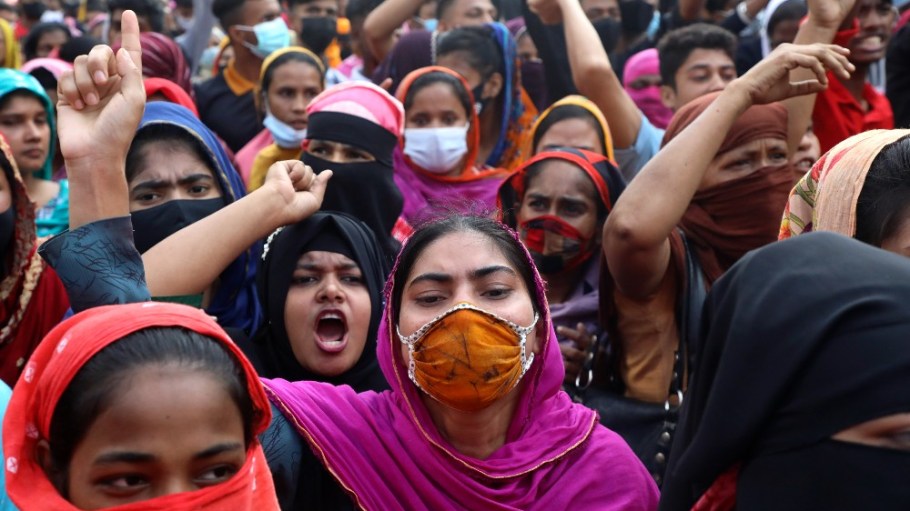
In Bangladesh, violent protests erupted last fall over the country’s revised minimum wage law, with garment workers arrested as they demanded the right to organize and strike. Worker rights groups and unions clashed with authorities throughout October and November, and tensions still persist as some workers claim to have been unjustly terminated for their roles in the movement. The ready-made garment sector is pivotal to the country’s economy, accounting for about 80 percent of Bangladesh’s total exports and more than 9 percent of its gross domestic product (GDP).
“The resulting disruption from unrest in these countries has had clear implications for global supply chains,” analysts wrote. “And with all of the 40 countries we assessed classed as high or very high risk for civil unrest over the next 12 months in our predictive model, the outlook for 2024 could be more turbulent.”
Mexico, which recently outpaced China as the number-one supplier to the U.S. market, ranked No. 5 globally in the group’s predictive model that forecasts civil unrest risks. Protests on commercial highways surrounding civil rights and police brutality, among other issues, threaten to disrupt the flow of goods and access to urban areas like Mexico City, Guadalajara and Hermosillo.
Large-scale regional conflicts in the Middle East and Europe could further erode supply chains and derail the flow of trade in 2024. The Russia-Ukraine war, which began nearly two years ago, has driven unrest and political instability in emerging European markets like Hungary, Poland and Slovenia. “Given the geopolitical context, the deterioration is unsurprising, but it has created a unique set of emerging supply chain risks for countries bordering war-torn Ukraine,” the report said.
The Israel-Hamas conflict, too, has unearthed vulnerabilities in an essential trade route. Attacks on cargo ships in the Red Sea by Yemen-based Houthi rebels have blocked access to the Suez Canal, forcing shippers like Maersk and MSC to suspend shipments or reroute and incur significant costs and delays. As of last week, Maersk CEO Vincent Clerc maintained that the situation would mean “longer transit times and probably disruptions of the supply chain for a few months, at least.”
Supply chains across the globe are also caught in the tug of war between the Western world and China, with sanctions against the sourcing superpower—and counter-sanctions levied in retaliation—deepening tensions in a region that remains a key realm for exports. Verisk Maplecroft’s Trade Sanctions Index showed that U.S. and EU measures against “finances, assets, trade and services” are at a five-year high, with 31 countries out of 198 assessed currently subject to “some form of sanctions.”
The U.S. is working to push the Indo-Pacific Economic Framework for Prosperity, which aims to promote supply chain resilience and investment across markets like India, Indonesia, Malaysia, the Philippines, Thailand and Vietnam. “However, China’s importance as a regional trade and investment partner means countries are highly unlikely to cut ties with the region’s largest economy, even as the U.S. attempts to strengthen its influence,” the report said. Countries aiming to do business with both the U.S. and China will need to walk a tenuous tightrope to stabilize relations with both countries.
The U.S. Trade Representative (USTR) last week demanded that the U.S. International Trade Commission (USITC) research and report on the growing export competitiveness of sourcing hubs like Bangladesh, Cambodia, India, Indonesia and Pakistan. The research will illuminate the countries’ existing ties with the American market, and also provide insights into their disparate apparel sourcing supply chains and any potential risks they might harbor.
As companies look toward the next 12 months, they should expect continued uncertainty, analysts wrote. “As global politics becomes more fragmented and polarized, strategic competition, policy choices, security issues, and diplomatic relations will continue to buffet supply chains,” the report said. “These factors will be amplified by additional stressors such as the impacts of climate change, which are likely to contribute to social unrest, instability and division.”