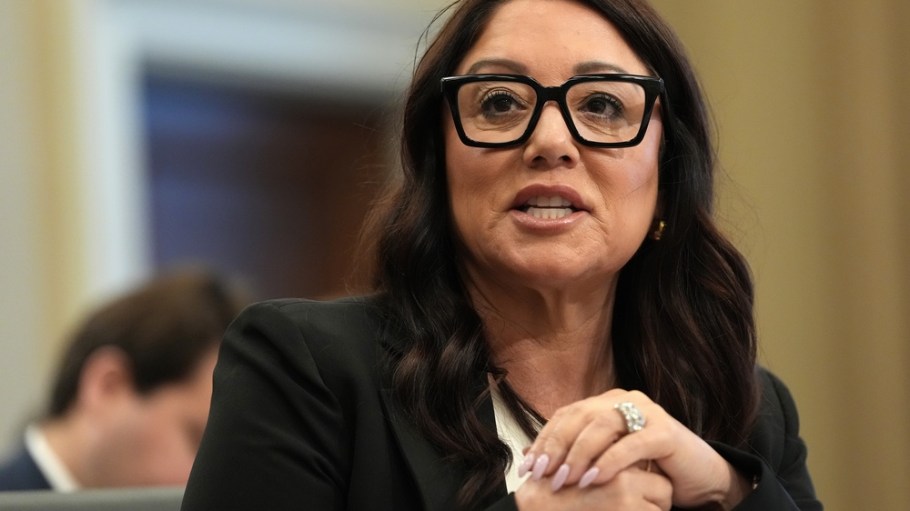
The U.S. Department of Labor, helmed by Secretary Lori Chavez-DeRemer, has opposed a lawsuit by several labor-focused nonprofits to restore its axed international technical assistance programs, saying that the claims “suffer from jurisdictional and substantive defects” and should therefore be dismissed.
The Solidarity Center, Global March Against Child Labour and the American Institutes for Research, which filed their legal complaint in April, said in their motion for a preliminary injunction earlier this month that Congress had “expressly instructed” the Labor Department’s Bureau of International Labor Affairs, or ILAB, to support projects that fought against child and other forms of exploitative labor in U.S. trading partner countries, appropriating the necessary funds to do so. They said that the Labor Department “violated” those commands when it abruptly terminated $577 million in grants, including 15 of their own, in March.
Related Stories
“The termination notices gave no project-specific reasons for termination, stating only that the programs were being cut ‘for alignment with agency priorities and national interest,’” the motion said. “Around that same time, on social media, defendants ridiculed the very concept of supporting workers’ rights abroad, despite Congress’s express endorsement of that support through its funding for ILAB. Defendants also ignored that, as DOL had long recognized, helping American workers was a key reason that Congress required ILAB to fund projects like these.”
In a filing in the U.S. District Court for the District of Columbia late last week, however, the Labor Department argued that a district court lacked the jurisdiction to grant relief to a federal grantee seeking contractual remedy over a federal grant agreement. They pushed back on the plaintiffs’ claims that the move to cancel the programs was unlawful because it violated various appropriations statutes, the Impoundment Control Act, the Anti-Deficiency Act, the Administrative Procedure Act’s prohibition of “arbitrary and capricious” agency action and the Constitution’s separation of powers principle.
“These claims…reflect [the] plaintiffs’ fundamental misunderstanding of appropriations law and fail on the merits,” the opposition said. “[The] plaintiffs identify no statutory entitlement to the specific funds they were awarded by cooperative grant agreement; the appropriations they identify were to ILAB’s overall program, not any specific grant or grantee. The agency undoubtedly has explicit authority to terminate such agreements for any number of reasons under the agreements’ terms. None of the statutes [the] plaintiffs invoke to make their claims is applicable to the question [the] plaintiffs’ press: whether the terminations were valid.”
The Department of Labor took aim at the plaintiffs’ alleged harms, characterizing them as “all economic” and thus “quintessentially reparable.” The balance of the equities and public interest also disfavor injunctive relief, it added, because the agency has “determined that these tax dollars should not be spent on foreign projects that are inconsistent with its priorities and the national interest.” It cited a presidential executive order that mandated federal agencies with responsibility for U.S. foreign development assistance programs to review the programs for “programmatic efficiency and consistency” with U.S. foreign policy.
“Plaintiffs also lack standing to challenge anything beyond the termination of their own 15 contracts, because their complaint and motion are devoid of allegations regarding injuries from the termination of non-parties’ grant agreements,” it said. “Additionally, an injunction ordering the agency to disburse funds would be improper because any such funds are unlikely to be recovered even if the agency ultimately prevails.”
Critics of the Trump administration’s decision to eviscerate foreign aid say that rather than putting “America last,” as Chavez-DeRemer previously contended, these grants helped place American workers on an even keel by uplifting labor rights everywhere else. The American Apparel & Footwear Association and the Fair Labor Association have sent letters urging ILAB’s preservation. So have over 100 civil society groups. Last Thursday, more than 70 Democratic lawmakers joined their ranks when they wrote to Congressman Robert Aderholt, the Republican chair of the House Committee on Appropriation’s Subcommittee on Labor, Health and Human Subcommittee on Labor, Health and Human Services, Education and Related Agencies, and Congresswoman Rosa DeLauro, its Democratic ranking member, to request that they support ILAB’s funding.
“As you know, ILAB’s mission is to promote a fair global playing field for workers in the United States and around the world by enforcing trade commitments, strengthening labor standards, and combating international child labor, forced labor and human trafficking,” they said. “ILAB works to ensure that fully enforceable labor standards are at the core of our trade agreements and programs, and that trade partners’ laws and practices align with those commitments. The need to continue increasing these capacities across international supply chains and in workplaces around the world remains evident.”
Representatives Ilhan Omar, Linda T. Sánchez, Hillary Scholten, Steven Horsford and others also said they rejected attempts to cut ILAB’s program funding because of the “critical role” it plays in enforcing labor-related trade obligations in the United States-Mexico-Canada Agreement, the legislation of which included $180 million over four years for ILAB to undergird labor justice reform and worker-focused capacity building in Mexico, including through a Rapid Response Mechanism that allows workers or unions to report rights violations to the U.S. government, which must investigate the grievances in 30 days.
“Gutting ILAB does not put America first,” the letter said. “It undermines American workers, distorts markets in favor of unscrupulous businesses and regimes, strips our trade and customs officials of critical enforcement tools, and accelerates a global race to the bottom on workers’ rights. ILAB is one of the only U.S. government entities with the infrastructure, expertise and on-the-ground partnerships necessary to effectively counter forced labor.”
The Solidarity Center, Global March Against Child Labour and the American Institutes for Research opposed the Department of Labor’s opposition on Wednesday, saying that the district court does have jurisdiction and that they are entitled to either a summary judgment on the claims they made or a preliminary injunction. Anything short of injunctive relief, they said, would cause “irreparable harm” to the organizations and the strides they have made in promoting respect for labor rights around the world and safeguarding American economic interests both domestically and abroad.
ILAB funding accounted for 24 percent of the Solidarity Center’s projected 2025 budget, 60 percent of Global March Against Child Labour’s and was the only source of support for the American Institutes for Research’s work with the Mexican government. The nonprofits said they’ve had to lay off employees; scupper partnerships with governments, unions, universities and community organizations; and “entirely shut down” certain programs. Unless their funding is returned soon, they will be unable to rebuild these programs or maintain their work, “given the difficulty rehiring staff with relevant expertise and connections and rebuilding relationships with partners they have had to abandon.” The Solidarity Center added that it will have to shutter projects in Mexico, Uzbekistan and the Republic of Georgia, imperiling its legal status and ability to operate in those countries.
“Abandoning their projects mid-stream will also hurt [the] plaintiffs’ ability to carry out their work and fulfill their missions,” they wrote. “Without restoration of ILAB funding, each plaintiff anticipates needing to make further cuts to their mission-critical work in the next weeks and months. Although, if funding is restored soon, [the] plaintiffs anticipate that they could rehire staff and rebuild their broken partnerships, doing so will become increasingly difficult as time passes.”
In the meantime, they said, workers in factories that supply the United States will lose their ability to gain union recognition and negotiate wage increases, government inspectors will no longer receive training and U.S. trading partner countries will have to make do without the technical support and accountability mechanisms to which they have become accustomed. The knock-on effects, too, will only “continue to accrue.”
Then there’s the fact that the Labor Department hasn’t addressed the fact that nixing all projects would render it “impossible” for ILAB to fulfill its statutory obligation as set down by Congress, including by ignoring “substantial evidence” showing whether each ILAB project lined up with the Trump administration’s priorities, the organizations said. This included the results of a protracted questionnaire that the Office of Management and Budget had ILAB staffers instruct grantees to fill out.
“Had [the] defendants evaluated any of the evidence before them about the alignment of ILAB’s cooperative agreements with agency priorities, they would have seen that much of this work is, in fact, consistent with their own stated desire to protect American workers,” the motion said. “As Congress itself recognized by continually funding ILAB’s technical assistance work, these projects make America stronger and more prosperous by, among other things, ‘ensur[ing] workers and businesses in the United States are not put at a competitive disadvantage’ when other countries ignore their labor commitments.”