The U.S. Department of Homeland Security revealed Tuesday that it would be blacklisting one of China’s largest textile manufacturers and two dozen of its subsidiaries for their alleged ties with the persecution of Muslim minorities in the Xinjiang Uyghur Autonomous Region. Together with companies in solar, real estate and mining, the additions count toward the largest single expansion of the Uyghur Forced Labor Prevention Act, or UFLPA, Entity List to date.
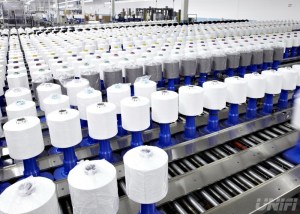
Huafu Fashion Co., according to the inter-agency Forced Labor Enforcement Task Force, which the Department of Homeland Security helms, maintains a vast vertically integrated supply chain from cotton planting in Xinjiang through textiles manufacturing. It said it has “reasonable cause” to believe, based on “specific and articulable” information, that the entities source cotton or cotton-based products from Xinjiang. The conglomerate, whose controlling shareholder is Huafu Holdings, did not respond to a request for comment.
Related Stories
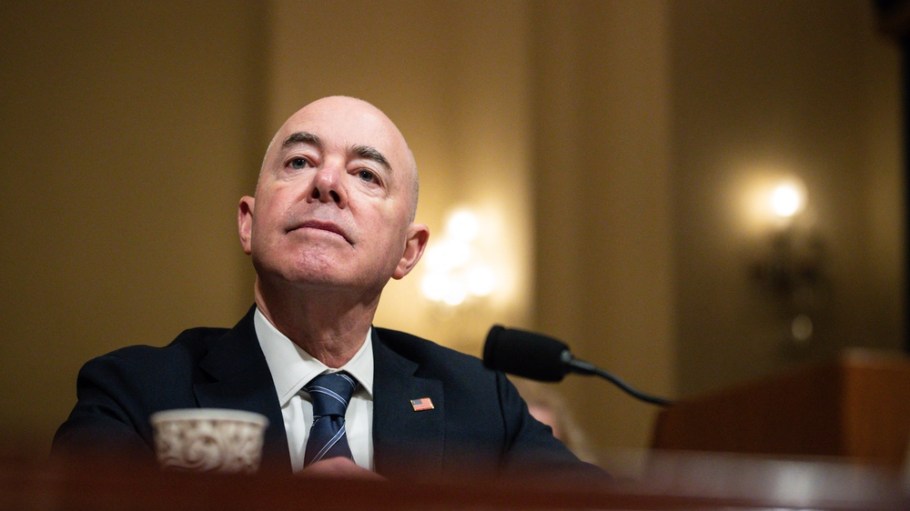
“In adding 37 companies to the UFLPA Entities List and bringing the total to nearly 150, we again demonstrate our relentless fight against the cruelty of forced labor, our unwavering commitment to basic human rights, and our tireless defense of a free, fair, and competitive market,” Secretary of Homeland Security Alejandro N. Mayorkas said in a statement.
One of the names should also be a familiar one: Aksu Huafu Textiles Co., which was cited in the Australia Strategic Policy Institute’s seminal 2020 report, “Uyghurs for Sale,” and the Helena Kennedy Centre for International Justice at Sheffield Hallam University’s 2021 follow-up, “Laundering Cotton,” had already been named to the list in 2022 for what the Biden administration described as the company’s cooperation with the Xinjiang government to “recruit, transport, transfer, harbor or receive forced labor.” Long-term customers such as Adidas, Abercrombie & Fitch, Lacoste, H&M and Zara quickly dropped the supplier.
Newly reinducted, Aksu Huafu Textiles Co., which also goes by Aksu Huafu Dyed Melange Yarn, is now joined by 24 others under the Huafu Fashion Co. umbrella, including companies not situated in Xinjiang, such as Ningbo Huafu Donghao Industrial Co., Ninghai Huafu Textile Co. and Zhejiang Weixin Trading Co., which are based in Zhejiang Province 2,400 miles away. These too, however, will now be subject to the UFLPA’s rebuttable presumption that goods made in whole or in part from them are the product of forced labor—which Beijing has long denied—and are therefore impermissible in the United States.
That Huafu is being sanctioned in the waning days of the Biden administration is significant, according to Adrian Zenz, a senior fellow in China studies at the Victims of Communism Memorial Foundation. “Huafu operates the world’s largest mill for spinning colored yarn in Xinjiang,” he said. “The company is one of the largest involved in Xinjiang’s cotton production process and has extensive operations in China.”
Zenz is less certain, however, about the tack that the incoming Trump 2.0 government might take, even though one of the architects of the UFLPA, Florida senator Marco Rubio, is pipped for the post of Secretary of State.
“The actions of the next administration are not that easy to predict, because you have a combination of China hawks and of politicians with America-first ambitions, and these two orientations do not always align,” he said. “During Trump’s first administration, we had a State Department that was willing to use human rights sanctions, but the Treasury Department was much more reticent. In the same way, UFLPA entity designations require approval by a range of agencies.”
Sheng Lu, professor of fashion and apparel studies at the University of Delaware, said that more enforcement is likely on its way. He pointed to the United States Trade Representative’s trade strategy to combat forced labor, published Monday, that lays out a “comprehensive approach” to using trade tools, from the UFLPA to the United States-Mexico-Canada Agreement to the Section 301 investigation into Nicaragua, to address modern slavery.
“Including Huafu Fashion in the Entity List signals the U.S.’s willingness to target key industry players with a broad impact on the supply chain,” he said. ”With the USTR’s recent release of its first-ever strategy to combat forced labor, it can be highly expected that the incoming new administration will continue to strengthen UFPLA enforcement and remind companies about the importance of due diligence and mapping their supply chains.”
For now, the White House still belongs to President Joe Biden, who signed the UFLPA into law in December 2021. And despite backlash from China that has included a surprise probe into Calvin Klein owner PVH Corp. for purportedly taking “discriminatory measures” against products from Xinjiang, fulfillment of the UFLPA continues apace, officials say.
“With each addition to the UFLPA Entity List, we are building momentum and showing that our efforts are sustainable and enduring in eradicating forced labor in our nation’s supply chains,” Robert Paschall, acting Undersecretary for Policy, said in a statement. “This largest-ever batch of additions reinforces that we are implementing the full force of this law, making impactful updates to the UFLPA Entity List, and enhancing U.S. Customs and Border Protection’s enforcement capabilities.”