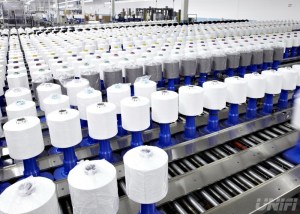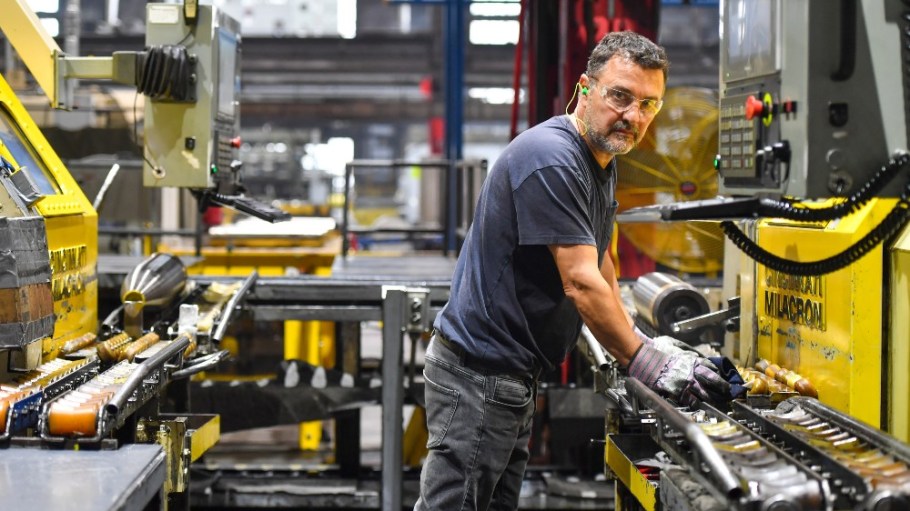
The Trump administration plans to jumpstart the construction of factories and industrial infrastructure as a part of its bid to revitalize the country’s manufacturing sector using the $550 billion windfall promised by Japan as a part of its recent trade deal with the United States.
A report from the Wall Street Journal citing individuals familiar with the dealings revealed that the government plans to funnel the cash infusion into developing production capabilities for goods like semiconductors, pharmaceuticals, energy, minerals, ships and quantum computing. The plan could involve giving companies leases for access to federal land and water.
Related Stories
The sources told the Journal that the implementation specifics are still being considered. White House spokesman Kush Desai told the outlet that the capital, which was promised to the U.S. during negotiations for a trade agreement that President Donald Trump called “the largest deal ever made,” will be “key to fueling America’s next Golden Age.”
The president and Commerce Secretary Howard Lutnick, according to the sources, are mulling the creation of facilities that would make generic pharmaceuticals and gas turbines, and they’ve talking about investing in nuclear power plants and pipelines as well. The collaborative construction of a liquefied natural gas pipeline in Alaska was announced following the Japan trade negotiations.
In early September, the White House released more details about the landmark trade agreement, which was brokered in late July.
Japan saw its “reciprocal” duty rate cut from 25 percent to 15 percent, while U.S. producers will gain greater access to the country’s food and energy markets. Japan agreed to purchase $8 billion in farmed products like soybeans, corn, rice and fertilizers, along with bioethanol and sustainable aviation fuel, along with long-term purchases of liquefied natural gas worth about $7 billion annually.
But the deal’s crown jewel was the unorthodox addition of the $550 billion investment fund for projects that the White House said would be selected personally by the president, with funding provided through 2029. The federal government will establish an Investment Committee chaired by Lutnick to devise funding ideas. A Consultation Committee made up of designees from both countries will be established to help the Investment Committee work through any strategic and legal considerations before bringing the plans to the president.
Costs per project will be evenly split between the countries, while the U.S. will reap 90 percent of the profits, with 10 percent going to Japan. Should Japan decline to fully fund a project, Trump could further ding its profits—or, if it refuses to fund an initiative entirely, it could face heightened duties.
Lutnick provided more color on the deal recently, saying that the U.S. and Japan would actually split profits evenly until Japan recouped on its investment, and then the country would go back to receiving just 10 percent. “For their country’s perspective, it’s a good deal,” the Commerce Secretary said this month on CNBC.
The focus on infrastructure and manufacturing will create hundreds of thousands of jobs with the goal of bolstering the capacity for domestic production, the administration said.
In turn, pushing trade partners to lower trade barriers will give the U.S. a leg up on exports, the memo said. “Since Day One, President Trump challenged the assumption that American workers and businesses must tolerate unfair trade practices that have disadvantaged them for decades and contributed to our historic trade deficit,” the Whirte House memo read.
Shortly after the deal with Japan was finalized, Trump went on to broker a similarly structured agreement with the European Union, which agreed to buy $750 billion in U.S. energy and allocate $600 billion for investments in the U.S. by 2028. Like Japan, the 27-member trade bloc will face 15 percent tariffs while lowering its own trade barriers to U.S. businesses.
But the fate of those 15 percent duties, along with double-digit tariffs on dozens of U.S. trade partners, hangs in the balance pending a looming Supreme Court decision on the legality of Trump’s use of the International Emergency Economic Powers Act (IEEPA) to leverage them.
On Thursday, the high court released changes to its fall schedule, including oral arguments on the legality of the tariffs to be heard on Nov. 5. Should the justices affirm the decisions of the lower courts, the administration has said it plans to pursue other avenues to impose the duties. And if those options don’t pan out, it could be on the hook for up to $1 trillion in refunds to American businesses.