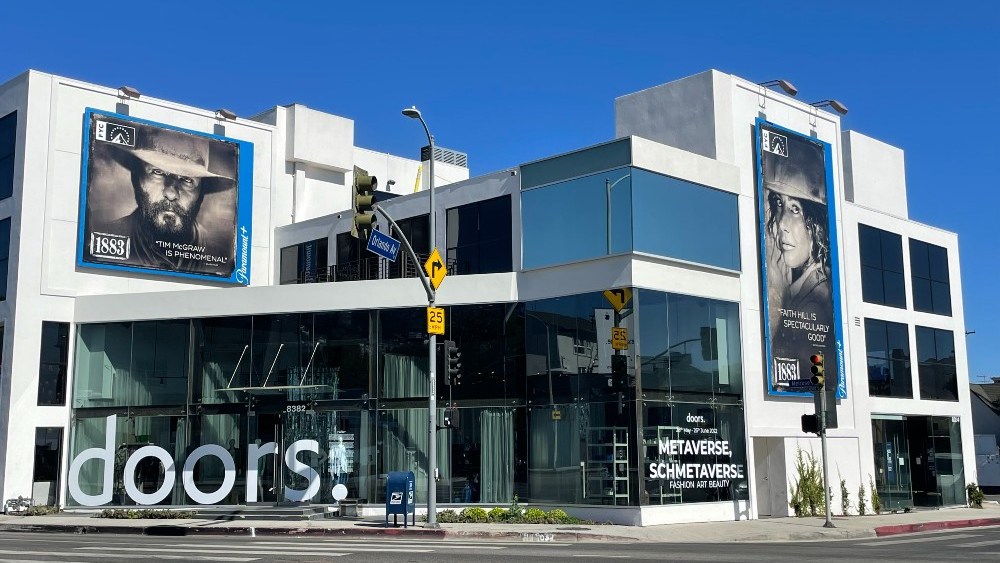
A curated pop-up on Melrose Ave. in Los Angeles that brought together independent designers from across the globe has closed its “doors” after a month-long residency.
Developed by Doors., a New York based firm that blends consumer-facing experiential retail with the traditional PR showroom, the ‘Metaverse, Schmetaverse’ activation explored the influence of the digital realm on fashion and art from May 28 through June 26. Showcasing apparel, footwear, accessories, jewelry, cosmetics and homewares, many of the event’s designs were influenced by futurism. Some creatives launched complementary virtual components alongside physical merchandise, or experimented with NFTs.
Related Stories
“Digital fashion and art offer ample possibilities for creative talent and community-building,” Doors. founder Alise Trautmane-Uzuner said, explaining the four-week event’s theme. “The metaverse is a compelling extension for physical fashion and art, and a unique way to engage with the younger consumer.”
She believes that the influence of the virtual world will only continue to snowball. “It is here to stay,” she added, “but so is physical retail.” According to the founder, brick-and-mortar experiences still hold immense value for emerging designers looking to introduce their work to new audiences.
A designer herself, Trautmane-Uzuner founded Doors. last year after shuttering her boutique in New York City’s SoHo. When maintaining the high-rent location year-round became burdensome, she developed a business model that would allow emerging and independent premium and luxury brands to enjoy the benefits of physical retail. A Doors. e-commerce platform also allows international brands to sell to American consumers beyond the pop-ups’ duration, while warehousing merchandise stateside for easier fulfillment.
“We provide so many different functions in this space,” Doors. pop-up retail and production manager Desmond Lim Zhengs told Sourcing Journal at the company’s L.A. outpost. The venue served as a retail storefront, of course, but also as a gallery for artists and a showroom where the city’s stylists could score unique pulls for their high-profile clientele.

For many brands, like Paris-based Y/ Project, Seoul’s elevated street-wear brand Juun J, New York Fashion Week favorites Private Policy and Ph5, Shanghai womenswear label Pann and Australia’s MQUEYT, the activation represented a foray into physical retail or an introduction to the U.S. market. Zhengs said that developing an on-the-ground presence is a goal for many international brands, but cost and logistics often stand in the way.
“We’re trying to solve for a lot of these pain points, to become the bridge” that connects brands on the other side of the world to potential fans and followers, he said. Social media has given designers exposure, but showing at a store in one of L.A.’s most iconic shopping districts is an opportunity to generate real recognition. Pann’s 2000s-inspired matching sets, for example, captured the attention of L.A. consumers, from walk-in shoppers to influencers and Hollywood stylists, and the line nearly sold out.
Giovanni Giannoni
Following the success of the L.A. pop-up, the firm has plans to launch projects in New York and Miami—but it’s keeping the themes under wraps, for now. The company’s first activation on the West Coast confirmed that shoppers have an appetite for experiential retail, Zhengs said. Likening a pop-up to a “temporary exhibition” at a gallery or a museum, he said, “There’s an urgency to see it while it’s still there.”