By all accounts, the renewal of the Pakistan Accord is a good thing.
The binding agreement negotiated by fashion brands and labor unions under the broader auspices of the International Accord for Health and Safety in the Textile and Garment Industry is being preserved in its current form throughout its yearlong extension and subsequent automatic three-year renewal.
The move, the International Accord secretariat said last week, reflects “ongoing confidence” in the Pakistan Accord’s approach to factory safety improvements through independent inspections, remediation work, safety training and a worker complaints mechanism. These measures play a “crucial role in identifying risks, preventing workplace accidents and ensuring workers’ health and safety across Pakistan’s textile and garment industry,” it added.
Related Stories
But while more than 100 of the Pakistan Accord’s original 140-plus brand and retailer signatories have re-upped their commitments—with additional brands pending internal approvals—at least two brands, including Hugo Boss and LPP, have indicated they don’t intend to sign, according to IndustriALL Global Union, which, together with UNI Global Union, mediated the agreement on behalf of workers’ rights.
In a statement on Thursday, IndustriALL said any failure to recommit was “completely unacceptable.” Atle Høie, the organization’s general secretary, said voluntary approaches long favored by the fashion industry are “simply not enough.” He noted that the Pakistan Accord delivers “real safety improvements” because it is “binding and enforceable,” holding brands sourcing from the country accountable for the conditions in their supply chains.
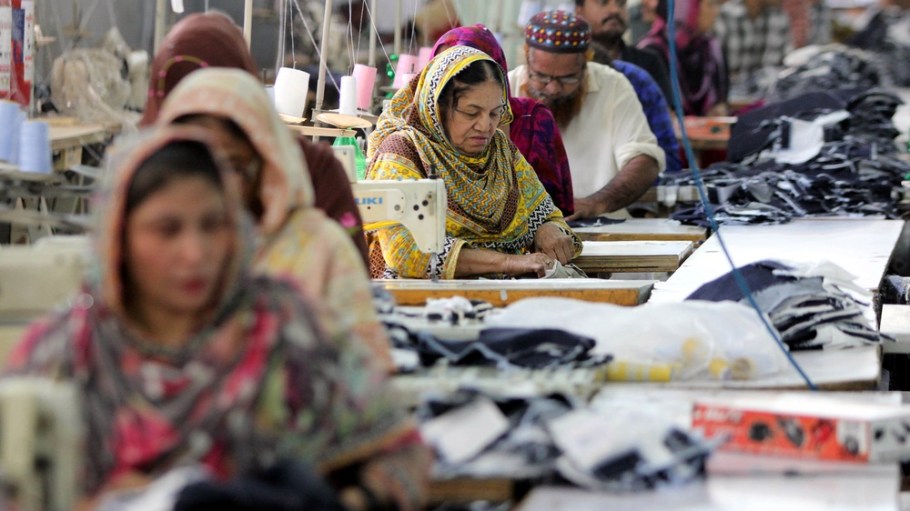
The Clean Clothes Campaign, the garment sector’s largest consortium of trade unions and civil society organizations and a witness signatory to both the Bangladesh and Pakistan Accords, went further. For the 100 factories that LPP works with and the eight contracted by Hugo Boss, it said, remediation is only at the “beginning stage,” with issues such as lockable gates and blocked exits that still need to be resolved. LPP and Hugo Boss must not only ensure that identified risks are addressed, it said, but also that their suppliers can afford to do so.
“By failing to renew their commitment to the Pakistan Accord by the intended deadline, brands are knowingly refusing to participate in the necessary remediation to ensure safe working conditions for workers producing their clothes,” said Nasir Mansoor, deputy general secretary at the National Trade Union Federation, a trade union center in Pakistan.
At best, Mansoor added, workers at factories where non-signing brands source are “lucky enough” to have another Accord signatory present, allowing those facilities to remain covered. At worst, the workers lose the protection of the Accord altogether as brands revert to “demonstrably unreliable” corporate-controlled codes of conduct and voluntary audit schemes.
A Hugo Boss spokesperson said the German company remains “firmly committed” to respecting human rights and promoting safe working conditions across its supply chain. Though it has decided to conclude its participation in the Pakistan Accord, it “will of course continue to apply comprehensive due diligence measures in Pakistan,” including human rights self-assessments and social compliance audits under its accredited membership with the Fair Labor Association. Hugo Boss’s commitment to the broader International Accord and the Bangladesh Accord also “remains steadfast,” the representative added.
LPP, a Polish retailer, did not respond to a request for comment.
The International Accord secretariat is accentuating the positive, describing the “high level” of renewals as “encouraging.” Still, it continues to call on previous signatories to re-sign and “continue the important work already underway in their Pakistan Accord-covered factories,” while urging all brands sourcing from Pakistan to “join and extend the Accord’s health and safety measures to their suppliers.”
“This work includes critical safety improvements, such as installing fire alarms, fire doors, safe evacuation measures and other life-saving systems,” the International Accord secretariat said, citing last month’s fire at the Gul Plaza shopping mall in Karachi, where 80 people died, as a reminder that fire prevention and building integrity are “essential and require ongoing attention.” By signing the Pakistan Accord, it added, brands “contribute to this vital work, place worker safety and health at the center of their operations, address the most urgent risks in their supply chains and advance their responsible sourcing objectives.”
Nevertheless, Ineke Zeldenrust, international coordinator for the Clean Clothes Campaign, expressed unease. Hugo Boss and LPP aren’t “small brands with only a small number of factories,” she said, but major buyers whose decisions could potentially affect tens of thousands of workers. The organization has previously targeted the likes of Ikea, Decathlon and Wrangler’s parent Kontoor Brands with campaigns calling on them to sign the Bangladesh and Pakistan Accords. Having companies retreat, however, is arguably worse.
“We are deeply concerned that some brands may be exiting the Accord, thereby avoiding the responsibility and the commitment to offer commercial terms that make remediation feasible, as required by the Accord,” Zeldenrust said. “It is the worst type of cut-and-run, where these brands have identified the risks, but refuse to prevent, mitigate and remedy them through a trusted and proven human rights due diligence process, as provided by the Accord.”