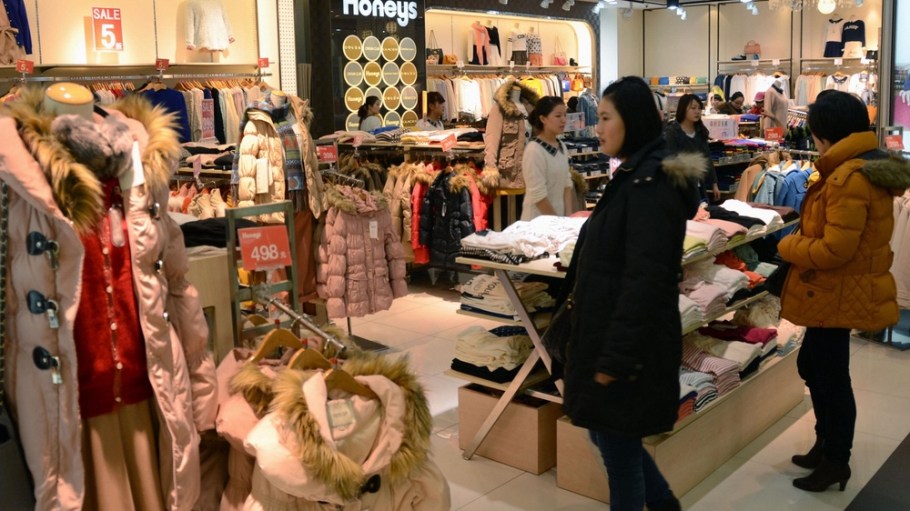
More than a dozen human rights organizations are urging a Japanese retailer and its Myanmar subsidiary to drop a long-running defamation lawsuit against a prominent union leader that they say is meant to “silence workers’ voices” in a nation already facing a “severe human rights crisis” in the wake of a brutal and violent military crackdown.
“Since the military coup on Feb. 1, 2021, Myanmar has faced daily armed conflict, putting civilians’ lives at constant risk due to the fighting,” wrote Human Rights Now, a Tokyo-based nonprofit, in an letter to Honeys Holdings and Honeys Garment Industry Limited that was co-signed by the All Burma Federation of Trade Unions, Behind the Labor, the Clean Clothes Campaign, No Sweat and others just before Christmas. “Reports of arbitrary arrests, threats and killings of trade union representatives have been widespread.”
Related Stories
It’s against this “extremely dangerous” environment, the organizations said, that Myo Myo Aye, leader of the Solidarity Trade Union of Myanmar, is being called to appear in court on a “regular basis” to defend the civil complaint, which was filed in 2017 after workers at Honeys Garment Industry Limited, or HGIL, protested what they characterized as “unrealistic quotas” that increased from 400 to 600 pieces a day in violation of an earlier collective bargaining agreement.
HGIL, which also filed a separate criminal complaint, accused Myo Myo Aye of, among other things, “intervening and instigating illegal actions by factory workers who lacked legal understanding, leading to the destabilization and decline in production” and “guiding workers through Facebook and other social network pages with flattery and motivational activities.” It said that her statements appeared in both newspaper articles and messages shared in a workers’ group chat, disrupting factory production and damaging the company’s reputation.
Honeys, which did not respond to a request for comment, would end up firing nearly 450 workers in a move that it said was the result of their “illegal actions” but that the Worker Rights Consortium described in a 2021 report as a “severe violation of workers’ fundamental labor rights” and a clear act of retaliation. Both its civil and criminal lawsuits also persisted after the coup, with the latter resulting in Myo Myo Aye’s arrest and six-month imprisonment in 2021 for breaching the country’s Telecommunications Act. While the case was subsequently dismissed after a Honeys representative failed to show up in court the same year, HGIL’s demand for civil damages of 1.8 billion kyats ($864,000) still stands.
“After the coup, the rule of law and the right to a fair trial in Myanmar have effectively collapsed,” the letter said. “In fact, in 1,648 cases involving opposition to military power between 1 April 2023, and 30 June 2024, no examples of acquittals or successful appeals were reported. In Myanmar’s current extraordinary judicial circumstances, there is no assurance that fair and impartial judicial decisions can be achieved. If she is ordered to pay damages and cannot comply, she could face up to six months of detention under Myanmar’s ‘civil prison’ system, which is used to enforce payment obligations.”
The organizations said that although HGIL’s claim for damages “has no valid basis,” there remains, in Myanmar’s current milieu, a “serious risk” the court could still rule in favor of the compensation claim, “leading to extremely harmful consequences” amid the country’s shrinking democratic space.
Roy Ngerng, regional urgent appeal coordinator for East Asia at the Clean Clothes Campaign, said the case also has broader implications for Japan despite “better” labor and union laws that Japanese workers are familiar with. What Myo Myo Aye’s case signals, he said, is that the Japanese government needs to implement stronger laws that require enterprises to respect human rights in their supply chains according to the United Nations guiding principles—no matter where they are in the world.
“When Japanese companies move their production to other countries, they should also ensure the same rights and conditions in these countries,” he said. “Allowing Japanese companies to blatantly violate labor rights in other countries can also hurt labor rights in Japan if Japanese companies do not think they will be penalized. It should therefore be unacceptable to the Japanese public when Japanese companies exploit or oppress workers overseas.”
Myo Myo Aye herself agreed. She said that when engaging in business, whether “in Japan or Korea or China or Myanmar,” international labor standards must be adhered to by both employers and those they employ.
“In this instance, the act of targeting and dismissing workers who attempted to establish a trade union, as well as taking legal action against the leader, is a very shameful act,” she said. “I would like to encourage the Japanese employer to engage in a conversation with us and to halt the actions against us and to have the most beneficial discussion for the workers and for me.”
In their letter, the human rights groups asked Honeys and HGIL to “immediately” withdraw the civil lawsuit, provide appropriate remedies for the violations against Myo Myo Aye and the workers, and implement heightened human rights due diligence to address deteriorating labor conditions in Myanmar.
“As long as this civil lawsuit continues, Daw Myo Myo Aye faces ongoing risks of violence and arrest,” they said, using an honorific to refer to the leader. “This not only endangers her safety but also further undermines civil liberties and trade union movements, which are already difficult to exercise. It also has a significant adverse impact on workers who are already facing severe hardships following the coup.”