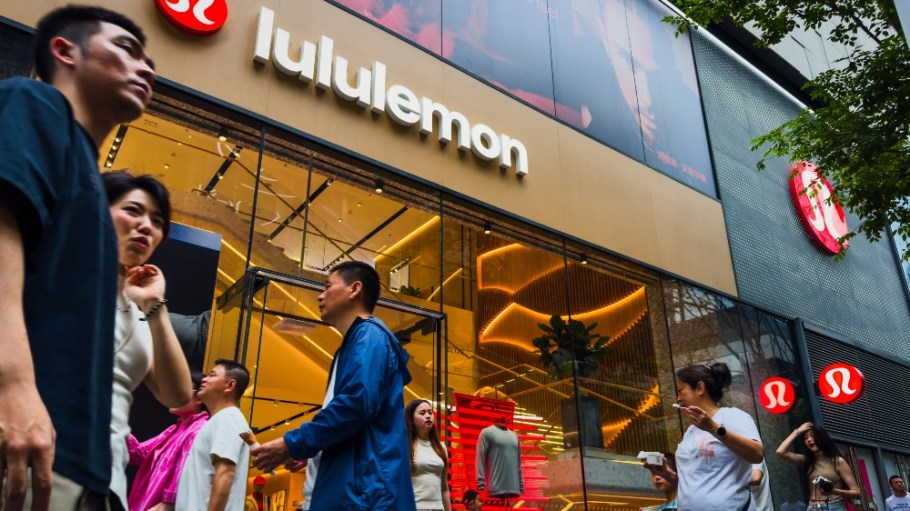
China’s retail sales rose in May in spite of long-simmering tariff tensions with its largest consumer export market, with in-country retail spending growing at the highest rate since December 2023.
Newly released data from China’s National Bureau of Statistics (NBS) showed that total sales of consumer goods reached 4,132.6 billion yuan ($575.44 billion) in May, beating the same period last year by 6.4 percent.
Despite the disruptions caused by the trade war with the U.S., which began heating up earlier this year, sales within China have been on an upswing. Between January and May, the total retail sales of consumer goods grew 5 percent, reaching 20,317.1 billion yuan ($2,829.05 billion), and sales of goods other than cars increased by 5.6 percent.
Related Stories
NBS spokesperson and director of the Comprehensive Statistics Department of the National Economy Fu Linghui said the data points to China’s steadfastness in “expanding high-level openness” against a backdrop of “rising protectionism and unilateralism, as well as obstacles to global economic and trade exchanges.”
China has been focused on fostering symbiotic trade relationships with nations across the globe outside of the U.S., and the positive impacts of that strategy have become “increasingly evident,” he added. From January to May, China’s total import and export volume grew 2.5 percent from the same period in 2024, while trade of services grew 8.2 percent.
The Asian superpower has also sought to increase its influence across continents, while taking in new talent, too. Fu said China has opened up its visa-free entry scope in order to promote “economic exchanges and cultural communication.” That change resulted in a 72.7-percent increase in foreign arrivals who entered the country under the visa-free policy during the May Day holiday this year.
The data presents an interesting dichotomy when compared to China’s industrial output, which hit a six-month low in May, growing 5.8 percent from the same period last year and slowing from April’s 6.1-percent rate. Growth was projected to hit about 5.9 percent, but instead backslid to the slowest rate seen since November 2024, when President Donald Trump was elected.
Nonetheless, the country’s consumer economy showed notable signs of recovery in May after months of stagnation due to weak demand and deflationary pressures. The sale of retail goods increased 6.5 percent from the year prior for a total of 3674.8 billion yuan ($511.83 billion), and the January-to-May timeframe generated 18,039.8 billion yuan ($2,512.59 billion)—an increase of 5.1 percent from 2024.
Specialty stores saw gains of 6.3 percent while brand stores saw modest growth (1.8 percent) along with department stores (1.3 percent). But online sales were the winner, demonstrating 8.5-percent growth year over year. Clothing, shoes, hats and textile sales increased by 4 percent in May from the year prior, and 3.3 percent between January and May compared with the same period in 2024.
Throughout the month of May, Beijing and Washington made plodding progress toward a trade deal, both agreeing to lower and suspend duties on each other for a period of 90 days on May 12. That agreement devolved in early June when the Trump administration accused China’s government of “slowrolling” compliance with the terms of the deal.
Last week, U.S. and China trade officials traveled to London to hash out new terms, settling on a 55-percent duty rate for China-originating imports into the U.S. market. Goods making their way into China will face far lower tariffs of just 10 percent.
In April, tariffs on U.S. apparel imports hit their highest point in decades, with China-made clothing bearing the brunt of the duty hikes. Such imports faced an unprecedented tariff markup of 55 percent, up from 37 percent in March and 22 percent in January—data that likely skews lower due to the fact that many importers frontloaded orders before the steepest duties took effect.