Fast Retailing chief Tadashi Yanai probably wished he hadn’t said anything.
Despite a somewhat muted response to his disclosure last week that Uniqlo and its fellow subsidiaries dont’t use cotton from China’s controversial Xinjiang Uyghur Autonomous Region, ground zero for Beijing’s repressive—if contested—crackdown on Muslim minorities, a fierce backlash has been brewing from netizens on the nation’s social media channels, including Weibo, its version of X.
“Domestic consumers have some backbone; don’t go to Uniqlo! Domestic clothing factories produce better ones, many of which are made of Xinjiang cotton,” a typical comment went. “Is it because Uniqlo products are too rubbish and not worthy of using the best cotton in the world?” another asked. “Try your best to persuade your relatives and friends to refuse to buy Uniqlo until it becomes obsolete,” counseled a third.
Related Stories
The calls for a boycott are more ominous than they might seem at first blush. A similar movement tanked the profits of brands like Adidas and Nike that publicly shunned Xinjiang cotton even before the enforcement of the Uyghur Forced Labor Prevention Act, a.k.a the UFLPA, in the United States made the commodity a non-starter, fueling the rise of guochao or homegrown brands like Anta Sports and Li-Ning. H&M Group bore much of the brunt of the cancellation campaign as its stores disappeared from domestic e-commerce websites and apps and local celebrities tore up their lucrative endorsement deals. Calvin Klein owner PVH Corp. is still hanging tight after Beijing announced in September that it had opened an investigation into the company for taking what it claimed were “discriminatory measures” against Xinjiang products. The UFLPA imposes a rebuttable presumption that all products made in whole or in part in Xinjiang are the result of forced labor and therefore barred from entering the American market under Section 307 of the 1930 Tariff Act.
Losing its grip on China would be disastrous for Fast Retailing, which declined to comment for this story. The world economy’s largest growth engine is its largest market, with more Uniqlo stores in China (1,032) than there are in Japan (797) as of Aug. 31. Greater China, which includes the mainland, Hong Kong and Taiwan, contributes to more than one-fifth of the company’s coffers. China’s hair trigger for commercial retaliation has put brands in the middle of a moral dilemma that damns them no matter what they do.
Yanai almost caught himself in time, too, saying “We’re not using” to a question by BBC before saying he didn’t want to complete his answer because it was “too political.”
On Thursday, a Chinese industry association took on a more conciliatory tone, urging companies like Fast Retailing to use Xinjiang cotton rather than resorting to threats.
“We hope international brands like Uniqlo can give Xinjiang cotton full respect and trust, restore its use and support the healthy development of the global cotton textile industry,” the Xinjiang Cotton Association posted on its official WeChat account. It said it “firmly rejects” any claims the region’s cotton is tainted with forced labor.
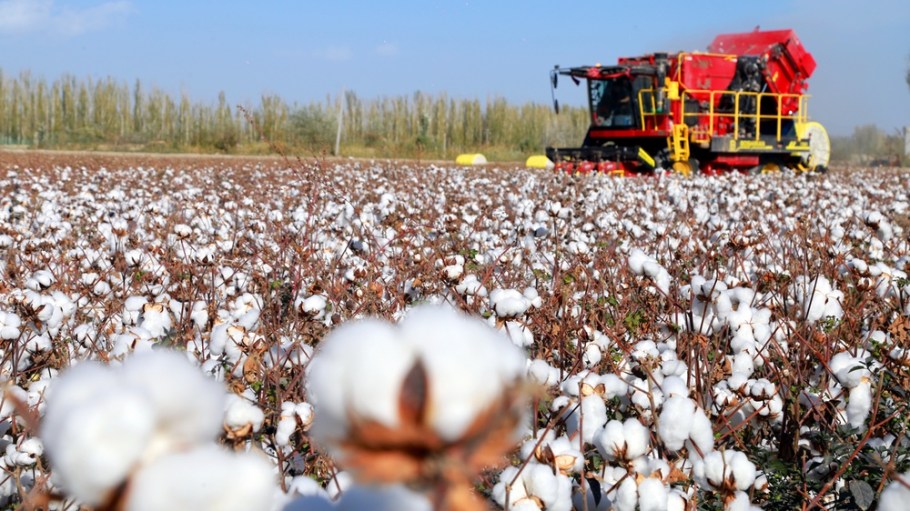
Cotton from Xinjiang accounts for nearly 90 percent of Chinese cotton, which, in turn, makes up roughly one-fifth of the world’s supply of the fiber. Fashion purveyors importing into the United States are increasingly eschewing Chinese cotton for varieties from Australia, Brazil, India and Turkey to swerve any potential detention under the UFLPA, though mislabeling is still a concern and other countries continue to provide an outlet. Xinjiang pumped out more than 5.11 million tons of cotton in 2023.
For the United States, the Xinjiang Cotton Association had terser words.
“The United States has repeatedly spread rumors about Xinjiang cotton under the guise of ‘human rights’ and attempted to deprive the people in Xinjiang of their right to improve their lives through hard work and employment,” it said. “Using the utterly baseless allegations of ‘forced labor,’ the United States has discredited and boycotted Xinjiang cotton and related products.”