North Carolinian Amazon workers voted “no” on unionization.
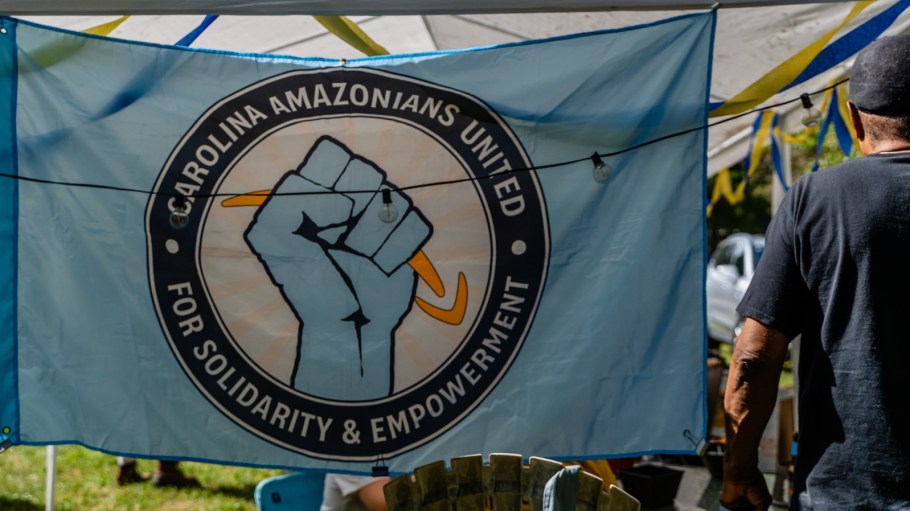
Last week, employees at an Amazon warehouse in Garner, N.C., faced a vote on whether to unionize. Ultimately, the vote failed; the warehouse employs about 4,300 people, and just 829 of those employees voted in favor of the union. Meanwhile, 2,447 voted against it, and 77 ballots were cast aside because they had been challenged by Amazon or by the union.
That means the union, Carolina Amazonians United for Empowerment and Solidarity (CAUSE), received about 20 percent of the votes from employees; in order to unionize, more than half of workers would have needed to vote in favor.
Related Stories
CAUSE, an independent union formed in 2022, has been fighting for more paid time off, longer lunch breaks and higher base pay for employees at the Garner warehouse, nicknamed RDU1. Specifically, they demanded a base wage of $30 an hour for all Tier 1 and Tier 2 associates. Today, employees receive wages that fall between $18.50 and $23.50, according to Amazon.
Eileen Hards, a spokesperson for Amazon, previously told Sourcing Journal the company had hoped its employees would vote against unionizing because “Amazon already offers what many unions are requesting” and because “CAUSE has never negotiated a union contract anywhere and has no experience representing workers or their interests.”
After the election, it became clear the e-commerce behemoth had gotten its wish.
“We’re glad that our team in Garner was able to have their voices heard, and that they chose to keep a direct relationship with Amazon,” Hards said in an emailed statement. “We look forward to continuing to make this a great place to work together, and to supporting our teammates as they build their futures with us.”
In 2024, North Carolina had the lowest union membership rate in the country, coming in at 2.4 percent of workers, according to data from the Bureau of Labor Statistics. Nationally, union membership stood at about 6 percent in private companies last year.
CAUSE said it would continue organizing but that it would need to “regroup and strategize beyond the legal structures that were never made to work for us,” according to NPR.
CNBC reported that union organizers called the results a testament to Amazon’s “willingness to break the law.”
Throughout the fight to organize, CAUSE accused Amazon of illegally interfering and forcing employees to attend anti-union meetings. Hards previously told Sourcing Journal such meetings were voluntary and said the company makes an effort to “talk openly, candidly and respectfully” to help its employees “make an informed decision” about unions.
“Amazon’s relentless and illegal efforts to intimidate us prove that this company is afraid of workers coming together to claim our power,” the group reportedly said in a statement to CNBC. “Amazon may think it is above the law, but we will not accept a system that allows billionaires and corporations to play by a different set of rules.”
Amazon has historically been against unions in its facilities. In Alabama, officials found the company illegally impacted the results of a failed 2021 union election. The second election at the warehouse was a close race, compounded by accusations from each party that the other had broken applicable laws. Last year, a judge ruled that the union could run a third election—effectively to re-run the second election—in Alabama, and Amazon is currently appealing that decision.
In Staten Island, N.Y., organizers who successfully convinced enough employees to vote in favor of unionization have faced an uphill battle in getting the company to come to the table to form a bargaining agreement.
Amazon also owns Whole Foods; in January, a Philadelphia-based store voted to unionize. Whole Foods has since requested that the National Labor Relations Board (NLRB) disallow that union’s results, since, at the moment, the agency lacks a quorum to certify such a win. That’s due to the fact that President Donald Trump parted ways with one member of the NLRB after taking office, leaving just two members.
CAUSE organizers indicated some worry over a similar issue, had they been able to persuade a majority of Garner workers to unionize.
In Canada, Amazon is being accused of union-busting after shutting down a group of warehouses in Quebec. One of those warehouses had voted to unionize and was working on a collective bargaining agreement. That union, Confédération des syndicats nationaux (CSN), has committed to pursuing legal action against the company.