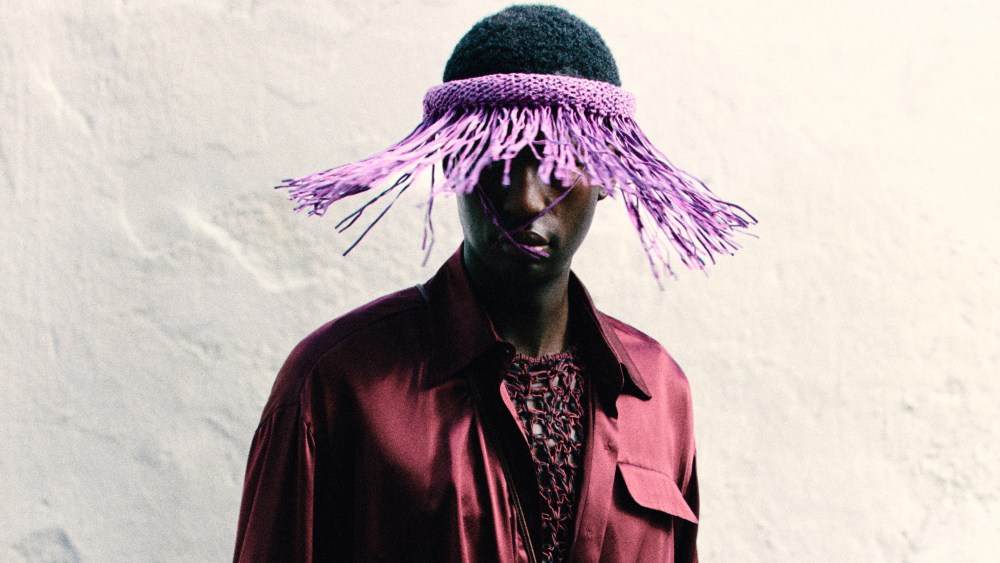
Another city has been added to the global landscape of fashion weeks.
Scheduled to take place from Tuesday to Saturday, Rio Fashion Week has been established as a new landmark on the official Brazilian fashion calendar, thanks to a partnership between the Rio de Janeiro city hall and IMM, one of the country’s largest sports and entertainment companies, which is also responsible for São Paulo Fashion Week.
The event aims to reposition Rio as both a national and international hub for creativity, business and culture. The city will host the national fashion week in the first half of the year, while São Paulo will take place in the second half. This structure broadens the reach of these initiatives and strengthens the development of the sector on a global scale.
Related Articles
Gustavo Oliveira, chief operating officer at IMM, said the event has been in development since 2021 in collaboration with the City of Rio de Janeiro, through its tourism department led by Secretary Daniela Maia. The project was officially approved only last year, marking a defining moment in repositioning Rio as a global fashion destination.
You May Also Like
“I strongly believe in this project because fashion in Rio is born everywhere, it lives in the streets, in the communities and on the beaches, and is deeply connected to our lifestyle,” Oliveira said. “That’s precisely why the city, and Brazil as a whole, has been calling for a fashion event that truly reflects this creative energy. The response so far has been extremely positive, reinforcing both the existing demand and Rio de Janeiro’s potential as a global platform for fashion, entertainment and creativity.”
Maia underscored Rio’s broader cultural resurgence. This is the first official Rio Fashion Week after a smaller event in the city a decade ago, alongside landmark events such as Carnival and New Year’s Eve celebrations. The city has also seen renewed momentum in music, with initiatives such as the biennial “Rock in Rio” festival and “Todo Mundo no Rio,” attracting global artists including Madonna and Lady Gaga. At the same time, Rio’s culinary scene is gaining international recognition, with accolades from the Michelin Guide and The World’s 50 Best.

“As a result, we have seen a significant increase in tourist traffic,” Maia said. “In 2025, the city welcomed 12.5 million visitors, both domestic and international, marking a 10.5 percent increase over 2024.”
Growth was primarily driven by international arrivals, which rose 44.8 percent. The 2.1 million foreign visitors accounted for 17 percent of total arrivals in 2025 and 30 percent of tourism’s economic impact, generating about $1.5 billion in revenue for Rio.
It is a continuation of an upward trend, with international tourism growing 59 percent between 2023 and 2025. In the first two months of 2026 alone, arrivals increased 95.1 percent compared with the same period in 2023, and 13 percent compared to 2025.
According to projections, Rio Fashion Week could attract more than 50 percent of its audience from outside the city. The event is expected to draw more than 26,000 attendees throughout the week, including a strong presence of international buyers.
“We are welcoming key players such as Galeries Lafayette, Selfridges, as well as representatives from the Mexican market, among others,” he said.
Among guests, Constanza Cavalli Etro will attend the event as Ambassador for Latin America of the Italian Chamber of Fashion.
“I’ve always believed that there’s a natural and complementary connection between Milan and Rio: Milan is a consolidated system of excellence and know-how, while Rio expresses a contemporary creative energy and a strong cultural identity,” she stated. “This encounter can spark an interesting dialogue, opening up possibilities for collaboration and highlighting our creativity and strengths.”
The event is expected to generate more than 8,000 direct and indirect jobs, with an estimated earned media reach of 1 billion people.
“Financially, the event is supported by an investment of approximately $2 million under a three-year agreement,” Maia said. “These results are expected to be replicated annually through 2026.”
The event will feature 21 runway brands, alongside more than 20 sponsors, exhibitors and partners across both B2C and B2B platforms, bringing the total number of participating brands to nearly 100.
Among the labels presenting their collections are Adidas, Karoline Vitto, Lenny Niemeyer, Misci, Normando, Apartamento 03 and Osklen.
According to curator Olivia Merquior, the lineup reflects a comprehensive snapshot of Brazilian fashion today, spanning geographic diversity, different stages of brand development and a wide range of design approaches. Established names will show alongside emerging brands, with a strong presence of women in creative leadership, representing more than half of the lineup.
“There is a strong sense of identity emerging from Brazil right now, but it is not centralized,” Merquior said. “It comes from different regions, production methods and cultural references. Rio reflects that in a very specific way, naturally connecting fashion to lifestyle, music and the city itself.”
She added that Rio positions itself through culture, international visibility and its connection to tourism and entertainment. “From a curatorial standpoint, Rio Fashion Week is less about scale and more about articulation, bringing together brands, content and global players in a way that creates visibility and opens doors. Within Latin America, this positions Rio as a city that connects, rather than simply presents.”
Merquior emphasized that the goal is to ensure this visibility translates into long-term impact. “The focus is to move beyond surface exposure or social media amplification, and instead foster a more structured market dynamic, creating real conditions for brands to grow, scale and establish business both domestically and internationally.”
For participating brands, Rio’s energy plays a central role. According to Airon Martin, creative director of Misci, the city represents a unique cultural platform.
“Rio is our cultural showcase. It is both urban and resort at the same time, a rare combination that very few places in the world can offer. We have all the elements to build a globally desirable lifestyle platform. What’s needed now is structure, support and a clear strategy to position it at that level,” Martin said.
The name of his brand reflects this very coexistence of identities, deriving from the Portuguese word “miscigenação,” meaning miscegenation, a concept that underscores the blending of cultures at the core of both Brazil and his creative vision.
“Brazil is one of the most culturally and ethnically diverse countries in the world and has a unique ability to absorb, reinterpret and elevate different references, whether in food, music or fashion,” he continued. “I believe Brazilians don’t just replicate, we transform. There is an instinct to improve, to adapt and to create something new out of what already exists.”
For Martin, fashion also serves as a way to introduce Brazil’s resources to the global market, not as raw commodities, but as refined, finished products with strong cultural and creative value. His collections reflect this approach, featuring relaxed, fluid silhouettes that express both identity and lifestyle.
A similar perspective is shared by the designers behind Normando, Emídio Contente and Marco Normando, who also point to Rio’s cultural force as a key driver of creativity.
“Culturally, Rio has an immense creative energy and expresses the Brazilian lifestyle in a very strong and distinctive way,” Contente said.
For the designers, their work is deeply rooted in their origins. “We always bring our background into our themes; it is both impossible and inherent for us to create without thinking about the Amazon. We place it at the center of the conversation because it is our reality, and because we believe the forest is the most avant-garde place in the world,” Normando said.
He added that their creative process draws on Brazilian cultural references, particularly from the mid-20th century. “For this collection, we read Ferreira Goulart, among other thinkers, as part of the development process.”
The collection, titled “Natureza Morta,” explores time as an active force, matter in transformation and nature as a system that reclaims its space.
“This collection features Amazonian rubber, a natural raw material produced by communities in the region, which we have used since the beginning of the brand,” Contente said. “We combine a strong sense of craftsmanship with what we define as forest-based technology, together with traditional tailoring techniques.”
The collection also continues the brand’s exploration of visual perception through photographic print patterns, including trompe-l’oeil effects that evoke decaying wood.
A similarly personal and culturally driven approach emerges from Apartamento 03, founded by Luiz Cláudio Silva, whose work centers on identity, representation and the female experience.
After years working across multiple brands, Silva launched his own label with the aim of creating with greater freedom and inclusivity. “Fashion has the power to create images and inspire people, and being able to dress bodies that were invisible for so long is exactly where we begin to change perspectives,” he said.
His creative vision is rooted in cultural and intellectual references, with a particular focus on female narratives. “My attention is always focused on the feminine. I like to follow women and their trajectories, especially how racialized women are able to shift structures,” he explained, citing figures such as political activist Angela Davis, Brazilian singer Elza Soares and American singer Nina Simone.
For this collection, inspiration stems from Brazilian writer Clarice Lispector and her character Macabéa in “The Hour of the Star,” alongside a dialogue with the Brazilian writer Conceição Evaristo.
Returning to Rio, where he previously showed in 2008, Silva will present a collection that reflects both narrative and construction. “I feel very honored and very happy with the invitation, it truly feels like a gift to return to Rio at this moment,” he said.
The collection explores tailoring alongside lighter, more fluid elements, with slip dresses and semi-transparent fabrics. A palette of white and natural tones is punctuated by black, gold and touches of yellow, while textures and artisanal elements add depth to the overall composition.