
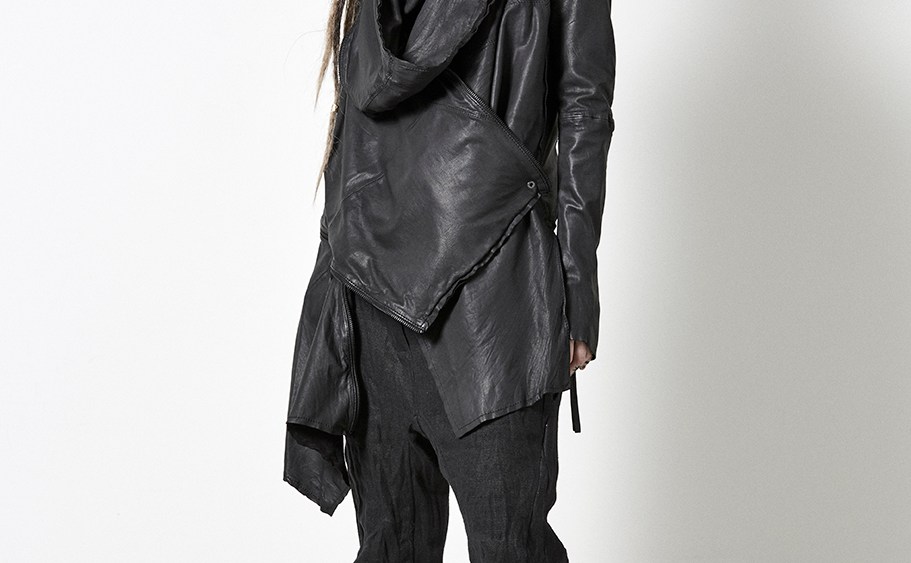
The fall fashion season is entering its final European leg as Paris Fashion Week gets set to begin. And along with the established names are a slew of newcomers worth checking out.
Ottolinger
After showing as part of VFiles’ emerging designer talent program during New York Fashion Week for the past two seasons, rising Berlin-based label Ottolinger counts among this season’s on-calendar presentation newcomers.
Known for their subversive, handcrafted, punk-tinged creations hooked on ugly/pretty mash-ups, deconstructed streetwear and cut-up, gender-ambiguous denim, cofounders Christa Bösch and Cosima Gadient like to challenge traditional notions of sexiness. Experimenting with collage constructions and fabric manipulation, the playful Swiss design duo is into things that look a bit “off.” “Sexy doesn’t have to be beautiful. We try to do stuff we don’t understand,” said Gadient.
Related Articles
The designers’ studio in Moabit, in Berlin’s Mitte district, is a bit of a creative laboratory, with the pair constantly “collecting, researching and analyzing stuff, always gathering and kicking things out again.” They take inspiration from “things that surround us,” said Gadient, and find beauty in the mundane. Case in point — the sling on a friend’s broken arm, which sparked a series of bandage pieces in the new collection.
You May Also Like
For fall, they’ve also experimented with traditional wool felt, used on “superstiff” dresses and sweaters with unfinished edges to create “weird but strong silhouettes.” In the mix are classic blue denim pieces and a sprinkling of tie-dye elements.
The presentation will take place on March 6 at the Palais de Tokyo.
Gadient said the collection was loosely inspired by the neo-punk graphic novel series “Transmetropolitan” and “this weird perception of what the new future might be, only it’s not futuristic at all.” A colored sweater with a marijuana leaf nods to the use of cultural references in the series, which is “so off,” she added. “It’s a play on the kind of item you could find in a tourist shop.”
Part of the motivation behind launching the label, which lifted its moniker from the name listed on the building buzzer of their former studio, lay in creating pieces that the designers and their posse would like to wear, as one of an emerging generation of voices coming out of Berlin’s dynamic fashion scene.
But it’s an aesthetic that has legs. In only two seasons, the label has sold to a network of significant retailers including Selfridges in London, Galeries Lafayette in Beijing and H. Lorenzo in Los Angeles.
— Katya Foreman
Anton Belinskiy
He’s a local fashion hero in his native Kiev and now Anton Belinskiy, a bright young proponent of the post-Soviet wave, is taking on Paris.
“I think the brand is ready for its next step,” said the designer, who describes his approach as an interpretation of the national costume, “or rather, what people wear today in Ukraine as their national costume, getting on the metro and passing by the Goncharov museum in Kiev.”
“I just try to interpret what I see around. I just state the present, I would say,” added Belinskiy, who is seen as a pied piper of the youthquake that’s been bubbling up since the Ukrainian revolution that began in late 2013.
After a season presenting as part of the VFiles show in New York, Belinskiy, who was an LVMH Prize finalist in 2015, presented his spring collection in Kiev in the framework of the One Day Project on Aug. 24, 2016, the 25th anniversary of Ukraine’s independence from the Soviet Union. The daylong event showcased homegrown fashion talent. “We do want to promote the values of our culture, its daily routine, its youth, its changes and struggles, which I can totally associate myself with,” he said.
Belinskiy’s approach to his Paris show format is similarly “real.” “We won’t be using a lot of devices, huge lights or all that big production….There will be just models, garments, and we will use some everyday objects like cell phones or speakers, etc.,” he continued.
Known for his avant-garde but wearable creations rooted in street-sport and workwear, Belinskiy believes clothing should first of all be comfortable and vibrant. He likes to mix materials and create different color schemes, working mainly with cotton, mohair, silk, cashmere and wool for fall. Key items include colored striped knits, tracksuits, denim boiler suits and shaggy shearling outerwear.
“We are looking for simple but irreplaceable things — something that [draws you] but you barely pay attention to [it],” he said. — Katya Foreman
Maison Rabih Kayrouz Manuel
He returned to the couture calendar this January to present his main ready-to-wear line, and on March 5, Rabih Kayrouz will unveil in his Paris atelier a new, more experimental concept that he plans to present each Paris Fashion Week, dubbed Maison Rabih Kayrouz Manuel. It’s based on jewelry and clothing pieces that celebrate the trace of the human hand.
“It’s nice to be able to give some importance to the [craft],” said the designer, who sees this year as marking a “new chapter” in the house’s story. The novel concept, he said, will feature deconstructed takes on his signature silhouettes that are “cut and re-cut, sewn and unsewn” to take on a new allure. The detail, explained Kayrouz, is in the handiwork rather than embellishment. Basic shapes are reworked in different fabrics like silk, wool and cotton “to give them a different life.” Same for the jewelry, which is based on organic, cuff-inspired forms worked in materials such as wood, porcelain and brass.
The designer is targeting a select range of high-end stores for the line. His main label is distributed in around 60 stores including Colette, Le Bon Marché, Dover Street Market and Barneys New York.
Kayrouz, who has been showing in Paris since 2009, this season has also teamed with Paris-based, Lebanese-born restaurateurs Liza Soughayar and Ziad Asseily on a project showcasing young Lebanese design talents being mentored by the Starch Foundation, which was cofounded by Kayrouz eight years ago.
Designer Salim Azzam will present a capsule of embroidered pieces at the restaurant Liza from March 5 to 12. It’s the start of an initiative that is to introduce a new Lebanese designer each season going forward. — Katya Foreman
Faith Connexion
With a dialed-up, graffiti-splattered aesthetic and the Kardashian clan among its celebrity devotees, punk-infused streetwear label Faith Connexion is not one for wallflowers. But fashion weeks have seen the 10-year-old brand opt for intimate presentations for buyers, staying on the margins of the runway hubbub.
This season, however, it’s changing tactics. After crossing the globe for its debut fashion show in Sydney last fall, Faith Connexion will host its first Paris catwalk show on Wednesday. During the show, the brand will unveil a footwear collaboration with New Rock as well as an undisclosed hook-up with an iconic Nineties sportswear label.
Faith Connexion, which operates as a rotating design collective, is known for an unorthodox look that is heavy on customization with graffiti, embellishments and distressed effects. In addition to a largely anonymous cast of designers, the brand has collaborated with artists including Pisco Logik and Vincent Dacquin on its signature hand-painted items.
The brand has grown to 280 points of sale, including Barneys New York, L’Eclaireur, Maxfield and The Webster.
In addition to its first Parisian runway show — to be sound-tracked by a surprise musical guest — the event will represent the brand’s foray into see-now-buy-now, with items from an exclusive capsule for Farfetch.com selling on the site immediately.
Among those with a front-row view will be two dozen social media influencers from Farfetch’s stable of brand ambassadors, who will be outfitted in exclusive jackets from the partnership. — Robert Williams
Jour/né
Jour/né founders Lou Menais, Léa Sabban and Jerry Journo decamped to the Paris headquarters of Nike France to prepare their fall collection upon invitation from the sporting goods giant, with which they are partnering on the show. A customized version of the new Nike Vapor Max 2017 by Jour/né sneaker will feature in the runway show and launch in late March.
Titled “Dear India,” the line was inspired by a recent trip to India filtered through kitsch-chic nods to the Wes Anderson film “The Darjeeling Limited.” (Think men’s wear-inspired tailoring in warm fabrics like boiled wool and tweed over roll-neck sweaters with accessories including scarves with pearl embellishments.)
“It’s this crossover of two worlds, Parisian style and the exoticism of India,” said Journo.
Key looks include a striped gray and burgundy three-piece wool suit and a high-waisted patchwork pant in a signature Jour/né palette of burgundy, navy and mustard.
While past locations for its presentations have included Colette, the Crazy Horse and historic Paris restaurant Le Grand Véfour, for its first show on the official calendar Jour/né will on Tuesday take over the Hôtel de Guénégaud in the Marais district. It sounds classic but “the set will be pretty special,” teased Journo.
The rising daywear-focused label, which was founded in 2015, is distributed in around 50 points of sale, including Colette, Le Bon Marché, 10 Corso Como, The Webster and Tsum. — Katya Foreman
Victoria/Tomas
Marking its debut on-calendar presentation, there’s a coming-of-age feel to the fall collection of Victoria/Tomas, both in terms of the label’s muse — Marina, the young cousin of cofounder Victoria Feldman — and of a crystallizing of vision.
“Things were a bit roller-coaster in the beginning, but there’s this feeling of having found the right formula in terms of how the collections are coming together. Winter is also our strongest season as we’re all about outerwear and these big heavy pieces with more of a masculine attitude,” said fellow cofounder Tomas Berzins, who is married to Feldman.
The pair cofounded the label straight out of fashion school in 2012, and it went on to be selected as a finalist for the 2013 edition of the Hyères International Festival of Fashion and Photography. Berzins is Latvian and Feldman is Russian, though she has lived in France for much of her life. The label has a Parisian attitude.
Channeling an edgy, but elegant spin on the teen spirit theme, mixing femininity with a rebel edge, the designers sought to bring the inspiration into the very fiber of the clothes, using tattoos as a leitmotif on fabric, leather and faux fur.
“There’s the needle, but instead of ink we have thread,” said Berzins, citing among examples super long trenches in camel, military green and navy embroidered with imitation tattoos in anchor, heart and star motifs. There are also denim and leather minis sporting tattoos on the back pockets and fake fur coats: one in brown with embroidery in two tones of gold, the other in black with silver embroidery. Accessories include chokers and neckpieces studded with piercing details made from embroidered silver thread.
A new injection of knits includes sporty sweaters in buttery-soft luxe fibers, including a merino, cashmere and silk blend, while subtle plays on asymmetry permeate the collection. The line includes, as well, a strong focus on another of the label’s star categories — shirting, with gathering and layering. Playful elements include bandanas inserted into tops to create a shawl effect and shirts with tone-on-tone mannish ties that can be knotted into a bow.
This male/female dichotomy — taking men’s basics and adapting them to a woman’s body — is a house signature and a natural part of the designers’ creative dialogue. “We design together; we’re a couple. It’s a love story, but not in a cheesy way,” said Berzins.
The label’s presentation will be held in a private apartment on Rue Portefoin in Paris’ 3rd arrondissement on Tuesday. — Katya Foreman
Barbara í Gongini
Newcomers from the Scandinavian contingent will include Barbara í Gongini, a label with a strong following on the local scene and a namesake designer who is an industry veteran. The brand is known for its drapy, black silhouettes bridging utility, futurism and Goth.
For Gongini, carving out her own visual identity that lasts from season to season is as much about the environment as it is about aesthetics. A native of the Faroe Islands, the designer strives for longevity and multifunctionality as a means of making her fashion as sustainable as possible.
For fall, expect to see deconstructed knits, diagonal closures and imposing black furs (sourced from animal by-products only). — Robert Williams