
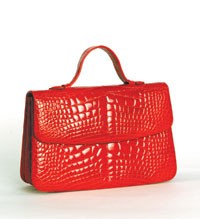
NEW YORK — Exotic skins dominated the designer handbag category this fall, but a slowdown may loom for next fall.
The industry is anxious about the effects of Hurricanes Katrina and Rita on Louisiana, the state that harvests alligators for their skins and is the biggest supplier of such goods to American and European designers, including Ralph Rucci, Lambertson Truex, Judith Leiber, VBH and Darby Scott.
“We are going to [catch] 32,000 from the wild harvest program [this year, which is about] two to three thousand gators fewer because of the hurricane,” said Noel Kinler, program manager for the Louisiana Department of Wildlife and Fisheries.
He said the relatively small number of alligators lost to hunters this year is attributable to displacement from their natural habitats and the fact that many have been feeding on the abundance of fish and foul the hurricanes displaced, which discourages them from taking the hunters’ bait.
He estimated a slightly more than 40 percent increase in the price of alligator skins as a result. Kinler said the average cost of skin per foot was $22.50 for 2005. That may increase to $30 or $32 per foot by 2006.
“The bottom line is that we don’t know yet,” he said, adding there could be long-term environmental consequences.
Christine Plott Redd, sales and marketing director of the Griffin, Ga.-based American Tanning & Leather Co., said she wants to dispel the rumors that the alligator supply is threatened.
“There have been waves of speculation in the luxury fashion houses all over the world as to what will happen to the American alligator supply in the wake of Hurricane Katrina,” said Plott Redd. “However, there are plenty of alligators being supplied to the market, so there is no need to panic about reduced supply. The prices are elevated, yes, but that is a direct result of a healthy and strong demand for luxury goods.”
Accessories designers that use the skins in their collections are mostly on the fence about how much the increased alligator skin prices will affect their businesses next year.
Cece Cord, designer and president of her eponymous three-year-old handbag line that uses alligator and crocodile skins, said her supplier doesn’t yet have a handle on the situation. For spring, she continued to show a multitude of alligator and crocodile bags, from totes for every day to clutches for evening.
Related Articles
You May Also Like
“I take [my alligator bag] everywhere with me. It’s not saved for special occasions. I take mine to the grocery store,” she said, emphasizing the changing image of an alligator handbag from austere to something young, fresh and luxurious.
She added, however, “Down the line, I’m sure it is going to have some long-term effects.”
Alexandra Knight, a Houston accessory designer who uses exotics exclusively, said her business has surged over the past few years. She believes the prices of alligator skin will increase, but isn’t worried about a decline in sales of her $1,550 to $9,150 bags.
“When you’re committed to paying [an average of] $2,650 on a bag, you want the best,” she said. “[An exotic skin bag is] the most luxurious purchase.”
Exotic skins in general have been increasing in popularity, whether alligator or python or ostrich.
Robert Burke, senior vice president of fashion at Bergdorf Goodman, told WWD in August that the increase in popularity of the exotic-skin handbag is rooted in the consumer’s quest for the ultimate status symbol. Because of its exclusive nature, not everyone is carrying such a handbag.
“There’s a bit of a rebellion against people having bags that everyone else has,” Burke said. “And crocodile, ostrich and snakeskin bags fill that void because they are the ultimate in luxury handbags and aren’t easily knocked off. It’s very difficult to craft a [faux] python bag out of cowhide or calfskin. When people see a real exotic skin bag, they know it.”
Saks Fifth Avenue senior fashion director Michael Fink said although exotics weren’t prevalent in handbags for spring, he is worried about next fall.
“We’re moving out of alligator and crocodile and more into python and ostrich [for spring],” he said. “But with fall’s minimalism, and lack of hardware on bags, an alligator or crocodile bag can really look great. Of course, it could just be the perfect excuse to charge more money. But with a luxury item like an alligator bag, if it’s the right bag, you’ll always have that customer [who buys it].”
Alligator skins aren’t the only design materials that accessories makers are watching. They have begun to fret about the supply of feathers from China and India due to the avian bird flu scare.
Ostrich and peacock feathers are used in handbags by companies like Valentino, Badgley Mischka and Malini Murjani, and in hair accessories by Alex and Ani.
Jay Dersh, head of New York-based feather wholesaler Dersh Feather, and Jon Coles, president of the fashion division of the American Plume & Fancy Feather Co., already have to follow new codes instated by the U.S. government a year ago.
“It’s still doable,” Dersh said. “We just have more red tape to deal with.”
Coles doesn’t see the possible pandemic affecting the fashion sector of the feather trade.
“We’re having the feathers sterilized [in the country of origin],” said Coles, whose feathers are used by Bob Mackie and Patricia Field.
Coles said prices increased 5 to 7 percent due to the extra sterilization process.
“I’m hoping there won’t be a knee-jerk reaction,” said Coles, adding that companies that manufacture feather dusters from Chinese chicken feathers will be hurt more than the fashion industry. “I don’t think the feather industry is in any big trouble in the U.S.”