
NEW YORK — Luxury brands are hoping now is the time to address a legal issue surrounding the availability of counterfeits through online auction Web sites.
The question many are grappling with is whether the operator of an online auction or marketplace can be held liable for the content of that site.
“Whenever you have a group of brand owners sitting around schmoozing, that’s all they talk about. ‘What are we going to do about the Internet and auction sites?’ We spend a lot of time, a lot of money and a lot of resources [on this],” said Barbara Kolsun, senior vice president and senior counsel for Seven For All Mankind.
So far the efforts by brand owners to address counterfeits on auction sites have been centered on lawsuits filed by luxury goods manufacturers against eBay Inc.
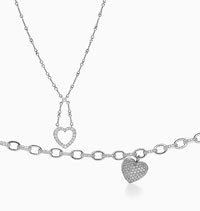
Tiffany & Co. filed suit against eBay in Manhattan federal court in 2004 alleging contributory trademark infringement. The case is pending and was referred to a magistrate judge for settlement negotiations on Nov. 7, according to court documents. Company sources said a trial date has been set for May. Executives at Tiffany declined to comment on the specifics of the case.
“Tiffany is David and eBay is Goliath now; it’s not the other way around anymore. These Internet companies are bigger than these luxury brand companies, financially and structurally,” said Rob Holmes, president of icybercrime.com, a company that conducts online counterfeit investigations.
In September, LVMH Moët Hennessy Louis Vuitton filed a lawsuit in Paris against eBay for alleged sales of counterfeit goods. The luxury goods giant claimed eBay failed to take an aggressive stance against the sale of counterfeit goods on its site. Louis Vuitton declined to comment on the suit.
Brand owners express frustration with the current model that eBay employs, which centers around its Verified Owners Rights Program, an automated system that allows brand owners to report and knock down auctions selling suspected counterfeits. Under the VERO program, brand owners are responsible for policing the eBay site themselves, and many have extensive internal programs dedicated to monitoring online auction activity.
Seven For All Mankind said that, as a result of the efforts of its legal team and outside investigators hired specifically to search for counterfeits online, it knocks 10,000 auctions off eBay every month using the VERO system, but that number never decreases.
Related Articles
You May Also Like
Tiffany said that in general it spends well over $1 million a year tracking and pulling down counterfeit auctions online from the different host sites.
Sources say the total counterfeit industry is estimated to be between $500 billion and $600 billion worldwide. Andrew Horton, director of product management at MarkMonitor, a provider of online brand protection services, said $77 billion in counterfeit goods changes hands through online channels, and of that total, it is estimated 3.6 percent, or $2.8 billion, is via auction sites.
But eBay is no longer the only online marketplace where counterfeits are found. As brands eliminate auctions from eBay through the VERO program, other online auctions and marketplaces emerge as an increasing problem for some companies.
Brian Brokate, partner at the law firm Gibney, Anthony & Flaherty, said that, of the 17,000 auctions and postings his firm helped its clients knock down in the first six months of this year, 55 percent were on Craigslist.com, 24 percent were on Ioffer.com and 15 percent of the total were eBay-hosted.
“Many of these sites could be characterized as all fake all the time,” he said. Auction sites present a 24-hour-a-day, seven-day-a-week problem for brand owners, he pointed out.
EBay’s response to allegations is to point to its efforts to work with brand owners. The VERO program has worked with 17,000 rights owners since it was established in 1998, said Catherine England, a company spokeswoman. EBay has 212 million members worldwide and lists an average of 105 million items on its site at any given time in more than 50,000 categories, said England. Approximately six million new items are listed on the site each day.
“EBay can’t possibly be an expert in antique glass and luxury goods and every single brand of every single item that could possibly be listed on our site,” England said. The company feels that individual brands are best equipped to identify counterfeits, she said.
The outcome of the eBay lawsuits, particularly in the U.S., are hard to predict because there is no legal precedent.
“Existing law provides some guidance, but the court is going to be put to the task of balancing perhaps the greatest threat to trademark law against a deeply rooted judicial reluctance to hold third parties liable for the bad acts of others,” said Brokate.
“We’d obviously like to see Internet sellers have some more responsibility for the legitimacy of the goods they are selling,” said Patrick Dorsey, general counsel for Tiffany. “I don’t know whether that solution will be won in litigation or won in legislation.”