
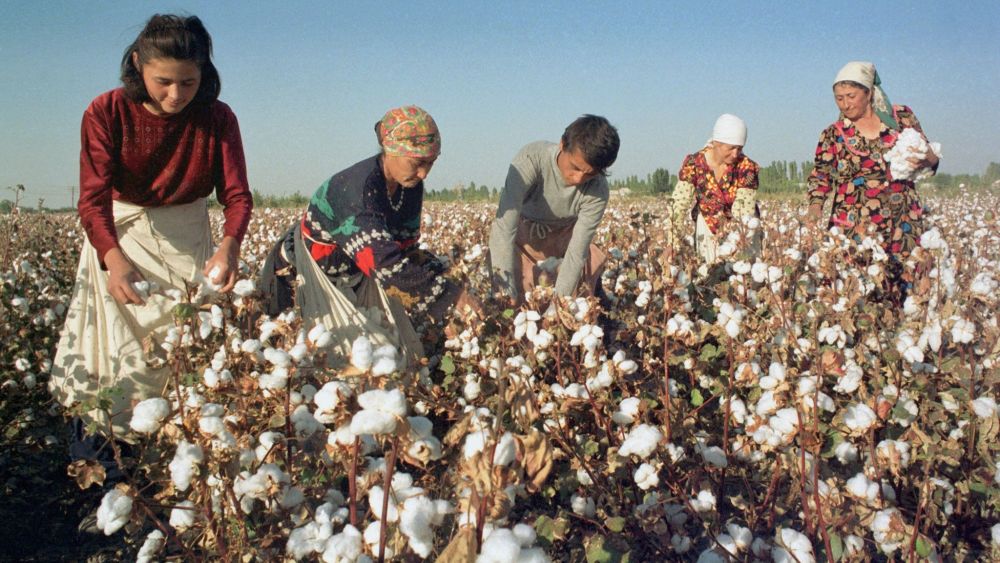
The International Labor Organization said thanks to reforms led by the government of Uzbekistan, organized child labor is now socially unacceptable in the Central Asian country and the practice has been phased out.
The ILO also said in a status report prepared for the World Bank that Uzbekistan is making progress in reforms to address risks of forced labor in its cotton industry.
“The unacceptability of child labor is recognized by all sections of society: authorities, teachers, specialists, farmers, parents and children themselves,” the ILO report said. “Uzbekistan has phased out organized child labor.”
Human Rights watchdog groups and the U.S. State Department have long called out Uzbekistan for its use of child labor and many apparel and textile companies have declined to use Uzbek cotton in their supply chain. In September, the International Labor Rights Forum released a report accusing the World Bank of potentially violating international labor law by providing loans to the Uzbek government even though these labor practices still existed.
Related Articles
The ILRF disputed some of the findings in the ILO report.
You May Also Like
The ILO report said Uzbekistan continues to implement action plans to reduce the risks of forced labor that are influencing the context of the annual large-scale cotton harvest. It also points to improved public awareness of prohibited labor practices due to a nationwide communications campaign that included more than 800 banners, 44,000 posters, 100,000 leaflets, TV, radio and text messages during the harvest in September and October.
“Improving labor practices and reforming and modernizing agriculture is a long-term process, and we remain committed to helping Uzbekistan transform its agriculture sector into an important source of growth, higher incomes and quality jobs for the people,” said Lilia Burunciuc, World Bank regional director for Central Asia.
Government projects in Uzbekistan, with financing from the World Bank, are designed to help the country transition away from cotton and reduce risks of forced labor through improving labor practices, increasing mechanization and diversifying agriculture to more profitable crops that are less labor intensive.
ILO monitored the implementation of government commitments and measures against child and forced labor in Uzbekistan and reported that “no incidences of child and forced labor were identified with regard to World Bank-supported agriculture, water and education projects.”
The ILO report stressed that forced labor remains a risk for some categories of people, including students, staff of educational and medical facilities and government employees. The monitoring concluded, among other things, that further steps are required to remove the risks of forced adult labor and noted that the existence of such risks has been recognized by the Uzbek government, which it said continues to make policy improvements aimed at reducing risks of undesirable labor practices.
Even though organized child labor has been in practice phased out, both the World Bank and the ILO recommend a high level of vigilance to ensure ongoing efficacy of measures against child labor in the country, especially for 16- to 17-year-old students.
The ILO has also noted progress in the functioning of the national feedback mechanisms established by the Federation of Trade Unions and Ministry of Labor. These mechanisms include call-in centers that allow citizens to report concerns about labor practices in the country. The positive changes include an appeal process for citizens contacting the call centers.
“Reforms since last year have incorporated some international best-practice principles into the Mechanisms,” the ILO report stated. “Effectiveness will require generating further public confidence in using the feedback mechanisms and clarity over their respective roles.”
Following the most recent harvest, the ILO and World Bank have agreed to extend their cooperation in Uzbekistan for another two years.
Abby McGill, the ILRF’s director of campaigns, said there are “grave concerns” about the methodology used in the worker surveys in the report and charged that the ILO “missed some red flags about labor coercion” in this year’s harvest.
McGill said independent civil society officials that operate in Uzbekistan have documented in preliminary findings key pieces of evidence that “lead us to disagree with many of the report’s conclusions.”
“Those monitors found, and documented with photographic evidence, an increase in child labor compared to the previous two harvests, as well as both child and forced labor in World Bank project areas,” she said.
“It [the ILO] claims that two-thirds of workers were voluntarily recruited (a figure we believe is high), but said the remaining workers were only ‘at risk’ of forced labor, not victims of forced labor,” McGill said. “This despite multiple cases of clear threat of penalty that emerged in this harvest, including students expelled from school for refusing to participate, at least one teacher losing her job for refusing to participate, and one pregnant woman who, threatened with denial of her maternity benefits if she did not harvest cotton, miscarried in the fields.”
She also questioned the ILO’s methodology which relied on worker surveys conducted in the presence of the “state-controlled” Federate of Trade Unions of Uzbekistan, a union she said was tasked by the Uzbek government to ensure “control over cotton pickers” through a government-issued protocol directing the deployment of all medical and education staff to pick cotton.
“The ILO itself cast doubt on the validity of survey responses, noting that ‘many interviewees appeared to have been briefed in advance,’” McGill said.
She said the ILRF agrees with many of the findings in the ILO report, noting that the report “reaffirms that there is a substantial risk of forced labor” and that “sustainable elimination of the risk of child and forced labor remains a prominent issue in Uzbekistan.”
In addition she said the ILO report also found that labor relations are “distorted and unregulated” and that local administrators face pressure to meet cotton quotas imposed by the central government, elevating the risk of forced labor.