
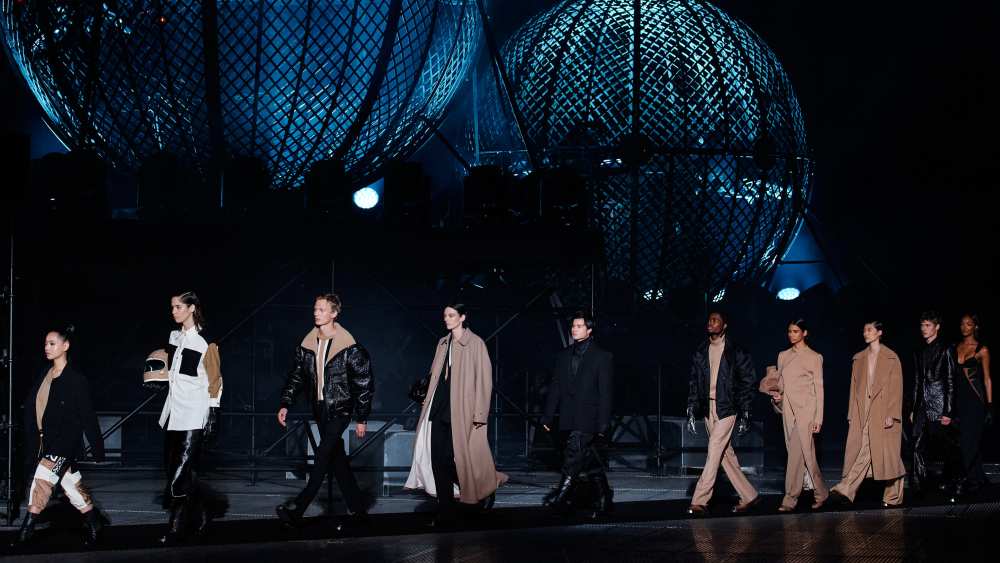
BERLIN — Despite a war in Europe, rising costs, falling consumer confidence and predictions from other apparel companies that there would be some tough quarterly earnings reports coming out soon, Hugo Boss has continued to do well.
The German brand recorded what company executives described as a record quarter between July and September. Sales rose 18 percent, currency adjusted, to 933 million euros.
In a Thursday morning conference call on the results, the company’s chief financial officer Yves Mueller tried to explain why. The third-quarter results “lead us to conclude this that, although the economic climate is currently impacting many consumer-related industries, we have not been as affected by the general economic development yet,” he said. “Why is that? The core of our success is certainly the product.”
Related Articles
While the premium sector may not be facing as much difficulty in the prevailing climate as yet, there’s no doubt that at least part of Hugo Boss’ growth is also powered by an increased spend on marketing, as the brand tries to appeal to a younger, global audience. Since the beginning of the year, Hugo Boss has undergone a significant design revamp and, Mueller explained, “the enthusiasm we generated [with that] continued over the summer.”
You May Also Like
The brand has enlisted a wide-ranging roster of big names to promote its clothing. They include models Naomi Campbell, Bella Hadid and Kendall Jenner and rapper Future, alongside various high-profile sports stars and the likes of TikTok creator Khaby Lame as well as South Korean rapper Big Matthew. Hugo Boss also put on two separate shows in Milan in September.
In its quarterly statement, the company said operating expenses had increased 25 percent in the third quarter to 475 million euros. The increase stemmed from factors including higher freight costs and costs of distribution as sales took off, plus a 39 percent rise in marketing costs, equaling 71 million euros.
“Of course, our success requires targeted investment,” Mueller argued. “The share of marketing expenses is now almost 8 percent of our group sales. But ultimately we don’t regard these costs as an expense. Rather we see them as an investment in the relevance and appeal of our brands.”
Hugo Boss raised prices by mid- to high-single digits on the upcoming winter collection, Mueller said. But this meant that rising costs were already priced into the new inventory.
The executive also believed that Hugo Boss’ return to color-coded segments — for example, Boss Camel signifies premium, tailored products that include materials like silk and cashmere, while Boss Green is all about athleisure — has helped spread price rises throughout the collections.
“That [the premium Boss Camel segment] is going really well,” Mueller said. “It’s going particularly well in France and China, as well as other parts of Asia.”
Mueller said Hugo Boss’ fourth quarter has also started well. As a result, the company raised guidance for the second time this year. Hugo Boss now expects sales to increase between 25 and 35 percent in 2022, coming in somewhere between 3.5 billion and 3.6 billion euros. Earlier this year, the company had only expected up to 15 percent growth. In 2021, Hugo Boss had sales of 2.79 billion euros.
“And as we previously said, our goal is still 4 billion [euros, in sales],” Mueller added. “But we need to get 2022 over the line first. But you know, because of these major macroeconomic uncertainties we are seeing everywhere, we are not on autopilot. We’re watching everything very carefully, week by week, and that is why it’s too early to adjust our medium-term targets as yet.”
It’s something of a post-pandemic comeback for the German business, which is best known for its men’s formalwear and which had seen sales plummet during the health crisis as events were canceled and consumers worked from home. Then in the middle of 2021, the company appointed a new chief executive officer, Daniel Grieder, and unveiled its new business strategy.
Even compared to sales in the middle of the COVID-19 pandemic, Hugo Boss is still seeing growth, the company noted. When compared to the same quarter in 2019, the last “normal” year before the health crisis hit, sales increased 27 percent, currency adjusted.
Over the course of the third quarter, menswear in the more formal Boss category, which includes suits, rose 20 percent, currency adjusted, and brought in 732 million euros. Boss menswear still makes up the bulk of the company’s sales. Boss womenswear rose 13 percent, currency adjusted, and totaled 61 million euros.
The more casual Hugo category, which includes athletic clothing, also grew 13 percent, currency adjusted, to hit 140 million euros.
Sales in Europe rose 17 percent, currency adjusted, to reach 601 million euros. The brand was more popular in Germany than in France or the U.K., as sales there rose 19 percent compared to between 8 and 9 percent in the other European nations.
Hugo Boss’ momentum in the Americas continued, with growth of 18 percent, currency adjusted, to 197 million euros. Recent collaborations with the National Basketball Association and Russell Athletic in North America had proven successful so far this year.
“Momentum in retail in the all-important U.S. market has kept up,” Mue ller noted. “We’ve been really successful in promoting the idea of Hugo Boss as a 24/7 lifestyle brand there.”
Sales in the Asia Pacific region also grew, currency adjusted, rising 33 percent to 111 million euros in the third quarter. Sales in mainland China were still difficult and fell 3 percent during the third quarter. However a double-digit increase in other parts of the territory made up for this.
Mueller explained that Hugo Boss was mainly affected by ongoing COVID-19-related lockdowns in China. In September alone, around 15 percent of its stores were closed, he added.