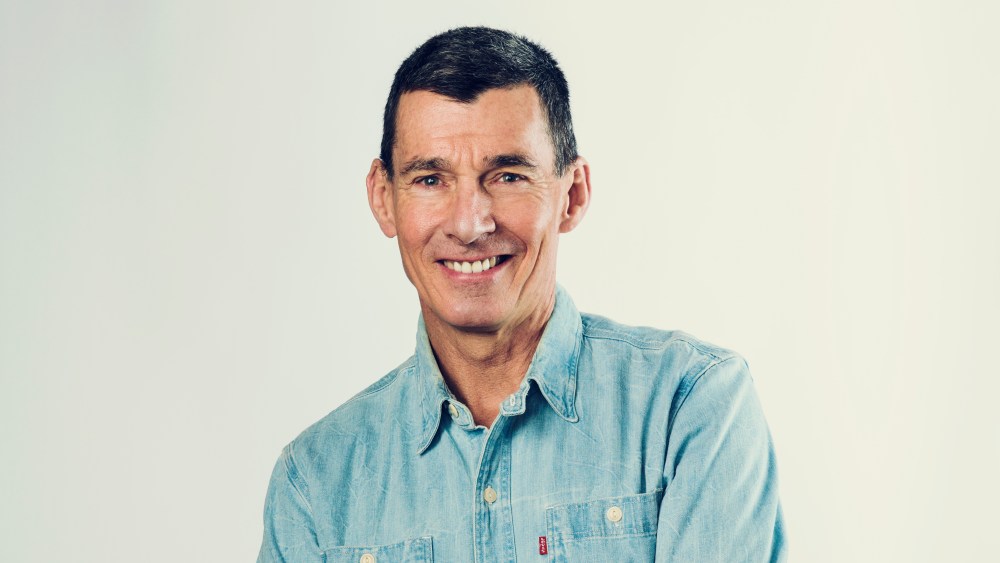
As Wall Street worried over signs of a little fading at Levi Strauss & Co., chief executive officer Chip Bergh told WWD that the denim leader is still very much in its groove.
Shares of Levi’s fell 16 percent to $15.14 after the company turned in first-quarter earnings that topped expectations, but were accompanied by gross margin declines, still-heavy inventories and weakness at wholesale.
“The market’s going to do what the market’s going to do,” Bergh said. “We’re going to always run this business for the longer term.”
Related Articles
Like most of the fashion industry, Levi’s loaded up on inventory early last year when the consumer was stronger and the supply chain was slower.
You May Also Like
Bergh said the idea was: “Stonewashed 501s don’t go out of style. Let’s be smart and proactively bring in extra inventory. We did this to ourselves to some extent. We kind of outsmarted ourselves.”
But when inflation and fears of recession prompted a pullback, it left Levi’s, as Bergh described it, “too far out over our skis.”
The result was more price promotions to move goods, hurting profits even while inventories were still up 33 percent at the end of the first quarter on Feb. 26.
First-quarter net income slid to $114.7 million, or 29 cents a share, from $195.8 million, or 48 cents a year earlier. Adjusted earnings, however, tallied 34 cents a share and came in 2 cents better than the 32 cents analysts anticipated.
“Despite the fact we beat on EPS, [Wall Street is] freaked about the gross margin — it fundamentally traces to a more promotional environment and that we proactively took some steps to get rid of inventory.”
Adjusted gross margins came in at 55.8 percent for the quarter, down 360 basis points from the record level hit a year earlier.
But Bergh — who has steered the company through much worse as he turned the company around and prepares to pass the CEO reins to Michelle Gass — said there were also many “very positive and very strong” aspects to the quarter, pointing to the direct-to-consumer business, women’s denim bottoms and the 501 jeans business, which is celebrating its 150th anniversary.

Revenues for the three months ended Feb. 26 rose 6 percent to $1.7 billion, with the increase coming from a $100 million benefit from a planning shift that moved wholesale shipments into the first quarter from the second. Wholesale revenues increased 2 percent.
In constant currencies, revenues gained 9 percent on top of a 26 percent gain a year earlier, when the period of strong consumer spending was just ending with Russia’s invasion of Ukraine and worries over inflation.
The d-to-c channel saw a 16 percent boost in constant currencies as revenues in the Americas increased 7 percent, Europe inched up 2 percent and Asia gained 22 percent.
A new global marketing campaign — dubbed “The Greatest Story Ever Worn” — has helped push Levi’s 501 to the fore and the company is expecting the style to post nearly $800 million in sales this year, a nearly 70 percent increase from before the pandemic.
“I always say, when your most iconic item is cranking — and the 501 is cranking right now — it’s a really good sign for the strength of the brand,” Bergh said.
Harmit Singh, chief financial and growth officer, added that the company is growing in the right ways.
“As we think about where this company is headed, it is going to be more [d-to-c] driven and [d-to-c] driven means that we can connect to the consumer directly, sell more lifestyle offerings directly, and it’s high gross margin,” Singh said.
The d-to-c business accounts for 42 percent of the company’s revenues.
Likewise, the CFO noted that 75 percent of the apparel market is outside of the U.S., while Levi’s international business accounted for 56 percent of total revenues and saw an 11 percent increase in constant currencies during the quarter.
“Structurally, we’re headed the right way,” Singh said. “It’s just a question of, is ‘23 a reset year and, if there is a recession, does it happen in the second half?”
Ike Boruchow, an analyst at Wells Fargo, said the Levi’s “stock is cheap,” but that the near-term setup is “tough” and lowered his annual EPS estimate to $1.30 from $1.32.
“While Levi Strauss has managed the business well over the past 12-18 months, today’s print was the fourth straight quarter with holes,” Boruchow said. “Big picture, wholesale headwinds are persisting — with share questions now arising — while heavy inventory will continue to pressure full price selling.”