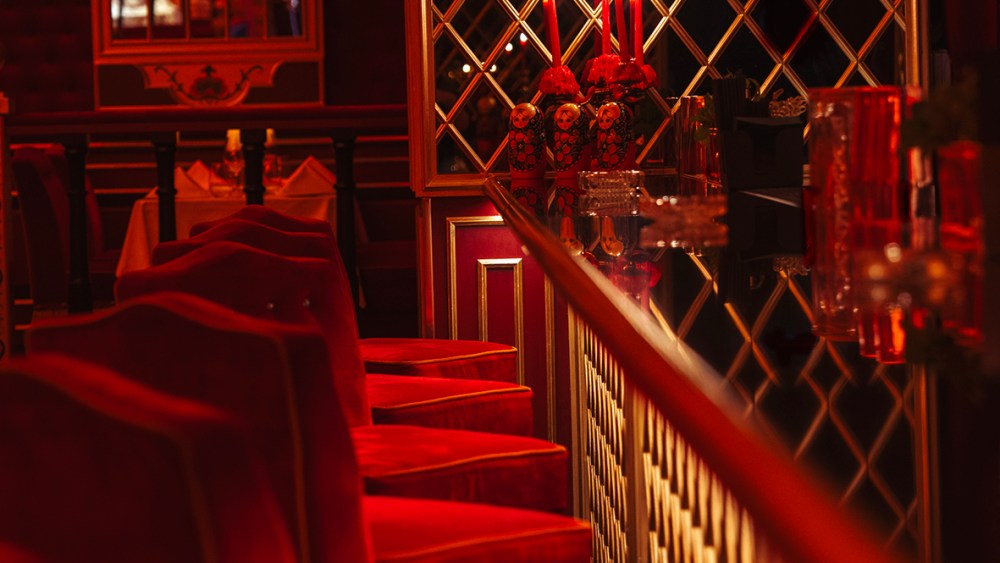
Premieres, exclusive dinners and private parties make up the Cannes circuit. This year, Paris-born nightclub Raspoutine, known for its velvet-lined interiors and ruby-hued decor, is popping up during the festival as it grows into a global name.
To kick off, it will host the after party for the official opening dinner Tuesday night.
For the festival’s fortnight, the venue has been adapted to mirror the brand’s signature aesthetic of deep reds, warm lighting and layered textures intended to evoke the sultry interiors of the original outpost.
Related Articles
For founder and owner Alexander Ghislain, the Cannes spot is about being seen among the right clientele as he builds it into a global luxury brand. The next destination on his global roadmap is a seasonal summer outpost in nearby Saint Tropez. It’s also set up to promote future openings across major global cities, such as Milan, Geneva, New York and Mexico City.
You May Also Like
The Cannes club, with a capacity of around 200, will take over the hidden speakeasy nestled inside the Palm Beach entertainment center, newly spruced up by French interior designer Hugo Toro.

“To recreate the universe can be quite expensive [for a pop-up], but we had the chance to have a very beautiful space with the right capacity and with the right partner,” Ghislain said. “It was a good opportunity for image, to host a lot of people from the cinema industry.
“There are a lot of events — free events — in Cannes, but we want to be a cool spot with the right crowd,” he said of the sponsored-beach scene that tends to dominate festival nights.
That distinction is important for Ghislain, who is following what could be described as a hospitality playbook to scale a nightlife concept in the same way luxury hotel or restaurant brands expand internationally, with consistent design, service standards and customer experience across locations. He is positioning the Raspoutine name as a global luxury brand.
Founded in Paris’ Pigalle district in 1965, Raspoutine began as a caviar restaurant catering to a cultured clientele of writers, actors and musicians, with a space that blended cabaret sensibilities with Empire-inspired opulence. The name, referencing the mystic figure associated with the Russian Romanov court, was meant to create a sense of decadence and intrigue.
It was a famous hot spot for 45 years, but by the 2010s its popularity had waned. Ghislain revived the name, turning it into a decoratively decadent nightclub and reestablishing it as a coveted late-night destination.
The Parisian club now operates without formal membership but with a tightly controlled velvet rope.
“We pay attention to the selection of people and to the service. The door is very selective. We don’t want it to be a membership club, because everyone can come — or everyone can try to come at least — if they are cool or elegant,” Ghislain said.
That philosophy extends to the brand’s outposts. After a decade in Paris, Ghislain began to to expand the brand, opening branches in Los Angeles in 2018 and Dubai in 2022, alongside a series of pop-ups in cities such as Miami and Marrakech.
The goal, Alexander said, is to build Raspoutine into a recognizable nightlife name. “Raspoutine, with its logo and the interior design of the place, is a very strong brand,” he said. “So we have the ambition to make it a famous brand, not only in Paris, but in other cities.”
Central to that ambition is consistency, similar to a fashion brand or hotel group, he said, citing the Four Seasons as an example, or restaurants like Cipriani or Nobu. Ghislain wants to create a curated experience across locations.
“In Paris or Hawaii or Vegas or wherever, you know what you will get — the service will be great, the design will be great,” he said. “You trust the brand.”
Nightlife can rely on spontaneity and local nuance and the sector remains fragmented. If a traveler lands in a new cultural capital, they must seek out hotspots and navigate different codes, and the company can be unpredictable.
Ghislain believes cultural trends show a growing appetite for reliable luxury experiences, particularly among young, globally mobile consumers.
“For sure, people like to discover new places, but in their journey, they also like something they know — the reputation and what they will find,” he said.
“You know it will be the same music, the same type of crowd you’re looking for, good service and a good atmosphere,” he added. “Raspoutine has this very warm design where you feel like [you are] in a living room, and it’s all red, so you have this vibe.”
His model of recognizable design with controlled capacity and a curated clientele aims to introduce a degree of predictability without eroding exclusivity.
Design plays a key role. The brand’s interiors, dominated by the ruby tones, lush velvet textures and low lighting, are deliberately distinctive. “If you take a picture, you know immediately where you are,” Ghislain said.
In the Instagram age where venues are backdrops for content as much as social interaction, the visual identity becomes a form of branding in itself.
The Cannes pop-up follows the same format. The space has been adapted with signature elements, from backlit windows installed to resemble the original location, to custom lamps, ensuring continuity with the Paris flagship.
The Raspoutine vibe will carry from the red carpet to the red club until May 31.