
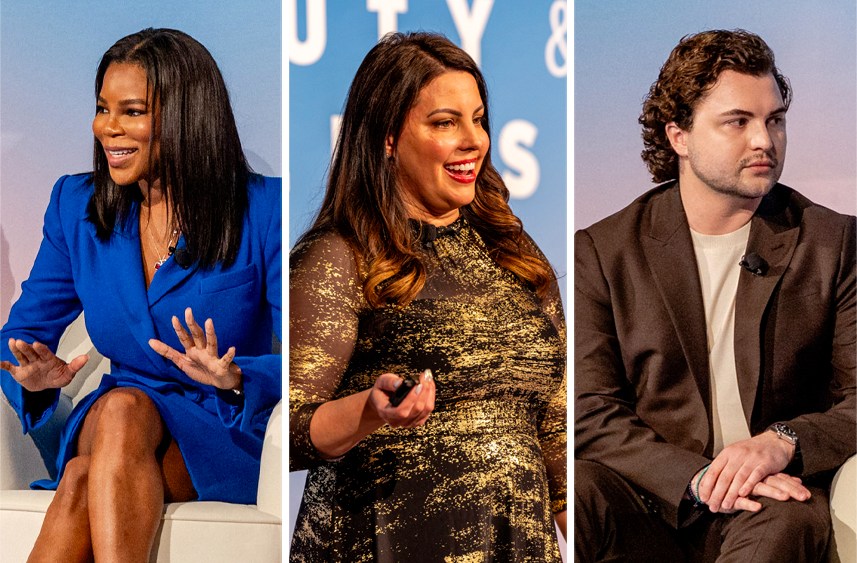
At the Beauty & Wellness Forum, Echo Sandburg, chief brand officer of C.P. Skin Health Group U.S., gave a presentation on how to protect skin health. She was later joined by Ian Michael Crumm, celebrity aesthetician and cohost of BeautyCurious Podcast, and Dr. Michelle Henry, founder of Skin & Aesthetic Surgery of Manhattan and chief executive officer of The Henry Research Group, in a discussion presented by EltaMD.
Noting that “everybody under the sun deserves to live freely,” Sandburg said skin cancer is the number-one most common cancer in the U.S. — one in five Americans develop skin cancer. “Something we are really laser-focused on is what we can do as a brand to change these statistics,” Sandburg said.
Related Articles
To create awareness and make a change, EltaMD has donated products to diverse groups of organizations for more accessibility and partnered with nonprofit organizations for free skin care screenings — with more than 2,000 people screened this year to date.
You May Also Like
To build advocacy, the brand has worked with dermatologists and celebrities to spread awareness and worked with the Melanoma Research Foundation. Andy Cohen, a survivor of skin cancer himself, partnered with EltaMD to recreate his famous nude photo from 1994. The sunscreen brand met its target goal with the campaign and donated $100,000 to the Melanoma Research Foundation.
Aiming to “make sun safety sexy,” Crumm has hosted his Skin Watch events for the past three years.
“Skin Watch is a way to speak about this serious topic but in an approachable way because a lot of people don’t want to talk about [death and cancer],” said Crumm. He shared that he’s been actively aware of skin cancer from a young age, as his grandma died from melanoma.
Now, as an aesthetician, Crumm said he’s always on Skin Watch and stated that he feels a responsibility to tell his clients to get a skin check if something doesn’t look right. The whole message behind Skin Watch is that anyone can be on watch. For example, hairstylists see the scalp and the back of their client’s neck.
While misinformation is still a big hurdle, research has proven that daily usage of sunscreen can reduce the risk of melanoma by 50 percent.
Henry said that while the overall daily sunscreen usage is up, less than 30 percent of women and less than 15 percent of men actively wear sunscreen when they’re outside for more than an hour. One common misconception she’s had from her patients is that artificial UV is not as harmful as natural UV. Moreover, the entire panel agreed that TikTok and other popular social media platforms have spread misinformation and that education is key.
But the tide is starting to change, as Henry said 50 percent more people report that they’re using sunscreen more often than the year prior. Social media is helping to drive the change by demystifying sunscreen and skin cancer.
Lobbying for better health care and more access to a dermatologist, investing in treatment for cancer and more UV filters is vital. Henry pointed to the European Union, which has 30 UV filters, while the FDA in the U.S. has only approved 16.
“Make sure you’re seeing a dermatologist and have that critical touch point with a health care provider,” said Henry.