LONDON — Is the lipstick effect feathering at the edges?
According to Jefferies, growth in beauty overall will be modest in the coming years, with consumer spending on injectable cosmetics and weight loss drugs slowly “chipping away” at sales of traditional products, such as creams and cosmetics.
According to Jefferies, the medium-term rate of growth in the beauty category will be around 4 percent per year, driven equally between volume and price. The main engine behind that growth has been, and will continue to be, the gradual increase in the “addressable market,” or consumers with enough income to enter the category.
You May Also Like
Related Articles
But growth will remain modest for a variety of reasons, including a slowdown in China following a golden period of sales between 2016 and 2021.
“Consumers rushed online/to travel retail/to Hainan duty-free stores to capture the novelty of buying western brands. It was a win/win for both sides, until the rule changed on duty-free buying, and culture shifts changed the dynamics,” the bank said.
Jefferies also acknowledged that incremental growth in the beauty category has always been elusive.
“It’s difficult to get the beauty engine firing on all cylinders at once. We believe history shows the average consumer has a finite level of discretionary income allocated for beauty expenditure. The allocation between subcategories (hair, makeup, skin care, fragrance) varies based on what is trending,” Jefferies said.
It added that if the leading trend is “heavy makeup, a minimalist look, improved health and wellness or smelling nice,” the total category growth will stick at around 4 percent, barring nonrecurring events, such as inflation spikes, macro shocks and/or events that deter or encourage consumer movement.

The bank also pointed out that beauty is vulnerable to cannibalization from subcategories such as injectable cosmetics and weight loss drugs.
“Beauty now encompasses more categories, but with the same share of wallet,” according to Jefferies, which said the injectable cosmetics category is growing “robustly,” and is expected to deliver around 11 percent growth per year, in the medium term.
“We think this growth will be somewhat cannibalistic to our [publicly listed beauty] names. Given the small base [of injectable cosmetics] compared to the size of the beauty category, it will not take a material share of wallet from beauty, but over time we expect it to chip away at the global beauty category growth,” Jefferies said.
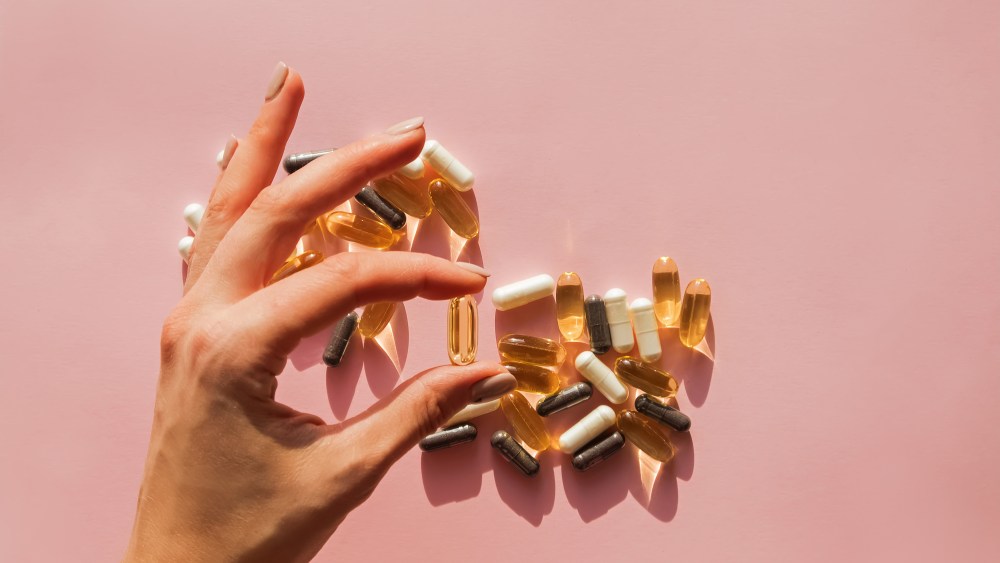
It added: “This infringement on the consumer beauty wallet may also be contributed to by supplement and weight loss drugs expenditures.”
As the market remains at a “normalized” growth rate of around 4 percent, Jefferies said it is expecting there to be a discount applied to midterm expectations, and valuations, of the beauty giants. In separate research notes on Tuesday, the company downgraded L’Oréal to “underperform,” and Beiersdorf to “hold.”
“We fear perceptions of midterm growth rates for these names will fade in the coming quarters, threatening derating,” the bank said. In mid-morning trading on Sept. 16, L’Oréal’s share price was down 1.8 percent to 381.65 euros, while Beiersdorf slipped 1.2 percent to 93.50 euros.
Jefferies is not the first to highlight a shift in consumer priorities and spend from traditional beauty and quick pick-me-ups, such as lipstick to longer-term investments in well-being.
Earlier this year, the investment company Iris Ventures published “Longevity Through Nutrition.” The report showed that people — of all ages — are prioritizing “performance, nutrition and proactive health,” eating the rainbow and spending their money on vitamins, supplements and natural compounds to live longer, healthier lives.
In the first half, Unilever’s well-being products delivered strong double-digit growth for the 21st consecutive quarter, with performance led by Liquid I.V., which helps replenish the body’s electrolytes, and Nutrafol, a hair-growth supplement for men and women.
Unilever said both brands continued to expand household penetration and deliver successful multiyear innovations, such as Liquid I.V.’s sugar-free platform.
By contrast, growth in Unilever’s Prestige beauty division was flat as the market remained subdued. Hourglass, Tatcha and K18 continued to grow in the double digits, while Paula’s Choice and Dermalogica declined.