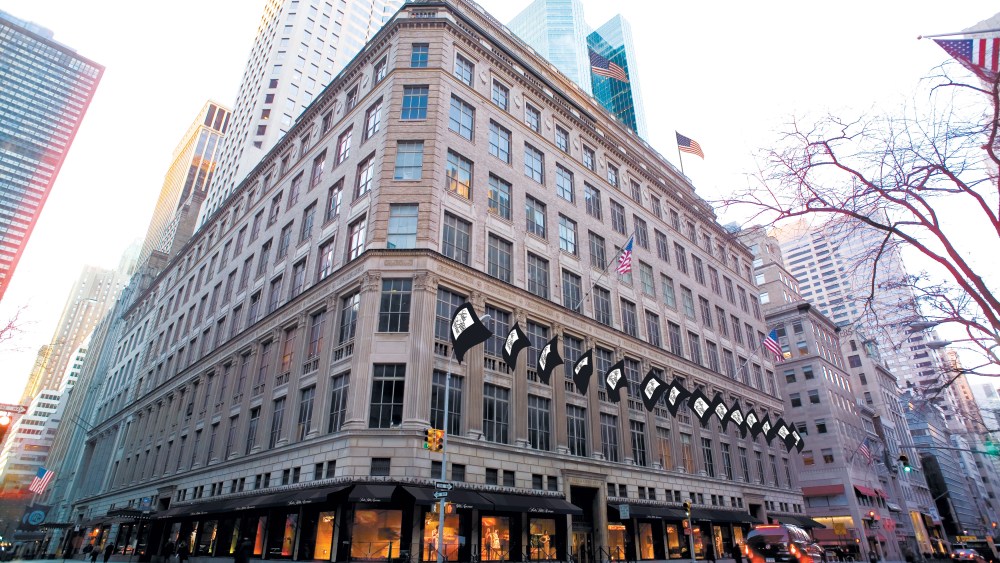
Saks Global is slashing the headcount at its corporate headquarters by 16 percent, impacting a wide spectrum of positions.
The downsizing will hit about 640 workers, representing a reduction of less than 4 percent of Saks Global’s total workforce, estimated at 16,000. Employees at stores, distribution centers and other facilities outside the corporate headquarters are not impacted by the cuts.
While some senior level management employees are being let go, there are no changes to the Saks Global management team, which includes those reporting directly to the chief executive officer Geoffroy van Raemdonck. Saks Global’s corporate headquarters is located at 225 Liberty Street in Brookfield Place in lower Manhattan. Saks Global also has some corporate staff in remote locations including Dallas.
Related Articles
Officials told WWD the layoffs reflect the luxury retailer’s “optimized” footprint, which was established through recent store closings. The company has been working for some time to consolidate certain functions of the Saks Fifth Avenue and Neiman Marcus Group businesses and become a leaner, more agile organization. “Not all of the changes are a reflection of Chapter 11,” one Saks Global official indicated. The reductions will also reduce payroll costs.
You May Also Like
“As we position Saks Global for future growth as the premier luxury multibrand retailer, we are focusing our resources to ensure we are a profitable business at the service of our customers, brand partners and other stakeholders,” van Raemdonck said in a statement Thursday.
“Decisions affecting our people are difficult and are made after thoughtful consideration,” the CEO said. “The strategic changes we are making to our corporate structure support the go-forward needs of the business, which will have a smaller operational footprint. We are thankful for our colleagues and wish them well in their future endeavors.”

Saks Global filed Chapter 11 bankruptcy on Jan. 13, after months of failing to pay vendors, which led to inventory shortfalls and an inability to stay current with debt from the retailer’s $2.7 billion acquisition of Neiman Marcus Group.
On Thursday, van Raemdonck discussed the progress Saks Global is making through the bankruptcy proceedings, stating: “We have successfully executed on a number of strategic actions to prime Saks Global for long-term success, guided by our devotion to the luxury customer, including securing sufficient liquidity to stabilize our financial foundation.”
The luxury retailer’s senior secured bondholders have committed to giving it $500 million in financing when it exits the Chapter 11 process, setting the company up to reemerge this summer. Saks Global went into bankruptcy with a $1.75 billion debtor-in-possession financing commitment.
Van Raemdonck also that “sales and inventory results continue to outperform our internal plans. This, along with the committed capital we have secured, ensures we will have sufficient liquidity to operate effectively through the completion of the restructuring process, setting us up for a successful emergence and beyond.”
He said Saks Global has been strengthening brand partner relationships, leading to a “significant acceleration of inventory flow” and that the company has been sharpening its focus on luxury and full-price selling, streamlining the Saks Off 5th chain to 12 locations from 69. The remaining Off 5th locations serve as a selling channel for residual inventory from Saks Fifth Avenue, Neiman Marcus and Bergdorf Goodman.
The company has also reduced the Saks Fifth Avenue and Neiman Marcus store portfolio, van Raemdonck said, “creating a more productive footprint comprising the best-performing and most desirable locations in markets with a high concentration of luxury customers.” Eighteen Saks Fifth Avenue units and three Neiman Marcus doors have closed, leaving Saks Fifth Avenue with 15 stores and Neiman Marcus with 33 locations, as the plan stands now. Initially, Saks Global announced that 20 Saks Fifth Avenue stores and four Neiman Marcus locations would close, but after further negotiations with landlords, decisions to close three stores were reversed.
Saks Global has also streamlined the supply chain network, “prioritizing three go-forward distribution and service center facilities in Texas, Pennsylvania and California, which have been significantly invested in over recent years, to support faster shipping, improve the customer experience and drive cost efficiencies,” the company said.
Even before filing for bankruptcy, Saks Global initiated a few rounds of layoffs. Among the cuts, 550 workers were let go in April 2025 at Saks Global’s corporate offices, at Dallas offices and other locations. In February 2025, there was a 5 percent corporate workforce reduction, and another 500 jobs were eliminated when Saks closed an owned fulfillment center in Tennessee.
While Saks Global’s bankruptcy proceedings have been going relatively smoothly, there is no guarantee that the company’s long-term future is secure. Much depends on Saks Global’s ability to generate positive sales gains and to continue to repair relations with designers and brands, including many that lost huge amounts of money from unpaid bills. Furthermore, competitors, in particular Bloomingdale’s and Nordstrom, have capitalized on the disruption at Saks Global by building up their vendor matrices and bringing in additional luxury and contemporary labels to more of their doors.
Saks Global is making progress on priority number one: getting vendors to resume shipping, and has been securing agreements with LVMH Moët Hennessy Louis Vuitton, Kering, Estée Lauder Cos. Inc., Christian Louboutin, Burberry, Brandon Maxwell and American contemporary brands including Frame, Alice + Olivia, Rag & Bone, Lafayette 148 and Zankov, among others.
But there are other priorities, including replacing some of the sales associates and merchants who left, including Yumi Shin, the former chief merchandising officer of Bergdorf Goodman who joined Nordstrom. Roopal Patel, senior vice president of the fashion office for Saks Global, also left the company.