
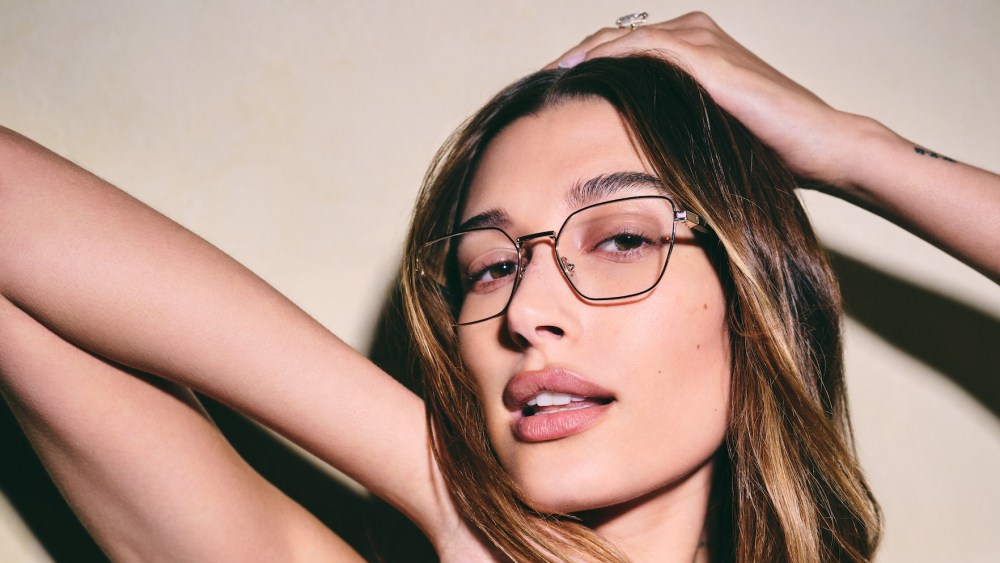
The eyewear industry is continuing to rally amid global uncertainties. Executives for leading firms told WWD at last week’s Vision Expo East — the first in-person edition since the pandemic began — that the overall industry forecast remains positive despite swirling global forces.
“This industry is generally insulated from economic issues,” said Angelo Trocchia, chief executive officer for the Safilo Group.
The near-term future of supply chains, transportation and key retail networks in China are uncertain due to escalating COVID-19 lockdowns there, which has also affected the return of travel retail. But executives said longer-term forecasts about eyewear demand paint a more important picture.
Related Articles
Most executives said they have observed data that predicts a massive global decline in eyesight due to an increased reliance on electronic screens — particularly owing to work-from-home culture. They expect this will create untold demand for optical frames and lenses, particularly those with upgrades like blue light lenses.
You May Also Like
“I have heard stats that myopia will increase in significant numbers, not that we want to wish that on anyone, but it’s a fact and seems to be an issue that could benefit us,” said Steve Wright, president and chief commercial officer for Safilo USA.
“It’s a huge phenomenon from a social perspective, especially if you look at Asia, there is a probable number of people who will be needing this category that is going to be huge,” said Trocchia.
Marchon’s chief marketing officer and senior vice president of brands Thomas Burkhardt added: “Certainly there is data available that looks at how professional video gamers need vision correction in their late 20s — there is a clear cause and effect.”
Marchon president Nicola Zotta said: “What we have seen with people working from home for a couple of years is a raised awareness of needing a proper prescription and blue light lenses.” He projected that the company is on track for “solid single-digit” growth in 2022, a relatively conservative estimate compared to recent times, which Zotta accredited to global circumstances.
Eyewear’s biggest players claim that roiling inflation is having a minimal effect due to the sheer size of their operations, but they are taking the current situation day-by-day.
“Having a bigger size helps companies be more effective in how they reach their distribution network and all of this is very helpful when you have tougher market conditions like inflation or a fluctuation in demand. Not all competitors survive though,” said Marcolin’s newly appointed U.S. president Emanuele Cappellano.
He was more concerned about wider implications. “The transportation supply chain and raw material network is affected by fuel inflation and as a trend we see labor costs growing in North America, Europe and Asia,” he said, adding that Marcolin is monitoring the situation in China and how it relates to the company’s global supply chain.
Burkhardt countered though that, “despite inflation and purse strings being tighter, higher price points are doing well. There is still a spending statement.”
Zotta added: “Region by region we think Europe is in good shape, but has all-in-all been slower than anticipated because of the war. For Asia, we have to see what happens in China,” he said, and like most people noted a slow return of travel retail, which has cut into bottom-line projections. The recent cancellation of a major trade show in China has also had an effect.
“We need to start digesting that we are living in an inflation moment — we have been living the past three to four years with almost no inflation,” said Trocchia.
He is among eyewear’s players to converge for the first time in years at New York City’s Jacob K. Javits Center, at a show that’s updated its concept to be more interactive and cheerful. While some booths doled out baked goods or had smoothie bars installed, the Vision Council also set up a puppy play pen in the middle of the show floor where attendees could play with dogs and ultimately purchase them (to the tune of thousands of dollars) if so inclined.
The lighter mood was in some ways indicative of eyewear’s new prowess in the general accessories landscape. While never given the prominence of say, shoes or handbags, the pandemic’s Zoom culture and wave of practicality has given eyewear a new edge.
“If you’re an investor and see how resilient eyewear is to crisis, how we bounced back in eyewear versus other fashion accessories categories, this is very important. Not only is eyewear a healthy market but it’s growing because there is a need,” said Trocchia.
Zotta said: “Eyewear is the object of significant focus, which is good news. Our customers are satisfied by our service and we are optimistic about the industry, we are solid and there has not been an impact on demand.” Marchon’s parent company VSP recently retooled its branding and will be more front-facing in Marchon’s own promotion.
Said Burkhardt: “VSP has 85 million members and it’s nice for our licensors that we can represent their brand and access such a group of people, new licenses don’t always know all of this.”
The eyewear industry has also benefited from an increased desire for statement-making frames. Current Zoom culture has emboldened consumers to choose frames that express a certain level of individualism, enabling eyewear companies to focus on creative designs that speak more to their individual brand licenses, rather than an overarching trend. While thick acetate frames remain popular, there is simultaneous appetite for bright colors, wire frames and athletic crossover styling.
Zotta said this is a good thing for companies that hold multiple eyewear licenses. “I don’t think you have one single trend emerging. Now there are equally cool trends. If I look at our collection now it’s more diverse than it used to be, you don’t have to switch a brand every 18 months and the brand can stand for something on its own,” he said of eyewear’s new fashion rules.
Fabrizio Uguzzoni, president of wholesale for North America at EssilorLuxottica, added: “In the component of fashion, people are showing more of their face on Zoom. We are making sure all of our brands have their own DNA and have a very close relationship with the brands to interpret trends in a distinct way.”
The company has recently introduced lifestyle crossover designs from Oakley and will release a line of brightly colored Ray-Bans that come outfitted with lanyards that are made with music festival season in mind.
The company continues to maintain an eyewear license with Tiffany & Co. amid its global rebrand under new LVMH Moët Hennessy Louis Vuitton leadership. To Uguzzoni, the relationship between Luxottica and Tiffany “has changed for the good.” Their license with Tiffany has several years left, Uguzzoni said.
“I don’t know if it’s the European component, but the relationship has gotten even better in terms of aligning. Our values around eyewear align with what they are doing, there is now a more fashion-forward approach while maintaining the heritage of the brand,” he said.