A three-day hearing on the United States-Mexico-Canada Agreement (USMCA) began Wednesday, bringing together industry advocates and policy experts who largely argued on behalf of the program’s extension as it comes up for review next year.
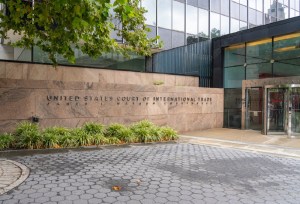
Held by the Office of the United States Trade Representative (USTR), the hearing focused on the future of the trilateral trade agreement that connects the three North American nations and whether it should be renegotiated, renewed or terminated in July of 2026.
Related Stories
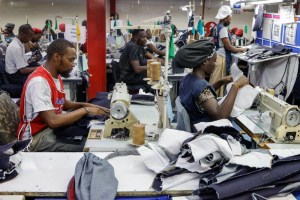
Considered by many within the apparel, textiles and footwear sector to be a crucial commercial lifeline fostering collaboration and shared investment across borders, USMCA has faced challenges throughout 2025 due to the onset of new federal trade policies. Both Mexico and Canada have been targeted heavily in President Donald Trump’s “reciprocal” tariff scheme, with arguments about the countries’ roles in fentanyl smuggling and illegal migration coming to the fore during the spring.
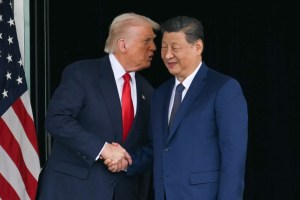
Currently, Mexico faces 25 percent duties on goods that don’t meet USMCA rules of origin, while Canada faces 35 percent duties on goods not covered by the free trade agreement. Despite playing a key role in negotiating the deal during his first term in office, and even calling it “the best and most important trade deal ever made by the USA,” Trump has repeatedly threatened to pull out of the pact as tensions with both nations have percolated.
That’s a scenario that would put U.S. industry at risk of losing access to a burgeoning and “tightly woven” regional value chain, according to the American Apparel and Footwear Association’s vice president of trade and customs policy, Beth Hughes, who testified before the panel on Wednesday.
“The USMCA enables this supply chain, setting clear and predictable ground rules and articulating a long-term incentive structure that powers jobs, investments, and regional trade,” Hughes said, noting that communities within all three countries rely on the trade partnership.
The AAFA trade policy expert spoke on behalf of the industry group’s hundreds of members, saying that duty-free access on USMCA-qualifying goods must be maintained. She also spoke out against additional International Emergency Economic Powers Act (IEEPA) tariffs on Mexico or Canada, saying that avoiding such an outcome “is critical to ensuring the region remains competitive in the global market, particularly relative to Asia.”
Hughes went on to speak to the program’s high utilization and its power to solidify export markets for U.S. goods. In 2024, 53 percent of U.S.-made textile exports were sent to Mexico and Canada, with Mexico being the sixth largest destination for U.S. cotton. Most of these materials and inputs are incorporated into apparel that is sent back to the U.S. market, underscoring the functionality of the agreement in facilitating multiway trade.
Hughes also spoke to the efficacy of current USMCA rules of origin, cautioning the USTR against creating new restrictions. Last year, she said, 85 percent of U.S. apparel imports from Mexico and 92 percent of clothing brought in from Canada qualified for duty-free benefits under the USMCA. “This demonstrates that most goods can meet the rules of origin, providing businesses with clear, predictable, and certain trade conditions that are essential for planning, investment, and long-term competitiveness in the global market,” she said.
The agreement is not perfect, however. It needs a modernized short-supply provision for yarns and fabrics that aren’t available in commercial quantities across the U.S., Mexico or Canada, Hughes said. She also argued on behalf of cumulating USMCA with other free-trade-agreement partners, so inputs from those countries can be used to make products that qualify for USMCA duty-free benefits.
“Aside from our collective professional interest in the USMCA, all of us have a personal one since about four percent of all the fashion we wear comes from the USMCA region,” she said. “A stable, predictable, and zero tariff USMCA not only supports investments and workers in our industry, but it also gives all of us an affordable option as we outfit ourselves and our families.”
In prepared remarks, National Council of Textile Organizations (NCTO) vice president of policy Katherine White said the group, which represents textile mills and apparel companies, also strongly supports an extension of the USMCA—but with caveats.
“The United States, Canada, and Mexico have built a vibrant and prosperous textile and apparel production chain over the 26-year life of the North American Free Trade Agreement (NAFTA) that has continued under the USMCA,” she said. Last year, textile and apparel trade between the U.S., Mexico and Canada totaled $20 billion, up from just $7 billion in 1993 (the year before NAFTA took effect). Mexico and Canada account for $12.3 billion of this trade and 53 percent of total U.S. textile and apparel exports.
White commended the Trump administration for exempting USMCA-qualifying products from the double-digit IEEPA tariffs and urged the government to maintain this exemption. She also spoke to NCTO’s stance on the current yarn-forward rule of origin, which she said “has provided significant benefit to U.S. textile manufacturers by promoting the use of Made in the USA fibers, yarns, and fabrics in the production of apparel and other sewn products.”
Some firms and groups have argued on behalf of exceptions for tough-to-procure fibers, but NCTO believes the yarn-forward rule has been a driver for the creation of a regionally integrated supply chain. The group recognizes that some inputs like acrylic, for example, aren’t readily available in the region, but urges against tariff preference levels (TPLs) for finished fabrics, apparel and other products that can be made by American producers. White said NCTO wants to work with the administration to make targeted reforms to yarn-forward exemptions to protect U.S. competitiveness.
She also spoke to a perceived need to “deepen customs enforcement cooperation” with USMCA partners to deal with customs fraud and other activities that allow bad actors to circumvent U.S. trade laws. Under the trade agreement, White said Canada and Mexico should be required to publicly provide trade data that would help customs identify fraudulent imports.
Some such activity is being perpetuated by China and other Asian countries, NCTO has long argued, with certain illicit products from less-regulated markets making their way into the U.S. via free-trade partners. Now, the group is asking USTR to push Mexico and Canada to crack down on goods made with forced labor with laws like the U.S.’ Uyghur Forced Labor Prevention Act.
American apparel and textile makers were among a multitude of industries represented during the first of the three-day hearings, which will ultimately feature nearly 150 speakers. Wednesday focused chiefly on the apparel and textile sectors, along with pharmaceuticals and agricultural products. The messaging was largely in favor of maintaining the trade agreement.
American Soybean Association secretary Dave Walton said that a failure to extend the USMCA would have terrible consequences for farmers and producers—as would a continuing to clash with the nation’s prominent trade partners. “Our industry would not survive a long tariff battle with our two closest customers,” he said.
Meanwhile, chairwoman of the Arizona-based Fresh Produce Association of the Americas Raquel Espinoza advocated on behalf of the continuation of the free-trade agreement, saying, “Protectionism enriches a few at the expense of American consumers and agricultural exports.”