The U.S. Trade Representative’s (USTR) office is taking China to task for what it calls an “unreasonable” dominance of the global maritime, logistics and shipbuilding sectors that is “severely disadvantaging U.S. companies, workers and the U.S. economy.”
Concluding a nearly nine-month investigation, the USTR determined that China’s practices are therefore “actionable” under U.S. Section 301 trade laws.
Section 301 of the Trade Act of 1974 allows the U.S. to penalize foreign countries that engage in acts that are “unjustifiable” or “unreasonable,” or burden U.S. commerce. Both President-elect Donald Trump and President Joe Biden have leveraged the law to impose tariffs on billions of dollars worth of Chinese goods since 2018.
Related Stories
“China’s targeting of these sectors for dominance is enabled by policies that unfairly depress costs or provide advantages,” the report said. “For example, enterprises in the Chinese shipbuilding supply chain benefit from China’s lack of effective labor rights and the use of forced or compulsory labor. Likewise, China’s non-market excess capacity in inputs, such as steel, advantage downstream Chinese enterprises.”
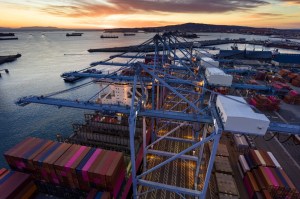
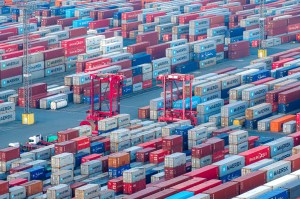
Among the allegations listed, the USTR report said China displaces foreign firms in existing markets and prevents them from thriving in new markets, namely since they cannot compete with the country’s state-owned and -subsidized resources. This, the U.S. alleges, has enabled China to secure a dominant position as a provider of chassis, containers and cranes, as well as an owner and operator of overseas port terminals.
The report accuses China of increasing dependence on the country due to diminished choices, thus elevating potential supply chain risks and reducing supply chain resilience. It also alleges the country leverages “extraordinary control over its economic actors” by mandating them to adhere to state industrial targets.
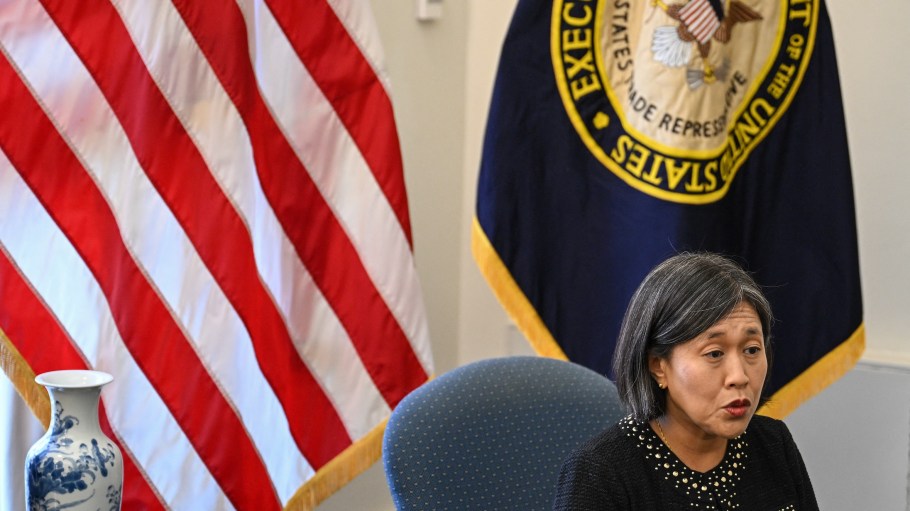
In a statement, Ambassador Katherine Tai illustrated the massive gap in current shipbuilding activity between the two countries, highlighting that the U.S. ranks 19th in the world in commercial shipbuilding.
While the U.S. builds less than five ships each year, China is building more than 1,700 ships, she said. Compare that to 1975, when the U.S. ranked No. 1 and built more than 70 ships per year.
“Beijing’s targeted dominance of these sectors undermines fair, market-oriented competition, increases economic security risks and is the greatest barrier to revitalization of U.S. industries, as well as the communities that rely on them,” Ambassador Tai said in a statement. “These findings under Section 301 set the stage for urgent action to invest in America and strengthen our supply chains.”
China’s Ministry of Commerce said Friday it was “strongly dissatisfied and firmly opposes” the probe, adding that its conclusions were “full of false accusations against China.”
The findings of the 170-page probe did not include a specific recommendation of penalties against Beijing, but it opens the door for more Section 301 penalties to be enacted by President-elect Trump, who takes office on Monday.
Trump, who is expected to levy additional tariffs on Chinese goods upon his return to the presidency, spoke with Chinese President Xi Jinping early Friday. “Balancing trade” was one of the topics in their discussion, per Trump’s Truth Social account.
Arnav Rao, transportation policy analyst at Open Markets Institute, a think tank focused on antitrust law and competition policy, said the probe’s findings pave the way for remedies like port fees for Chinese vessels, that will counter the effects of Chinese overcapacity.
Rao called for “bold action to address the decades-long slump in U.S. maritime capacity,” saying the country can ill-afford to continue its “laissez-faire approach to maritime policy.”
The U.S. Department of Defense already appears to be prepping for heightened trade tensions, slapping a military designation on Chinese container shipping giant Cosco Shipping, as well as air cargo company China Cargo Airlines and two of the country’s chief shipbuilders.
The probe was launched at the request of the United Steelworkers and four other U.S. unions, who alleged that that China gave its domestic maritime, logistics and shipbuilding sectors unfair advantages by mandating the purchase and use of Chinese ships by Chinese state-owned shipping enterprises and state-owned oil companies.
“China has warped the global market to its advantage for decades,” Alliance for American Manufacturing president Scott Paul said in a statement Thursday. “These actions have undermined the opportunity for America’s shipyards and factories to compete, harming the hardworking men and women who keep our country strong.”
Paul testified before the House Select Committee on the Chinese Communist Party last June, recommending that the U.S. should curb the country’s practices by reforming de minimis policy, revoking its permanent normal trade relations status, vigorously enforcing the Uyghur Forced Labor Prevention Act, screening outbound investment of U.S. companies in China and increasing oversight of Chinese investment in the U.S.
As concerns over the shipbuilding gap emerge in Washington, four lawmakers introduced bipartisan legislation last month to bolster the U.S. shipbuilding industry, reduce reliance on foreign vessels and ultimately place more China-to-U.S. cargo on American vessels.
Although the SHIPS for America Act is primarily a national security and maritime policy bill, passing of the legislation in Congress would impact supply chains. That bill would require that within 15 years, 10 percent of all cargo imported into the U.S. from China must be imported on U.S.-flagged vessels that are also and built in the U.S. and staffed by American crews.