Days ahead of a meeting between its leader, President Recep Tayyip Erdogan, and President Donald Trump, Turkey has removed tariffs on some American-made automobiles, agricultural products, chemicals, fuels and alcoholic beverages.
Erdogan, who arrived in the United States on Sunday, addressed United Nations General Assembly on Tuesday, and will fly to Washington for a meeting with Trump on Thursday.
The tariffs in question were put in place in 2018, during Trump’s first term in office, as retaliation for duties levied on Turkey. Now, it appears that the foreign head of state is extending an olive branch ahead of a consequential meeting focused significantly on trade issues. Turkey currently faces tariffs of 15 percent on most products, as well as 50 percent duties on steel, as a part of Trump’s tariff “reciprocal” tariff scheme.
Related Stories
“During our meeting, we will discuss issues aimed at strengthening our bilateral cooperation, with a focus on trade, investment and the defense industry. Regional issues will top our agenda,” Erdogan said of the scheduled White House meeting, according to Turkish state-run news outlet Anadolu Agency.
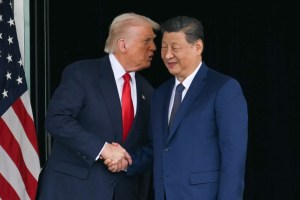
He may have a shot at more favorable terms, given his longstanding relationship with Trump, which dates back to the latter’s first term. Though they have disagreed over certain issues—Turkey was ousted from the Department of Defense’s F-35 fighter jet program in 2019 after purchasing Russian missiles—there is a well-documented mutual respect between the two leaders. Trump has referred to Erdogan as a “friend,” and the Turkish president expressed a desire to “reset” the trade relationship following the 2024 election.
Turkey also has a growing, but basically balanced, trade relationship with the U.S.—an advantage during a time when Trump is targeting American trade partners with higher tariffs over pervasive trade deficits. In 2024, U.S. total goods trade with Turkey totaled $32.1 billion, with American exports growing 5.6 percent from the year prior to $15.4 billion. Turkish exports to the U.S. market totaled $16.7 billion, up 8.6 percent from 2023.
Meanwhile, Kenya is hoping to finalize a trade agreement with the U.S. by the end of the year, its trade minister, Lee Kinyanjui, told Reuters. The country currently benefits from Africa Growth and Opportunity Act (AGOA) privileges, at least until the program lapses on Sept. 30, underscoring the urgency of a trade truce.
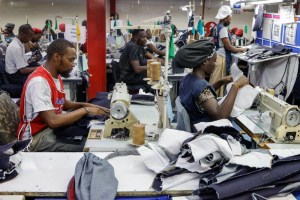
The sub-Saharan African nation’s reciprocal tariff rate is currently set at 10 percent—the lowest rate available to U.S. trade partners under Trump’s tariff regime. However, an end to the duty-free trade preference program will have significant consequences for Kenya’s burgeoning apparel and textile manufacturing sector, which is responsible for about 300,000 jobs supported directly by AGOA trade.
Kinyanjui said a “sudden end” to AGOA would cause upheaval, adding that Kenya’s government hopes for an extension in order to protect workers’ livelihoods. “If there’s no clear transition, there would be disruption,” he added, according to Reuters.
The trade minister met with U.S. Trade Representative (USTR) Ambassador Jamieson Greer in August, and the two mutually agreed to further talks for a bilateral trade deal, but no further discussions have taken place.
Switzerland, which has been hit with a steep duty rate of 39 percent, is attempting to sweeten a potential deal with the U.S. by offering to buy more weapons and energy amid negotiations with American trade officials.
According to the Financial Times, larger purchases of enriched uranium and liquefied natural gas are on the table. Swiss economy minister Guy Parmelin has been tasked with interfacing with U.S. Commerce Secretary Howard Lutnick on the issue following a lackluster call between Swiss President Karin Keller-Sutter and Trump.
The leader reportedly pressed for a lower tariff rate, but was rebuffed. Traveling to Washington to meet with Trump in person shortly after yielded similarly disappointing results, with Trump holding firm on his established tariff rate and attributing his intractability to the multibillion-dollar trade imbalance—$38.3 billion, to be exact—between the U.S. and Switzerland.
Chief executive of the Swiss-American Chamber of Commerce Rahul Sahgal said the two sides have seen “some good progress lately,” but more talks are needed to move the ball forward.
“Negotiations are still ongoing, but I would not be hopeful for an imminent deal,” he added.
India, which faces 50 percent tariffs as of last month, is vying for relief as its U.S.-bound exports plummet. The country’s apparel and textile sector stands to see major contraction due to the sky-high tariffs, which the Clothing Manufacturers Association of India (CMAI) said will cause product prices to increase by up to 35 percent.
Secretary of State Marco Rubio met with Indian External Affairs Minister Subrahmanyam Jaishankar on the sidelines of the United Nations General Assembly on Monday, and his office’s comments underscored a desire on the part of both nations to work toward a symbiotic agreement.
“Secretary Rubio, reiterating that India is a relationship of critical importance to the United States, expressed his appreciation for the Indian government’s continued engagement on a number of issues including trade, defense, energy, pharmaceuticals, critical minerals, and other items related to the bilateral relationship,” the readout said.
“Secretary Rubio and External Affairs Minister Jaishankar agreed the United States and India will continue working together to promote a free and open Indo-Pacific region, including through the Quad.”
In recent weeks, however, Trump has been pressing U.S. allies like the European Union and the United Kingdom to up their own tariffs on India due to its close economic ties to Russia, which provides the country with much of its oil. Trump views India’s purchases as funding for the assault on Ukraine, for which he is eager to facilitate an end.
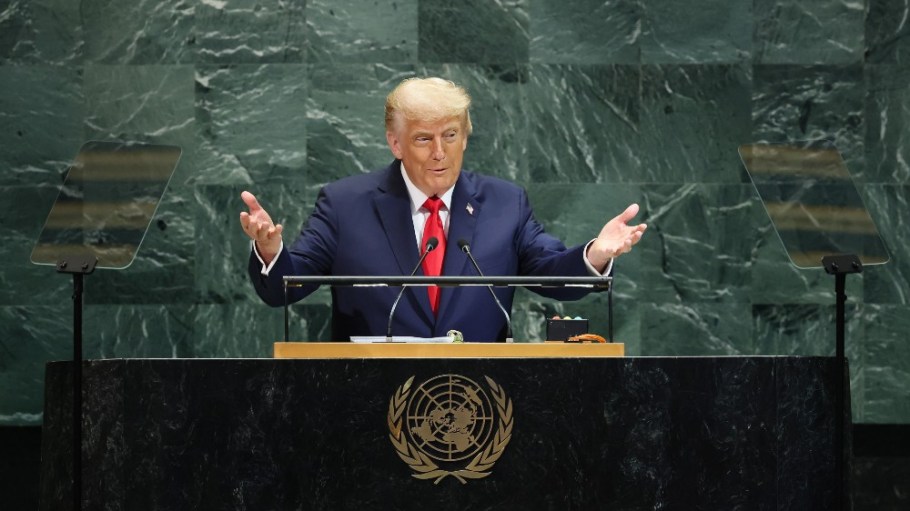
During his own address Tuesday at the UN gathering, the president renewed direct threats against Russia and his request to the EU, saying duties and sanctions are on the way unless it complies.
“If Russia does not end the war, the United States will impose very strict tariffs which would end the war very quickly, but the Europeans have to adopt them as well,” Trump said.
The event was not an occasion for diplomacy, at least for the American president, who lambasted the other heads of state present over issues including immigration and climate change. “Your countries are going to hell,” he said.