The U.S. trade deficit took a significant plunge in April after President Donald Trump announced aggressive, sweeping tariffs on countries across the globe.
U.S. Commerce Department data showed that the trade gap between America and its trading partners narrowed drastically as imports into the U.S. fell by 16 percent. The trade deficit rang in at $61 billion in April—less than half of the $140 billion seen just one month earlier.
At the same time, America’s exports grew. April saw the U.S. export $289.4 billion in products and services, $8.3 billion more than the volume seen in March. Meanwhile, April imports amounted to $351 billion, $68.4 billion less than the previous month, when many businesses frontloaded inventory in an effort to beat the tariff deadline.
Related Stories
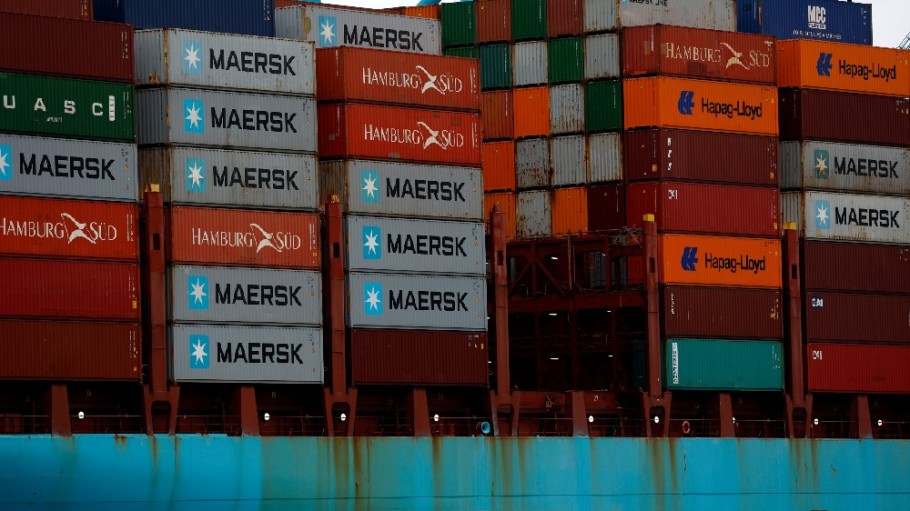
Imports of consumer goods decreased $33 billion in April after the shipping boom in March. Apparel bookings in particular took a precipitous, 60-percent tumble in anticipation of the tariff fallout.
Not surprisingly, American imports from Canada and China took particularly hard hits amid massive trade tensions spurred by Trump’s tariff threats. Canadian imports fell 15.7 percent to their lowest levels since 2021, compounding a drop of over 9 percent in March. Meanwhile, goods coming into the country from China fell 21 percent to their lowest levels since 2020.
According to the Bureau of Economic analysis, the average goods and services deficit decreased $22.9 billion to $107.3 billion for the three months ending in April—basically, Trump’s first 90 days in office. Average exports increased $5.6 billion to $283 billion in April, while average imports decreased $17.2 billion to $390.4 billion.
But while the deficit has contracted significantly in 2025, it’s actually grown quite a bit from the same period the year prior. Year-to-date, the deficit in goods and services grew $179.3 billion—a whopping 65.7 percent—from the same period in 2024. Over the course of the past year, exports ticked up 5.5 percent, or $58.4 billion, but imports also increased 17.8 percent, or $237.8 billion.
Trump’s trade policy, which has hinged on the broad application of double-to-triple-digit duties, was conceived as a means of dealing with the trade deficit and rebalancing trade with partners across the world. On April 2, which the president termed “Liberation Day,” Trump announced reciprocal duties on about 90 nations, including the country’s biggest trading partners and allies.
Soon after, those duties were deferred for a period of three months, and they’re slated to resume on July 9 barring changes that could result from ongoing negotiations with foreign trade officials. The White House has said in recent weeks that it has dozens of talks in process with nations eager to reach deals with the U.S. through the mutual lowering of trade barriers, though only a single provisional agreement with the United Kingdom has been formally signed.
Last week, a New York Court of International Trade (CIT) ruled that many of the president’s duties, levied under the International Emergency Economic Powers Act (IEEPA), were invalid, and it gave the administration 10 days to unwind the tariff actions. However, a Washington, D.C. appeals court put a stay on that ruling with the intention of reviewing the case, which was brought by several U.S. businesses and more than a dozen state attorneys general. Therefore, the tariff regime will be allowed to proceed as planned.
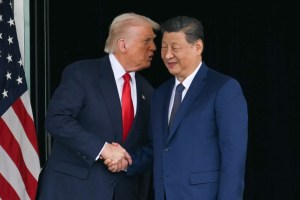
On Thursday, Trump indicated that he had spoken to Chinese President Xi Jinping following claims last week that the country had violated its temporary trade truce with the U.S. He wrote on Truth Social that the two discussed the “intricacies of our recently made, and agreed to, Trade Deal,” saying that the discussion resulted in a “very positive conclusion” regarding the future of rare earth mineral trade. Trump said further negotiations would be completed “shortly” by Treasury Secretary Scott Bessent, Commerce Secretary Howard Lutnick, and U.S. Trade Representative Ambassador Jamieson Greer.