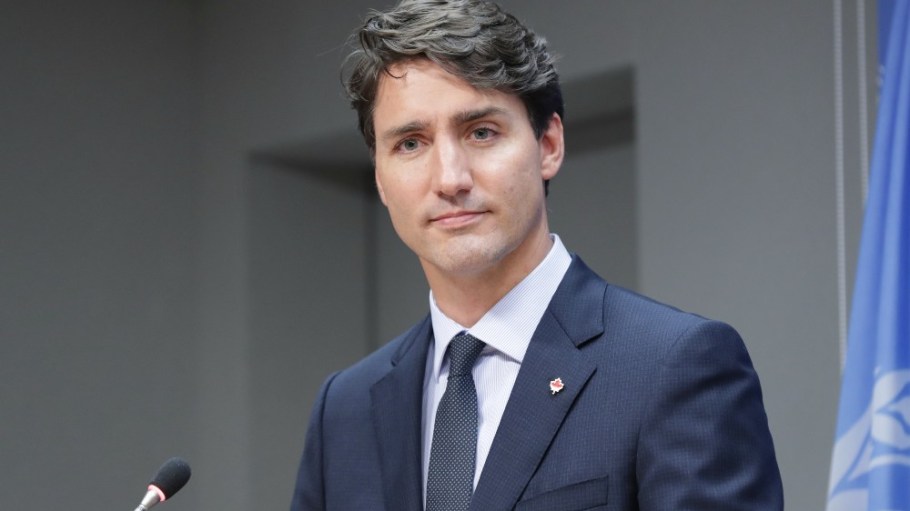
Canada’s leader may be on his way out, but he’s not backing down from President-elect Donald Trump’s tariff threats.
Prime Minister Justin Trudeau, who announced his resignation last week, said Canada is prepared to respond with punitive duties of its own if the incoming American Commander in Chief pulls the trigger on his 25-percent tariff scheme.
According to Trudeau, Canadian officials are drawing up a roster of dozens of U.S.-made products—from steel items to furniture, ceramics, alcohol, orange juice and pet food—that could face steep duty hikes if Trump makes good on his threat.
Related Stories
Worse still, Canada is prepared to tax energy exports to the U.S., which power states like Wisconsin, Michigan, Minnesota and New York. Alberta and other provinces throughout Canada export some 4.3 million barrels of oil across the border each day.
The embattled Trudeau hasn’t taken Trump’s tariff threats lying down, but some other Canadian leaders from the country’s Conservative party—and even former members of the Prime Minister’s own cabinet—have criticized his response as tepid and toothless in the face of Trump’s intimidation.
With his approval ratings already in the doldrums, the hits against his leadership capacity may have spelled doom for Trudeau, who told Canadians he would step down after nearly a decade. The ruling Liberal party is expected to announce his replacement on March 9.
But as his time in office winds down, Trudeau is holding firm against foreign threats, even from allies.
“The 51st state—that’s not going to happen,” he told MSNBC last week, referring to the U.S. president-elect’s repeated overtures about annexing Canada. Trump’s bizarre and dubious claims to the nation’s Northern neighbor are merely a distraction, Trudeau continued. “[P]eople are talking about that, as opposed to talking about what impact 25 percent tariffs (has) on steel and aluminum coming into the United States. No American wants to pay 25 percent more for electricity or oil and gas coming from Canada. This is something people need to take seriously.”
Should Trump implement duties in the early days of his second act, Canada won’t be unprepared to respond. In fact, there’s a precedent for such a trade skirmish.
“You may remember when Donald Trump put tariffs on Canadian steel and aluminum, which did nothing but raise the cost of steel and aluminum for American consumers,” he said, referring to the former president’s 2018 decision to levy duties against Canada as well as the EU.
At the time, Canada hit back by slapping tariffs on more than 200 American-made products, matching the $12.6-billion value of the duties the White House placed on Canadian goods.
“It ended up causing a lot of loss in American businesses for whom Canada is their number one export partner. We are the number one export partner of about 35 different U.S. states, and anything that thickens the border between us ends up costing American citizens and American jobs. That’s not what President Trump got elected do,” he added.
“I know he got elected to try and make life easier for all Americans, to support American workers. These are things that are going to hurt them,” Trudeau warned.
The truth is in the numbers—and they back up the outgoing leader’s claims. U.S. Commerce Department data from last week shows that Canada is the U.S.’ biggest purchasing partner, having taken in about $320 billion in American-made products during the first 11 months of 2024. In November of last year, shipments directly from the U.S. into Canada were worth $349.7 million.
As Trump prepares to take office in less than one week, Canada and Mexico—which have both been subjected to his relentless outlash over issues like mass migration and fentanyl smuggling for months—have demonstrated their tactical value as U.S. allies, responding to catastrophic fires in Los Angeles, Calif. and surrounding areas that began last Tuesday.
Mexico on Saturday sent 73 firefighters to the front lines of the Eaton fire, joining more than 10,000 U.S. personnel laboring to contain its rapid spread across 14,000 acres in Altadena and Pasadena. “We are a country of generosity and solidarity,” Mexican President Claudia Sheinbaum tweeted.
Throughout the weekend, Trudeau’s government deployed 60 firefighters along with multiple aerial water bombers to the raging SoCal blazes, which helped stop the Palisades fire’s advancement into more heavily populated L.A. neighborhoods and suburbs. After speaking with California Governor Gavin Newsom, Trudeau wrote on X, “We both know that Canada and the United States are more than just neighbours [sic]. We’re friends—especially when times get tough.”