Citing its continued purchasing of Russian oil exports, President Donald Trump has made good on his threat to levy additional duties on India, bringing the country’s overall tariff rate to 50 percent.
The White House on Wednesday released an executive order that pointed to the “unusual and extraordinary threat” that Russia poses to the United States as a result of the ongoing conflict in Ukraine. “I determine that it is necessary and appropriate to impose an additional ad valorem duty on imports of articles of India, which is directly or indirectly importing Russian Federation oil,” Trump wrote.
Related Stories
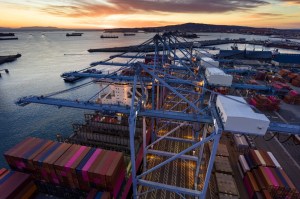
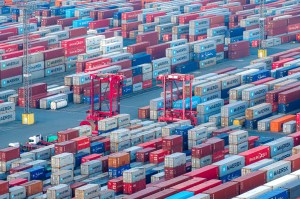
The new ad valorem rate of 25 percent will be stacked upon existing duties, including the 25 percent to be levied upon the country’s exports on Thursday under Trump’s worldwide “reciprocal” tariffs. The tariffs announced Wednesday will go into effect in 21 days. Goods that have already been loaded onto vessels bound for the U.S. before that date that arrive before Sept. 17 will not be subject to the new duties.
Trump cited Biden-era directive from 2022 as justification for the action. Executive Order 14066 declared a state of emergency and imposed trade and financial sanctions on Russia for its aggression against Ukraine and the inherent threat posed to U.S. interests. Trump extended the executive order for one year in April.
About 18 percent of India’s exports are bound for the U.S., representing 2 percent of the country’s gross domestic product (GDP). Global investment bank UBS estimated that $8 billion worth of exports will be impacted greatly by the duty hike, including apparel, textiles, chemicals and jewelry.
U.S. trade with India has been on an upswing in recent years, with data from the Office of the U.S. Trade Representative (USTR) showing bilateral trade amounted to $212.3 billion in 2024, up 8.3 percent ($16.3 billion) from the year prior. Total goods trade amounted to $128.9 billion in 2024, with India’s exports to the U.S. accounting for $87.3 billion (up 4.5 percent from 2023). America’s goods trade deficit with India increased by 5.9 percent last year, reaching $45.8 billion.
There are certain sectors that will likely be saved from the burn of new tariffs, including pharmaceuticals, semiconductors and derived electronic products, like those manufactured by Apple in large volumes at its India-based production campuses. The country faces 50-percent duties on steel and aluminum through a separate, global executive order impacting all export markets.
India’s Ministry of Foreign Affairs wasted no time in responding to the president’s announcement, with an official spokesperson writing, “The United States has in recent days targeted India’s oil imports from Russia. We have already made clear our position on these issues, including the fact that our imports are based on market factors and done with the overall objective of ensuring the energy security of 1.4 billion people of India.”
“It is therefore extremely unfortunate that the U.S. should choose to impose additional tariffs on India for actions that several other countries are also taking in their own national interest,” the statement said. “We reiterate that these actions are unfair, unjustified and unreasonable. India will take all actions necessary to protect its national interests.”
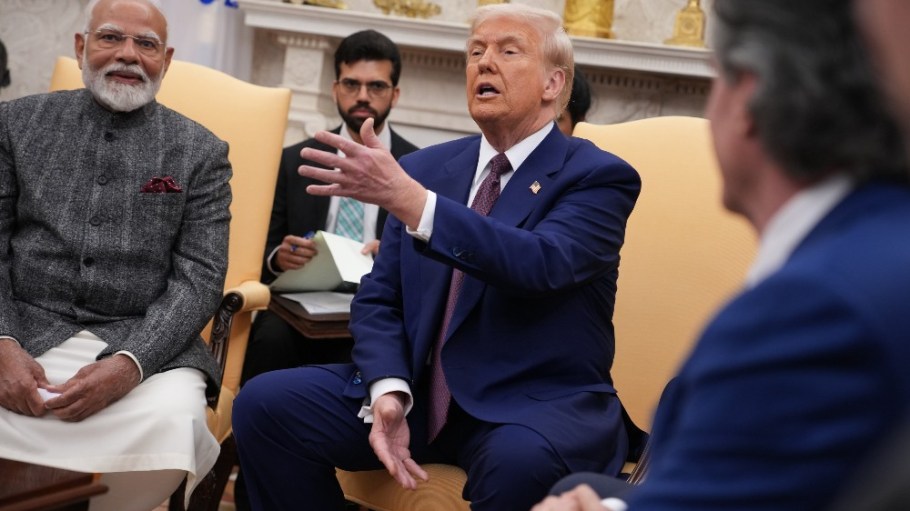
As tensions with the U.S. heat up again, Indian Prime Minister Narendra Modi is reportedly planning an Aug. 31 sojourn to meet with Chinese President Xi Jinping for the first visit in seven years. Modi will attend a summit hosted by the Shanghai Cooperation Organisation summit, a 24-year-old international and economic security organization founded by Russia and China, along with Kazakhstan, Kyrgyzstan, Tajikistan and Uzbekistan. India and Pakistan joined as full-time members in 2017.
India and China’s relationship appears to be growing cozier despite a longstanding territory dispute over their shared border in the Ladakh region near the Himalayas. A major confrontation took place in June 2020, and a clash occurred again in December 2022.
The two nations have taken steps toward compromise in recent years as their economies become ever more intertwined. China is India’s second largest trading partner, accounting for $127.7 billion in bilateral trade last year. Both are founding members of the BRICS Alliance, which includes Russia and Brazil—two countries that have recently been at the center of the Trump administration’s crosshairs.
Just hours after targeting India for its trade relationship with Russia, the president announced that his special envoy, Steve Witkoff, “just had a highly productive meeting with Russian President Vladimir Putin.”
“Great progress was made! Afterwards, I updated some of our European Allies. Everyone agrees this War must come to a close, and we will work towards that in the days and weeks to come,” Trump Truthed.