President Donald Trump’s tariff regime came under legal scrutiny on Thursday, just hours ahead of the deployment of sweeping global duties on hundreds of billions of dollars’ worth of imports.
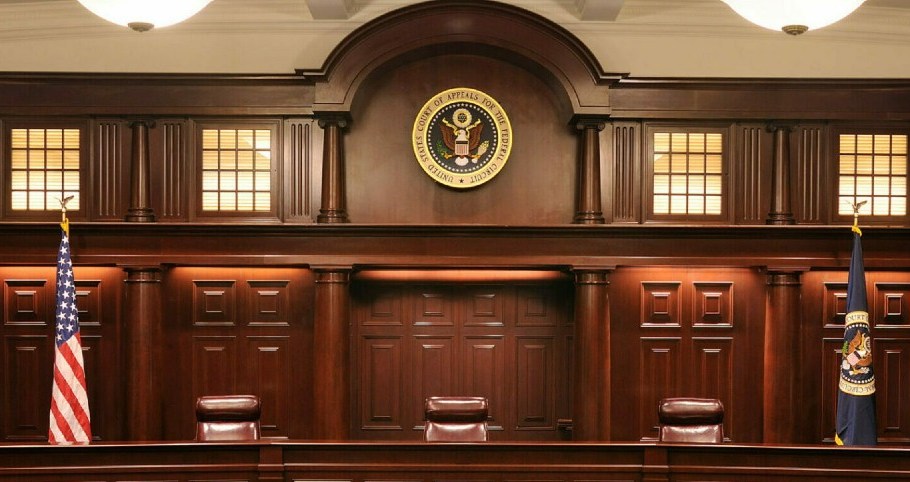
A U.S. Court of Appeals for the Federal Circuit in Washington on Thursday heard arguments regarding the president’s use of the International Emergency Economic Powers Act (IEEPA), specifically related to whether Trump overstepped his authority in leveraging the 1977 trade law to impose wide-ranging duties on dozens of U.S. trade partners.
Related Stories
Trump’s “reciprocal” tariffs represent unprecedented application of the law, which allows the president to regulate international commerce in the face of a national emergency characterized by the presence of an “unusual and extraordinary threat.”
The judges espoused skepticism over the administration’s use of IEEPA for the purpose of rebalancing trade while hearing the case, which was brought by 12 U.S. state attorneys general and five small businesses to the Court of International Trade (CIT) in New York in May.
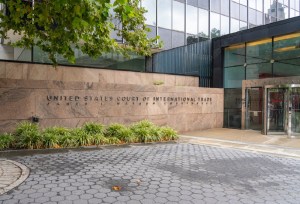
After three of the CIT’s presidentially appointed judges ruled to block Trump’s agenda, saying he indeed exceeded his authority by leveraging IEEPA for this purpose, the administration moved swiftly to appeal the decision. The Court of Appeals granted a stay on that decision on May 29, allowing the tariff agenda to move forward while it reviewed the case.
Thursday saw lawyers for the president and the plaintiffs argue for and against the IEEPA tariffs, with the central questions from the panel of 11 judges centering on the scope of IEEPA, the authorities it bestows upon the Commander in Chief, and the characterization of longstanding trade imbalances as threats to national security.
Brett Shumate, an assistant attorney general at the Justice Department, argued that the trade deficit—which stood at $86 billion in June, down 11 percent from the $96.4 billion seen in May—had “reached a tipping point” prior to the president’s actions on trade. Tariffs give him “leverage to address the emergency,” he said.
Judge Raymond Chen asked Shumate, “Can the trade deficit be an extraordinary and unusual threat when we have had trade deficits for decades?”
“Reciprocal tariffs directly deal with the emergency of the trade deficit by imposing tariffs to reduce imports and directly…address the trade deficit,” Shumate responded.
“IEEPA doesn’t mention the word tariffs anywhere,” Judge Jimmie Reyna added, raising the concern that the trade law doesn’t expressly give the president authority to impose duties as a means of regulating international commerce.
Section 1702 of IEEPA, where the “unusual and extraordinary threat” language is located and the scope of remedial actions laid out, says that under the law, the president can intervene in or limit foreign exchange transactions, transfers of credit or payments involving foreign interests, import and export of currency and securities, and transactions involving property with foreign interests.
Several judges raised concerns about the administration’s contention that IEEPA enables the president to declare an emergency without review by the courts, effectively upending historical procedures and removing the teeth from existing trade laws.
Shumate referred to tariffs imposed by Richard Nixon under the Trading with the Enemy Act (TWEA) in 1971, when he enacted a 10-percent duty on an importer called Yoshida International due to what the then president referred to as a balance-of-payments crisis. The company challenged the action, saying Nixon overstepped his authority, but it was upheld.
IEEPA six years later replaced TWEA’s peacetime provisions. The judges on Thursday said Nixon’s tariffs prevailed because they applied to a specific problem and were temporary in nature, with a stated expiration date, unlike the current IEEPA tariffs.
Neal Katyal, a lawyer for the business plaintiffs, said Shumate’s argument against the CIT’s decision centers on an incorrect belief that “our federal courts are powerless, that the President can do whatever he wants, whenever he wants, for as long as he wants, so long as he declares an emergency.”
Katyal called Trump’s IEEPA tariffs “a breathtaking taking claim to power that no president has asserted in 200 years, and the consequences are staggering.” He said that should a review of Section 1702 be conducted, the administration “would lose every day of the week.”
“IEEPA has a freestanding requirement of a clear of an unusual and extraordinary threat in the statute,” Katyal said, noting that the president has said the trade deficit—the central tenet of his argument for IEEPA tariffs—has persisted for decades. “He’s coming in saying, ‘Well, I can declare a…slow boil kind of emergency,’ or something like that. That isn’t the point of what IEEPA is about.”
While the court evinced doubt about Trump’s authority to utilize IEEPA to impose tariffs, multiple judges expressed openness to a view that America’s trade deficit with the rest of the world could pose genuine threats, including to the health of U.S. manufacturing and self-sufficiency when it comes to military readiness.
Ahead of the hearing, Trump Truthed thanks to his legal team for representing him in the matter. “To all of my great lawyers who have fought so hard to save our Country, good luck in America’s big case today. If our Country was not able to protect itself by using TARIFFS AGAINST TARIFFS, WE WOULD BE ‘DEAD,’ WITH NO CHANCE OF SURVIVAL OR SUCCESS,” he wrote.
In a separate post, the president said tariffs had been used against the U.S. for decades. “Now the tide has completely turned, and America has successfully countered this onslaught of Tariffs used against it.”
The Court of Appeals is expected to reach a decision on the issue by early August, and should judges rule against the president, the administration is likely to appeal the decision again, at which point it will be volleyed to the Supreme Court for a final ruling.