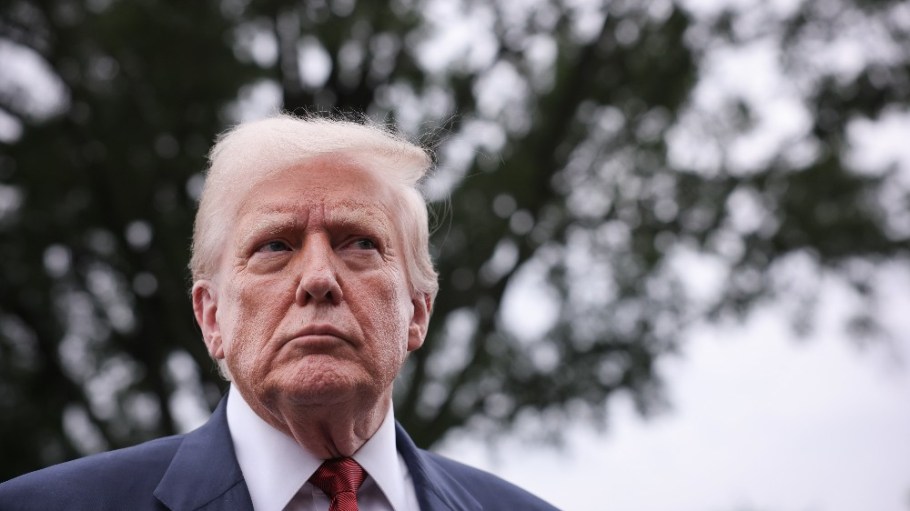
President Donald Trump’s administration continues to ramp up its efforts surrounding its tariff and trade moves.
Despite legal uncertainty about the president’s authority on tariffs, the Department of Justice (DoJ) announced late last week that it has formed a cross-agency Trade Fraud Task Force aimed at quelling tariff dodging and fraud.
The task force is set to include the DoJ, the Department of Homeland Security (DHS), Customs and Border Protection (CBP) and Immigration and Customs Enforcement (ICE). The announcement said the task force will target “any parties who seek to evade tariffs and other duties, as well as smugglers who seek to import prohibited goods into the American economy.”
Related Stories
That mandate is influenced by Trump’s America First Trade Policy. The DoJ said it will use the Tariff Act of 1930, the False Claims Act (FCA) and prosecutions, penalties and seizures as needed to tackle issues of fraud and crime.
The Trump administration has been bullish on its interest in using the FCA as a measure to enforce the collection of applicable duties from importers; the FCA, in effect, holds individuals or entities liable for knowingly submitting false or fraudulent claims to the government. The law has not always held such weight in the trade world, but law firms have tracked closely the Trump administration’s repeated interest in using it for duty collection. For instance,
Nadia Patel, Jackson David Toof and Mario Torrico, attorneys at law firm ArentFox Schiff said in a blog post earlier this year that tariff evasions that use undervaluation of imports, misclassification of import type or misrepresentation of country of origin could be scrutinized under the FCA.
“Customs fraud has traditionally been a less common area of FCA enforcement but is likely to grow significantly over the next year, particularly in light of President Trump’s new tariffs on imports,” Patel, Toof and Torrico wrote at the time.
The Trump administration seems to be leveraging the FCA for exactly that. Penalties are likely to include multiplied fines, but some importers are still struggling to wrap their heads around what exactly qualifies as a transshipped good, and how tariffs are likely to impact their supply chains.
In its task force announcement, the DoJ said people and entities committing trade fraud negatively impact American manufacturers, businesses and consumers and noted that trade fraud “deprives the government of vital revenue used to reinvest in America.”
Matthew Galeotti, acting assistant attorney general of the DoJ’s Criminal Division, said Trump’s tariffs—and the subsequent enforcement of the duty rates—could change that.
“For years, nefarious importers and their co-conspirators have put law-abiding businesses in the United States at a competitive disadvantage—and cheated the American public of funds—by brazenly committing trade fraud. Trade fraud is not a victimless crime, and it won’t be tolerated,” Galeotti said, noting that his division is “committed to using every available tool” to apprehend bad actors. The attorney announced earlier this year that the department had expanded the incentives for whistleblowers who reported a slew of crimes, including customs fraud and tariff evasion.
Trump’s administration has heralded tariffs as a strategy for revitalizing American manufacturing, though the Institute for Supply Chain Management’s Purchasing Managers’ Index showed in August that American manufacturing continues to contract, albeit at a slower rate than in July. Brett Shumate, assistant attorney of the DoJ’s Civil Division, said the formation of the task force is only another step toward protecting the American economy and noted that the agency is confident this approach, paired with others will provide a boost to the U.S.
“The President’s America First Trade Policy supports American manufacturing by ending unfair trade practices,” Shumate said in a statement. “The Civil Division will coordinate with law enforcement partners to bring to justice any parties attempting to harm American workers through evasion of tariffs and other duties.”