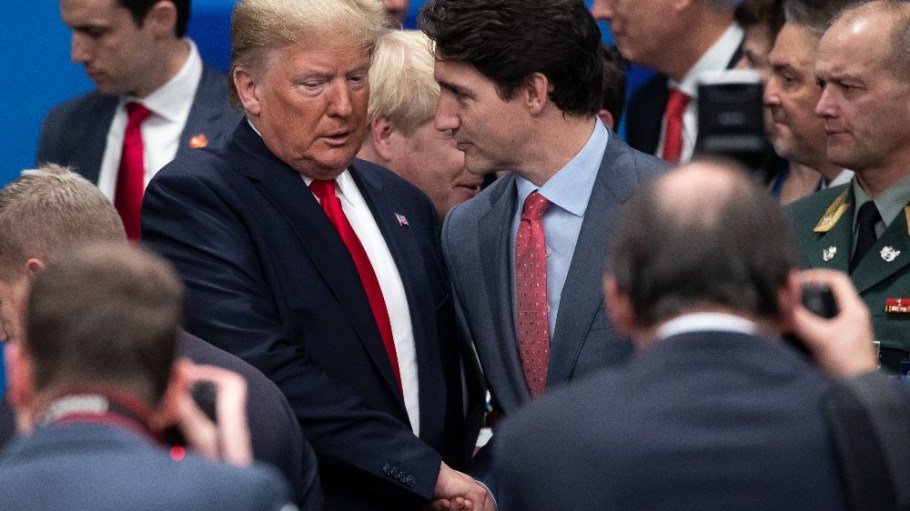
Recent conversations between President-elect Donald Trump and Canadian Prime Minister Justin Trudeau haven’t managed to squash the tariff tensions, as it turns out.
The Canadian leader this week vowed to retaliate with duties of his own if the U.S. carries out its plan to hit Canadian and Mexican imports with new duties of up to 25 percent. “We will, of course, as we did eight years ago, respond to unfair tariffs in a number of ways, and we’re still looking at the right ways to respond,” Trudeau said at an event held by the Halifax Chamber of Commerce in Nova Scotia on Monday.
Related Stories
“Trump got elected on a commitment to make life better and more affordable for Americans, and I think people south of the border are beginning to wake up to the real reality that tariffs on everything from Canada would make life a lot more expensive,” the Prime Minister added.
Following Trump’s Thanksgiving-week threats, Trudeau spoke with the incoming president by phone and jetted off soon after for an in-person meeting at Mar-a-Lago. During that dinner, Trudeau reportedly conveyed a message that Canada shouldn’t face the same sanctions or penalties as Mexico, which Trump has accused of facilitating a wave of “Crime and Drugs” across the border.
Trump characterized the talk as “very productive,” but he wasted no time in taking to Truth Social to troll Trudeau following the leader’s Monday statements. He referred to him as “Governor Justin Trudeau of the Great State of Canada”—a reference to comments Trump made at the dinner, wherein he suggested Canada should become the 51st U.S. state.
“I look forward to seeing the Governor again soon so that we may continue our in depth talks on Tariffs and Trade, the results of which will be truly spectacular for all!” Trump wrote.
Trump’s liberal application of tariff threats is rankling friends and foes alike.
Not surprisingly, Chinese President Xi Jinping continues to rail against duties as his country’s economy sputters. November data showed China’s exports rose just 6.7 percent in U.S. dollars from the same period last year, missing the projected 8.5-percent increase. Last month’s figures also represent a marked decline from the 12.7-percent upswing seen in October.
“Tariff wars, trade wars, and technology wars go against historical trends and economic rules, and there will be no winners,” Xi said at a Monday meeting in Beijing with several financial institutions.
“China is willing to maintain dialogue with the U.S. government, expand cooperation, manage differences and promote the development of China-U.S. relations in a stable, healthy and sustainable direction,” he said, according to state news outlet CCTV.
China’s imports also saw an unexpected 3.9-percent decline in November from the year-ago period—a reflection of cooling consumer demand.
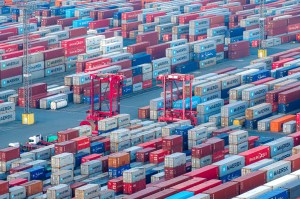
Notably, year-over-year exports from China to the U.S. grew 8 percent in November, and exports to Europe rose by more than 7 percent. That upward trend isn’t likely to last, though. Import cargo making its way through U.S. ports has been ramping up, and is expected to see a significant surge in the coming weeks as shippers attempt to bring their goods in before any prospective tariffs take effect.
But following Trump’s swearing-in on Jan. 20, all bets are off for China-based exporters. The country could retaliate, however, by further restricting U.S. access to critical minerals used in the creation of semiconductors and other technology. The country has already diversified its sourcing base for certain agricultural products, like sorghum, which are cultivated by U.S. farmers, and it could cut off that line of business, too.
In the final days of his presidency, Joe Biden is using his platform to sound off on the viability of Trump’s all-tariff policy, which the president-elect has said will offset the cost of tax cuts, primarily for the wealthy.
“By all accounts, the incoming administration is determined to return the country to another round of trickle-down economics,” Biden said during a speech at Washington, D.C.-based think tank the Brookings Institute on Tuesday. “On top of that, he seems determined to impose steep, universal tariffs on all important goods brought into this country on the mistaken belief that foreign countries will bear the cost of those tariffs, rather than the American consumer.”
Treasury Secretary Janet Yellen, too, worried aloud that the impact of Trump’s proposed tariffs would be hardest felt by the American public.
At the Wall Street Journal’s CEO Council Summit on Tuesday, Yellen said implementing across-the-board tariffs could “raise prices significantly for American consumers and create cost pressures on firms.”
“This is a strategy I worry could derail the progress that we’ve made on inflation, and have adverse consequences on growth,” she added.