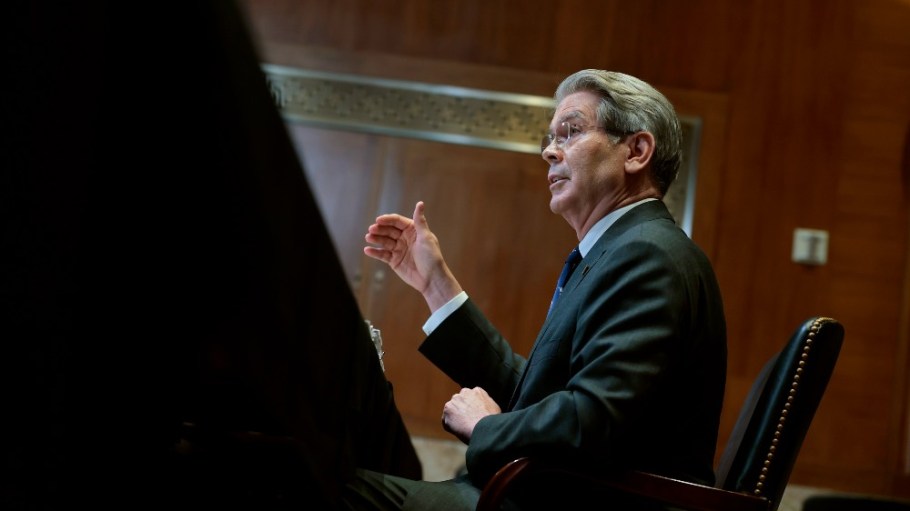
U.S. Treasury Secretary Scott Bessent said it’s “highly likely” that President Donald Trump will extend his July 9 reciprocal tariff deadline to continue negotiations with trade partners.
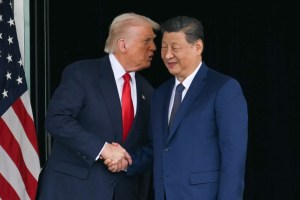
Following two days of discussions in London with Chinese officials which resulted in a patched-up trade truce, Bessent testified in front of the House Ways and Means Committee on Wednesday, telling members of Congress that the administration is “working toward deals” with “18 important trading partners” or blocs, in the case of the European Union.
Related Stories
Those deals may take more time to complete, Bessent hinted, saying that countries that are “negotiating in good faith” could see extensions on the tariff deadline. “If someone is not negotiating, then we will not,” he added.
Just one month remains until the double-digit “Liberation Day” duties that the president announced on April 2 will go into effect.
With negotiations between the Washington and Beijing reaching an apparent consensus, Commerce Secretary Howard Lutnick said trade-focused members of Trump’s team, including himself, Bessent, and U.S. Trade Representative (USTR) Ambassador Jamieson Greer, will now be focused on other deals.
“Our teams are moving them forward… we’re going to be focused starting today,” he said during an interview on CNBC, noting that the U.S. is in “good shape with a lot of countries” and could see “deal after deal” as soon as next week. “We’ve got lots of them in the hopper. We just want to make sure they’re the best deal we possibly can make. We don’t want to rush,” he said.
Lutnick confirmed that dealmaking with the E.U. has been tense. “Europe was more than thorny,” he told the news outlet, saying, “they just weren’t really engaging.”
In late May, Trump threatened the E.U. with sweeping 50-percent tariffs—significantly higher than the 20 percent announced in April—saying leaders had been “difficult to deal with” and that the negotiations were “going nowhere.”
The president accused the trade bloc of maintaining high trade barriers and value-added taxes (VAT) on American goods, among other complaints. At the time, he said the heightened duty rate would help address the trade deficit between Europe and the U.S., which totaled $235 billion in 2024, according to USTR data.
Lutnick echoed Trump’s sentiments on Wednesday, telling CNBC that the sheer breadth of the negotiations, which will result in trade rules that apply to 27 European countries, makes it “tough” to come to a resolution. Within the scope of the administration’s trade deal agenda, “Europe will be probably the very, very end,” he said.
Lutnick also commented on recent legal setbacks that the president’s tariff regime has suffered, referencing a ruling by a Court of International Trade that the duties, applied under the International Emergency Economic Powers Act (IEEPA), were illegal. A federal appeals court granted a stay on that decision as it reviews the cases brought against the president, and the tariffs are allowed to move forward—for now.
The Commerce Secretary said “ultimately, it’s not going to matter” what the courts rule because the president has a number of executive authorities and avenues to pursue to execute his tariff plan.