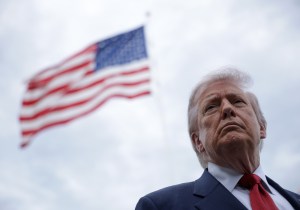
After threatening to levy 10 percent duties on eight European nations for their defense of Greenland against potential United States rule, President Donald Trump has revoked last weekend’s edict, citing progress in negotiations.
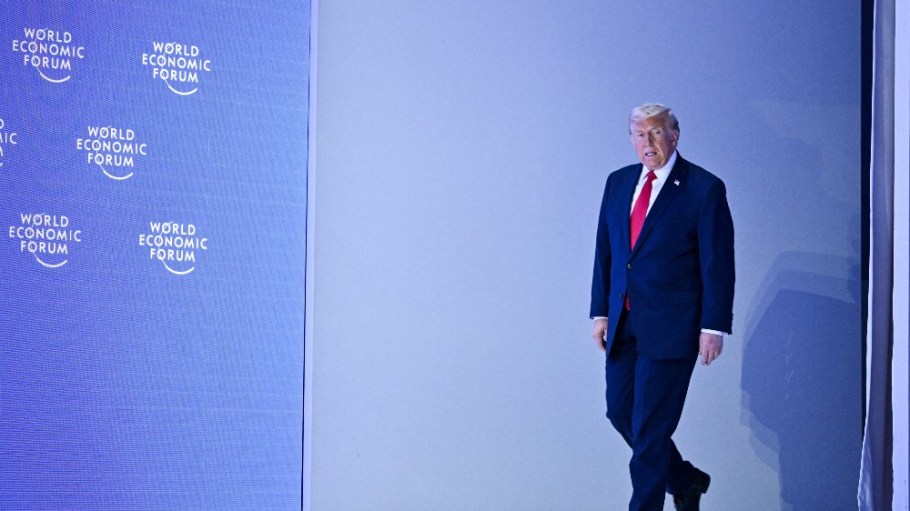
The American president, who traveled to Davos, Switzerland to deliver an address at the World Economic Forum on Wednesday, announced that he reached a “framework of a future deal” on the fate of Greenland—and the Arctic region more broadly—with NATO Secretary-General Mark Rutte.
Related Stories
In a post to Truth Social, Trump said the “very productive meeting” on the sidelines of the leadership summit was a first step in talks that will be advanced by cabinet members like Vice President JD Vance, Secretary of State Marco Rubio and special envoy Steve Witkoff.
“This solution, if consummated, will be a great one for the United States of America, and all NATO Nations,” he wrote, though he did not expand upon the framework’s potential terms. “Based upon this understanding, I will not be imposing the Tariffs that were scheduled to go into effect on February 1st,” he added.
The news represents a marked about-face for Trump, who earlier in the day lambasted Denmark in a rambling, 70-minute speech over its refusal to relinquish the territory. Calling the country “ungrateful” for U.S. military intervention in World War II, Trump said he would not use military force to acquire Greenland, but that he could see purchasing it in some capacity.
It is unclear whether Trump expects the U.S. to take an ownership stance over the territory moving forward. As he was leaving the summit, however, he told reporters, “It’s the ultimate long-term deal, and I think it puts everybody in a very good position.”
Tensions came to a head on Saturday morning when Trump threatened to tax imports from Denmark, Norway, Sweden, France, Germany, the United Kingdom, the Netherlands and Finland for getting in the way of such a deal. The 10 percent tariffs imposed on Feb. 1 would have increased to 35 percent on June 1 absent a deal with the European stakeholders.
The ticking time bomb of tariff tensions was not fully diffused, however.
The European Union earlier in the day halted the implementation of a trade agreement with the U.S. reached last July in Turnberry, Scotland. Trump and European Commission President Ursula von der Leyen agreed that Europe would lower tariffs on a range of U.S. imports, including agricultural products, while the U.S. would cap its tariff rate on European countries at 15 percent. Certain products like pharmaceuticals from Europe would be able to enter the U.S. duty free.
But on Wednesday, the European Parliament opted to stop the formal approval of the deal. Bernd Lange, chairman of the Parliament’s international trade committee, said in a statement that the body had “been left with no alternative but to suspend work” on the agreement, “[g]iven the continued and escalating threats, including tariff threats, against Greenland and Denmark, and their European allies.”
In a tweet, Lange added that the EU-U.S. deal “is on hold until further notice.”
“Our sovereignty and territorial integrity are at stake. Business as usual impossible,” he added.