If 2025 was the year of tariff policy, 2026 is slated to become the year of enforcement.
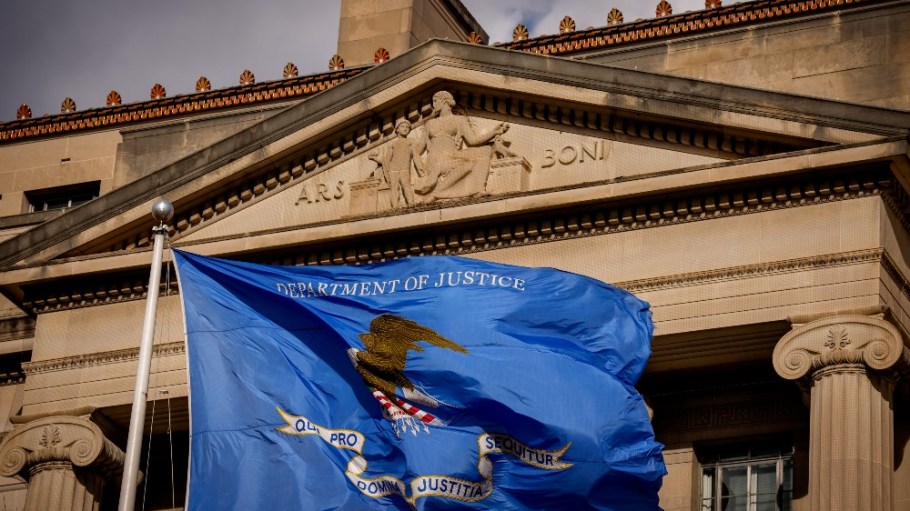
The Department of Justice under President Donald Trump has been readying itself for months to begin seriously cracking down on violators of trade laws—namely, the “reciprocal” and punitive duties levied last year on imports from countries across the globe.
There will be a “wave” of lawsuits aimed at importers—including those in the apparel sector—that seek to undermine the administration’s tariff strategy or dodge the duties, according to Reed Smith partner Mark Bini. The former federal and state prosecutor (who now represents clients in government investigations and cross-border litigation, among other matters) said the Trump administration has made it crystal clear that a successful rollout of its tariff strategy is priority No. 1.
Related Stories
Acting Attorney General Matt Galeotti has been explicit that rooting out trade fraud and tariff evasion in particular are vital to the DOJ’s mission this year. Last summer, DOJ announced that it would combine its civil and criminal resources to form the Market Government and Consumer Fraud Unit, honing their collective assets to focus on the investigation and prosecution of customs fraud. The Department also expanded its Trade Fraud Task Force, combining the potent powers of the Department of Homeland Security, Customs and Border Protection (CBP) and Immigration and Customs Enforcement (ICE).
That internal investment is telling, Bini believes, as these groups will be laser focused on stopping tariff evasion—schemes that could come in the form of transshipment, misclassification, undervaluation or country-of-origin fraud.
“With tariff evasion, we now are at a point where there’s the possibility—and frankly, unfortunately, the temptation—by certain bad actors to evade tariffs to the tune of millions and millions of dollars,” Bini told Sourcing Journal. The fiscal incentive to find tariff workarounds is through the roof now that the duties have reached historical highs not seen in nearly a century.
But the government is prepared, he believes, with DOJ treating tariff evasion as an issue of national and economic security, not just a matter of customs compliance.
“I think by having DOJ bring over additional prosecutors from the civil side to sit in the fraud section and look at trade fraud, and then announcing a task force of different agencies… they’re going to get a lot of information on tariffs,” he explained, underscoring the potency of the amalgamation of resources. “When you bring those assets together, that coordination results, typically, in lots of investigations and criminal prosecution, because the DOJ and the government are going to want some return of on investment.”
Bini draws parallels between the rollout of the Trump administration’s tariff enforcement strategy and that of the Foreign Corrupt Practices Act (FCPA) in the 1990s, which prohibits individuals and companies within the United States and abroad from bribing foreign government officials for business purposes. In the early 2000s, the government threw significant firepower behind the initiative, creating specialized units for investigating and prosecuting such fraud. The effort resulted in dozens of investigations and penalties worth billions of dollars, according to Bini.
It also pushed firms to invest heavily in transparent financial reporting in order to prove their compliance, he said. “We’re now seeing the same with trade fraud and tariff evasion; that’s the new FCPA under the Trump 2.0 administration,” he added. “Companies will need to be increasingly cognizant.”
The lawyer projects that during the second quarter of 2026, more cases will be brought against those that, either due to malfeasance or neglect, fail to comply with the laws, especially 18 USC 545 for smuggling, 18 USC 545 for false statements, 18 USC 1343 for wire fraud, and 18 USC 1956 and 1957 for money laundering. “I think most importantly, frankly, for potential criminal prosecution, is going to be wire fraud and money laundering, because of the size of the tariffs involved,” he said.
Notably, he also expects that it won’t just be brokers and freight forwarders that face criminal liability for violations—it will be household name companies. And as entities of all kinds doing business across the globe seek to ready themselves for an onslaught of probes, they should be ready to respond, he believes.
What should that response entail? Data. Lots of it.
Historical classification files, supplier certifications, routing documentation, communications with logistics providers and internal compliance manuals and training records are among the assets Bini said companies should be compiling with a high level of diligence.
“I think that companies should be looking at these areas and doing some assessment: ‘How strong are we? How strong is our compliance in this area? Because it’s going to be tested, whether we are directly involved or we are indirectly involved. We may receive a subpoena, we may receive a call. So what do our records look like?’” Bini said. “And if they think they have a problem, I do think an ounce of prevention is absolutely the best remedy here.”
Companies that keep meticulous records will be better positioned to fend off accusations of misconduct supposing bad acts are perpetrated by a third party like a customs broker, for example. “The best way to show that is by having clean records, by having a strong compliance program. ‘We took steps to avoid this, and this bad guy fooled us. They deceived us.’ That’s going to be something that is going to get you out of having criminal liability and hopefully terminate any investigation of your company quickly,” he added.
Bini also believes that investigations will ramp up as more reports about tariff evasion are filed—some, inevitably, by companies competing against each other for the same business. “If you’re a company that is being a good actor, and you’re paying your tariffs, but you notice a competitor who’s taking advantage of it… you may refer that to DOJ for investigation and prosecution,” he said. It’s a phenomenon that he’s seen picking up in recent months, and he doesn’t expect it to slow any time soon.
Of course, the existence of the tariffs as they stand is still in question as the fate of Trump’s International Emergency Economic Powers Act (IEEPA) tariffs is under consideration by the Supreme Court. Some legal experts believe it’s likely that the high court will uphold the rulings of the two lower courts that previously invalidated the duties.
But companies responsible for compliance with the trade laws shouldn’t rest easy in that assurance.
“They’re going to have to comply,” Bini said. “This is going to be an issue no matter how the Supreme Court comes down,” he explained, opining that the administration will turn to other statutes to impose duties—a threat it has made, repeatedly, in the face of the legal challenges to the current regime.
“Of course, everyone’s going to be watching because, [that decision] is going to change the past,” he added. “But going forward, do I think there’s going to be tariffs? Yeah, I think there’s going to be tariffs.”