The United States Department of Justice (DOJ) is upping its efforts to promote robust trade enforcement as it anticipates an escalation of issues like duty evasion in the wake of the Trump administration’s expanding tariff regime.
And it’s issuing a warning to American companies: don’t try to skirt the forthcoming duties.
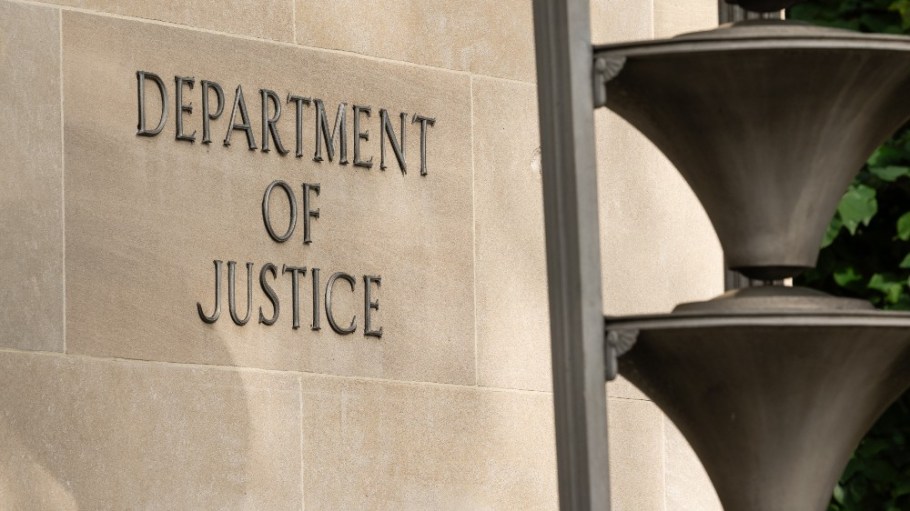
Earlier this month, the DOJ announced that it will combine civil and criminal resources within its fraud department to form the Market, Government, and Consumer Fraud Unit (MGCF). Its goal in bringing together these enforcement bodies is to hone their resources to focus on the investigation and prosecution of Customs fraud, among other issues.
Related Stories
The move comes as the government prepares to implement sweeping tariffs on imports from countries across the globe beginning on Friday.
In recent days, a handful of nations—and trade blocs—have negotiated trade agreements with U.S. officials, including directly with President Donald Trump. But most, if not all, prominent trading partners will still face double-digit duties on a significant volume and range of products.
As the government gears up to collect those new duties, the DOJ’s response belies an expectation that efforts and schemes designed to evade the tariffs could escalate. Recently, the department also announced that it plans to prioritize tariff enforcement under the False Claims Act (FCA).
These changes will also usher in a shift in the way U.S. Customs and Border Protection (CBP) handles customs and tariff enforcement, with both the DOJ and the Department of Homeland Security (DHS) laser focused on duty dodgers.
They will be looking to target companies and individuals taking part in illicit activities like misclassifying or undervaluing imports, misrepresenting country of origin, and transshipping.
Misrepresentation of country of origin could manifest in activities like falsifying Customs entry documents and invoices, or replacing product labels. This often takes place during transshipment, an illegal practice wherein goods from one country that faces high tariffs or trade barriers (like China) are rerouted through another to avoid tariffs.
Meanwhile, misclassification involves the deliberate and incorrect categorization of goods under the Harmonized Tariff Schedule (HTS), presumably with the goal of obtaining a lower duty classification. Bad actors have also engaged in undervaluation schemes, in which they falsify invoices and underreport the true value of the goods they’re importing in order to avoid paying duties.
On July 10, Acting Assistant Attorney General of the Criminal Division Matthew Galeotti announced that the new unit, MGCF, will be dedicating “significant personnel” to trade violations and white-collar crimes. Companies could now face serious penalties, with charges including tariff avoidance that earn violators up to 20 years in prison.
While there will be hurdles to achieving effective enforcement, especially when it comes to penalizing foreign entities, the unit is already actively targeting American firms using the False Claims Act.
The DOJ filed a FCA Complaint against a South Carolina home furnishing company called Global Office Furniture on July 15, alleging that the firm skirted at least $2 million in duties on imports and engaged in a so-called “double-invoicing scheme.”
The company allegedly submitted false invoices to CBP while creating separate invoices that reflected the accurate price of the goods, which were used to collect payment from the end purchasers. Global Office Furniture’s bogus invoices were used to calculate lower—and incorrect—duty rates. A former office manager filed a whistleblower complaint in 2020, though the U.S. District Attorney’s Office for the District filed its FCA complaint after the Trump administration’s announcement this month.
According to New York-based law firm Sullivan and Cromwell, “This FCA complaint against [Global Office Furniture] signals the Trump administration’s focus on the FCA as a civil enforcement tool.” In a memo released this week, the firm said the complaint also “confirms that the Trump administration’s focus on tariff and trade issues is reflected in DOJ enforcement priorities, at both the civil and criminal levels.”
Meanwhile, just last week, a FCA complaint from the DOJ forced New Hampshire-based Global Plastics LLC and New York-based Marco Polo International LLC—both subsidiaries of MGI International LLC—to pay out $6.8 million. According to the DOJ, both companies knowingly failed to cough up Customs duties on plastic resin products imported from China.
Last year, MGI disclosed to CBP and the U.S. Attorney’s Office for the District of New Hampshire that in 2019, the subsidiary companies began obfuscating the country of origin, along with the value, of the goods they were bringing in and as a result, failed to pay the proper duties on those imports.
According to the DOJ memo, MGI’s timely action to rectify its wrongdoing played into the relative leniency of the penalty. The company made a relatively swift and voluntary self-disclosure of its violations, performed an internal investigation, conducted an analysis of potential damages, and took “remedial actions,” like disciplining personnel and tightening compliance procedures.
Upon news of the settlement, Assistant Attorney General Brett A. Shumate of the DOJ’s Civil Division underscored that while the department will actively pursue companies and individuals that try to gain unfair trade advantages, “they can mitigate the consequences by making timely self-disclosures, cooperating with investigations, and taking appropriate remedial measures.”
“This resolution demonstrates that when companies self-disclose misconduct, cooperate fully with the government’s investigation, and take meaningful corrective action, they can receive credit for those admissions,” Acting U.S. Attorney Jay McCormack for the District of New Hampshire echoed.