The de minimis gravy train has come to a halt for China-based retailers and sellers.
At 12:01am on Friday, the trade exception (which has allowed shipments worth $800 or less to enter the country duty-free) was eliminated for packages coming from China.
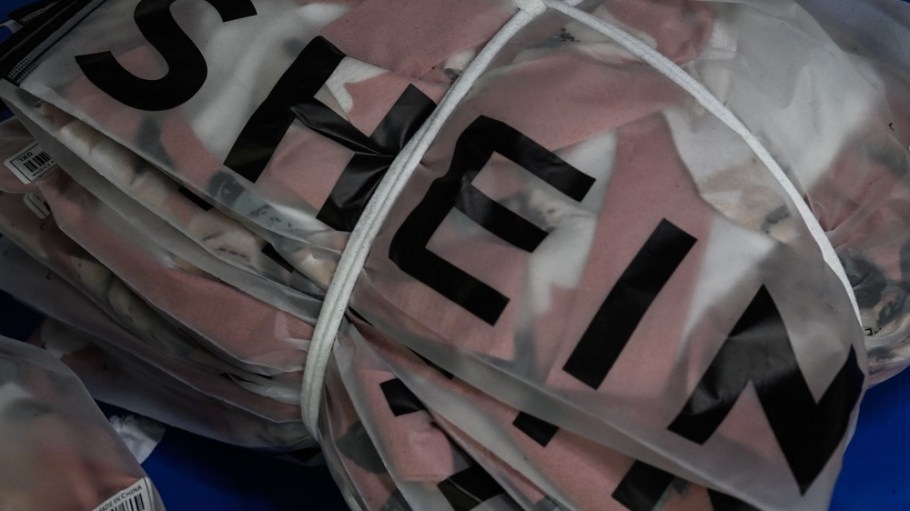
A key tenet of the business models of companies like Shein and Temu, as well as vendors on platforms like Amazon that drop-ship from overseas factories to consumers’ doorsteps, the trade rule, often referred to by detractors as a “loophole,” facilitates the importation of about 4 million packages per day into the U.S. market.
Related Stories
In 2024, 1.36 billion parcels entered the country duty free under de minimis, and at least half of them hailed from China.
There’s been much debate and confusion about what this will mean for shoppers, as well as Customs and Border Protection (CBP) and express shippers like FedEx, UPS and DHL, which handle high volumes of de minimis parcels. Now, most of the packages that would have once utilized de minimis will be subject to a Type 11 informal entry process. Shipments worth $2,500 or less will be subject to more rigorous examination, including more data requirements that help Customs determine the appropriate duty rate.
The stumbling block for Chinese brands or shippers currently utilizing de minimis may be the import requirement of the 10-digit HTSUS code, which classifies an item and stipulates its duty rate. Identifying the proper code is essential to calculating the amount an importer must pay in tariffs, but the companies that have relied on de minimis are unlikely to have a process in place for effectively determining—or disseminating—that information.
“The commercial model of many low-cost marketplaces is no longer viable,” said Ram Ben Tzion, founder of Ultra Information Solutions. “I would imagine that come May 3, we will see many additional disruptions to service.”
Now, it will become the carriers’ responsibility to compile the relevant information for Customs—a task they’re surely not accustomed to. This is a “huge, huge, huge transition,” Ben Tzion said. “So now for millions of packages a day, all of a sudden, the responsible entity is going to be the carriers. They’re not equipped, they’re not structured, they’re not informed to enforce this.”
But according to the founder, whose firm is behind digital shipment vetting platform Publican, “There are winners to this de minimis game.”
The short-term beneficiaries of the China de minimis ban will be big retail outlets, he believes. “Walmart is a huge winner. They have an online outlet that can compete with Amazon, that can compete with Temu, compete with Shein—but they already have the mechanism in place to import and distribute” goods through its e-commerce marketplace.
“If you’re now Walmart, all of a sudden, your online marketplace will become something super valuable and relevant. You import by container, you distribute to the end consumers. You can still bring stuff from China the same way you did last week—something that the small shops on Temu or Shein cannot offer. So it’s a huge advantage for them.”
Another group—American textile producers—has also been waiting with bated breath for the trade exception to expire.
“We are grateful to President Trump and his administration for closing the destructive de minimis loophole that has allowed unsafe and illegal Chinese goods—including goods made with forced labor—to flood the U.S. market duty-free and largely unchecked for years,” said National Council of Textile Organizations (NCTO) president and CEO Kim Glas.
“This loophole, largely exploited by Chinese e-commerce giants and others to skirt U.S. tariffs, regulations and laws, has contributed to the closure of 28 textile mills in the past 22 months,” she added. “Today’s action by the administration is an important step forward to help rebalance the playing field for American manufacturers, preserve good-paying American manufacturing jobs, spur more investment and innovation in manufacturing facilities here at home, and close the backdoor to China once and for all.”
NCTO is also urging the administration and Congress to end de minimis for shipments originating in all countries.
Parkdale Mills chairman and CEO Anderson Warlick said, “The de minimis loophole has impacted our businesses and our workforce significantly,” given that “[r]oughly half of de minimis shipments contain textile and apparel products which get an unfair competitive advantage at our expense.”
“The de minimis loophole has wreaked havoc on the U.S. textile industry by enabling duty-free access for massive volumes of fast fashion imports, largely from China. This policy undermines American manufacturers who play a critical role in our national security and industrial resilience,” said Amy Bircher Bruyn, CEO and founder of Ohio-based MMI Textiles.
The mill employs 39 workers directly and 21 more through its other operations, and with a robust contract manufacturing network, MMI also supports hundreds of jobs across the U.S. supply chain, she said.
“The U.S. textile industry is vital to our nation’s industrial base,” supplying the U.S. armed forces with uniforms and gear and producing lifesaving PPE during the pandemic. “Despite these contributions, the current de minimis threshold has created an unfair advantage for foreign competitors, particularly China, by allowing them to bypass duties and flood the market with underpriced goods—at the direct expense of American jobs,” she added.
Ron Sytz, CEO of fabric mill Beverly Knits, said he was thankful that the administration opted to close the door on duty-free China-made imports.
“This loophole has been devastating to my family’s 44-year-old textile manufacturing business in Gastonia, North Carolina, forcing us to lay off 175 workers and significantly reduce capacity in our plants,” he said. “We can’t compete against subsidized imports from China that enter the U.S. duty free through the de minimis loophole.”
With today’s ban, though, Sytz believes the company “will once again have a level playing field that will allow us to expand, invest and hire more associates here in the United States.”