Trade organizations and advocacy groups are applauding President Donald Trump’s decision to end the de minimis trade exemption globally—and urging the Commander in Chief to hold firm on the decision as it faces potential legal challenges.
The Coalition to Close the De Minimis Loophole, a collective made up of bodies like the National Council of Textile Organizations (NCTO), the Reshoring Initiative, the National Association of Police Organizations, Coalition for a Prosperous America (CPA), Facing Fentanyl, Families Against Fentanyl (FAF) and other groups pushing awareness about the dangers of fentanyl, last week released an open letter thanking the president for ending the provision, which facilitated the importation of more than 1.36 billion packages in 2024 alone.
Related Stories
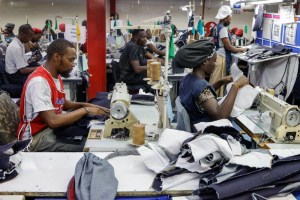
Groups like NCTO have long argued that the so-called “loophole” has acted as a thoroughfare for cheap foreign-made products and illicit goods like fentanyl precursors to enter the United States unchecked and duty free—a circumstance that they believe has undermined domestic producers and endangered consumers.
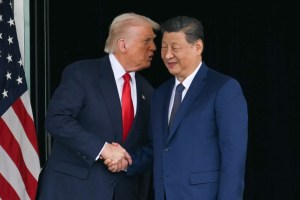
“Your executive orders have helped to level the playing field, restoring fairness for U.S. manufacturers and laying the groundwork for reinvestment and job creation in the United States,” the letter to Trump said. “Your actions also have closed a dangerous gateway used by bad actors seeking to illegally funnel fentanyl and precursor chemicals and other illicit goods into the United States, contributing to the drug epidemic ravaging our communities.”
China—the most prolific user of the exemption—lost its access to de minimis in May, and other countries across the globe saw their privileges revoked on Aug. 29. But there could be a wrinkle in the president’s plan, as he invoked the International Emergency Economic Powers Act (IEEPA)—the same 1977 trade law used to justify his global “reciprocal” tariff scheme—as the legal basis for the de minimis ban.
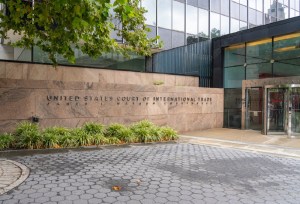
Trump’s IEEPA tariffs have been at the center of a legal maelstrom, having been deemed illegal by two federal courts over the summer. Now, the lawsuits against the tariffs, brought by a dozen state attorneys general and more than half a dozen American businesses, head to the Supreme Court for a final ruling. Plaintiffs argue that the president overstepped his authority by invoking IEEPA to impose the tariffs, and the lower courts agreed.
There have also been direct legal challenges to the de minimis ban, like a lawsuit brought by a Michigan auto parts retailer and distributor in May.
“Insofar as recent or future court rulings overturn, nullify or introduce any uncertainty regarding your order ending de minimis for all commercial packages, we urge you to use existing executive authorities without hesitation to ensure that the de minimis loophole remains closed for good,” the Coalition’s letter said.
The group did not elucidate other legal avenues that the president could pursue in order to execute the ban, but Treasury Secretary Scott Bessent has repeatedly stated that if Trump’s IEEPA tariffs are overturned by the Supreme Court, the administration is prepared to use “other authorities” to make sure the tariffs stay in place, though he’s “confident” that the administration’s agenda will prevail.
Another prevalent argument against halting the de minimis exemption stems from the sheer scale of enforcement and the challenges that mail carriers and Customs and Border Protection (CBP) will face when it comes to tariff collection and inspection, respectively.
“We are pleased to note that the price surges, supply chain collapses, and delivery delays predicted by de minimis supporters have not come to pass in the wake of the end of de minimis globally,” the Coalition wrote.
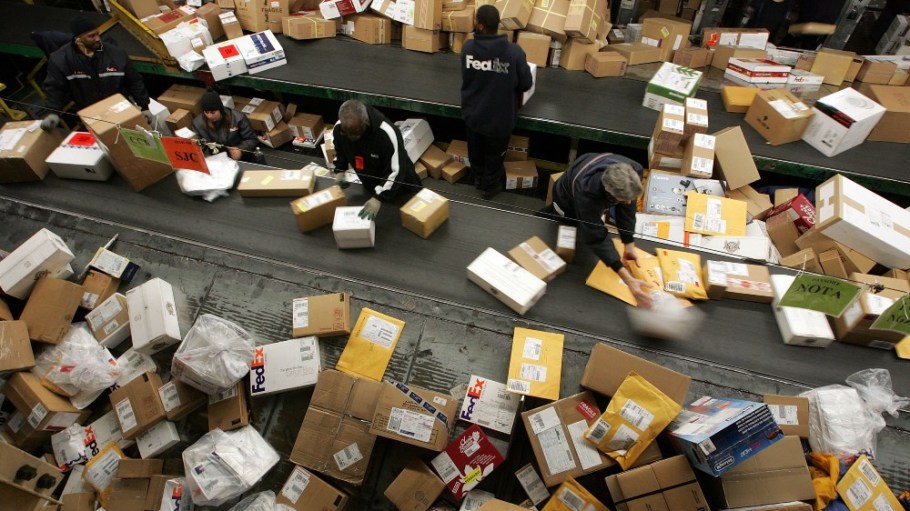
While Trump’s decision to end de minimis treatment for all low-value commercial shipments took effect just weeks ago, the bulk of de minimis packages hail from China, which was cut off over four months ago “without any significant disruptions,” the signatories wrote. They said the “panic stoked by de minimis supporters” over foreign postal operators suspending shipments to the U.S. has been “overblown,” as just 5 percent of de minimis shipments enter the country through the mail.
Private express carriers like UPS, DHL and FedEx adapted to the China shift with few disruptions, they added (though DHL recently hired 200 new customs agents to help cope with shifting trade policy). “Foreign postal services are also adapting to the new rules. Some posts, like Royal Mail, resumed shipments after brief adjustments. Others, like Australia Post, have paused parcels temporarily while updating systems.”
The group said it aims to continue “challenging misconceptions” about de minimis trade as a part of its advocacy work.