There’s a new trade czar in Washington.
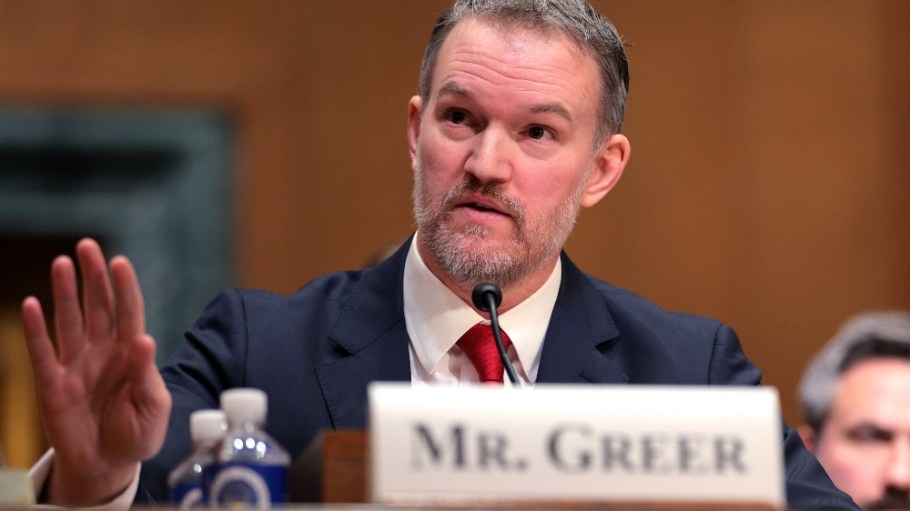
President Donald Trump’s pick for U.S. Trade Representative, Jamieson Greer, was confirmed at a hearing on Wednesday morning by a vote of 56 to 43, with 51 Republicans voting in favor, alongside just five Democrats.
Greer, the one-time chief of staff to former USTR Robert Lighthizer, was nominated in November by then President-elect Trump, who credited him for playing “a key role” in the rollout of Section 301 duties on China during Trump’s first administration, as well as helping along negotiations of the U.S.-Mexico-Canada Agreement (USMCA).
Related Stories
Greer is expected to be instrumental in carrying out Trump’s ambitious (if unorthodox) trade agenda, which centers on the leveraging of duties to address trade deficits and political objectives. This time around, though, the tariffs aren’t limited to China, or even America’s adversaries.
Trump reiterated his plans to levy duties on Mexico and Canada on Wednesday during his first cabinet meeting, telling reporters that the new taxes will go into effect on April 2. The 25-percent tariffs were slated to go into effect on Feb. 2, but were deferred for a period of a month to allow for negotiations with respective heads of state. Recently confirmed Secretary of Commerce Howard Lutnick jumped in following Trump’s remarks, saying that the 30-day deferral period still stands.
Trump also said during the meeting that he plans to levy 25-percent duties on the European Union’s “cars and all other things,” saying that the 27-country bloc was “formed to screw the United States.”
The muddying of messaging—and messengers—has become a signature of Trump’s short time in office. Lutnick has taken on an outsized role in promoting Trump’s tariff scheme thus far, given the president’s notion that it will benefit the U.S. economy and help pay for income tax cuts and reductions to corporate tax rates.
But with Greer now at the helm of the federal government’s foreign trade policy body, it’s yet to be seen whether his influence will temper or turbo-charge the president’s tariff ambitions.
Democrats, who largely stood up against the nomination, have worried aloud that a blanket approach to duties will harm, not help, American industry and consumers. “More and more Americans are rightly worried that tariffs are going to drive more inflation,” Sen. Ron Wyden (D-Kan.) said during a speech on the Senate floor.
Wyden also pointed to a growing concern that U.S. agriculture will suffer as international partners hit back at the high duties by restricting trade. “If this trade war continues, there’s no doubt many U.S. workers, farmers and ranchers are going to lose their jobs when our trading partners retaliate and slap tariffs on ‘Made in the USA’ products.”
Sen. Rand Paul (R-Ky.), the only member of the GOP to oppose Greer’s confirmation, is among a small but vocal contingent of Republicans to oppose Trump’s trade policy. “Tariffs are simply taxes. Conservatives once united against new taxes. Taxing trade will mean less trade and higher prices,” he tweeted earlier this month.
Industry advocates and trade advisors were predictably circumspect in their remarks about the appointment, with many evincing a trepidatious hopefulness that Greer, a USTR veteran, might adhere to established processes instead of shooting from the hip.
“Jamieson’s confirmation represents some hope for the industry that he can bring order and process to the President’s trade and tariff announcements because as a long-time trade lawyer, he is interested in fulfilling the various trade laws’ requirements like taking public comments,” Akin-Gump senior counsel for trade policy Josh Teitelbaum told Sourcing Journal.
“But, his fidelity to the law should not be confused for moderation. He is not a moderate,” the D.C. lawyer added. “He is still a trade hawk who takes the challenge with China especially seriously and will be forward leaning in using tariffs as a tool to accomplish the Administration’s trade goals.”
Footwear Distributors and Retailers of America (FDRA) CEO and president Matt Priest said the president appears to be “reconfiguring the way trade is dealt with” during his second term, and that there may be “some growing pains” when it comes to figuring out who within the administration “is going to be in charge of what.”
“Right now it seems like at least optically, Commerce Secretary Lutnick has been at the forefront of organizing and leading the policy around trade, and in particular, tariffs,” he said.
Characterizing the USTR as “a small agency often stretched to its limits,” Priest said he’s hopeful that Greer’s experience within the trade arena and the building itself will help him drive productive advancements in trade policy. “Whether you are negotiating free trade agreements globally under an Obama or Bush administration, or you are negotiating concessions to tariff threats under a Trump administration, it is an active agency,” he said.
Given Greer’s pedigree, though—and his allegiance to the president—he said he believes it’s unlikely that the new USTR will push back against Trump’s tariffs. “President Trump calls the shots. This is one of his core policy initiatives. It is top of mind for him at all times, so I think he’ll be the decider no matter who’s in these positions,” Priest said.
No matter who’s in office, America’s premier trade negotiator is unlikely to give up any policy tool that they view as instrumental to advancing American interests, the FDRA lead also said. Former USTR Katherine Tai did not roll back Trump’s Section 301 duties during President Joe Biden’s administration. “The China tariffs are, in my view, a significant piece of leverage—and a trade negotiator never walks away from leverage,” she said in 2022.
“Negotiating leverage is not something they want to give away. They don’t want to lower tariffs without getting something for that,” Priest added.
However, he believes that Greer and the administration more broadly may be more bullish about seeking out trade deals, especially in the form of bilateral trade agreements, than their predecessors. “I do think after having four years of almost zero trade engagement of substance, there’s going to be a more active trade landscape, and maybe some opportunities for us,” he said.
Steve Lamar, president and CEO of the American Apparel and Footwear Association (AAFA) underscored the hope that productive new trade deals could be formed, and old ones strengthened, under Greer’s stewardship of the trade agency.
“The Office of the U.S. Trade Representative is a critical agency, and this position is much needed in a time of trade turbulence and trade policy re-assessments,” he said. “We look forward to Greer’s insights on the benefits of trade for the economy and why we must encourage bipartisan support to champion global trade, including both the crucial exports of U.S. goods and the imports of diverse and ethically-made products.”
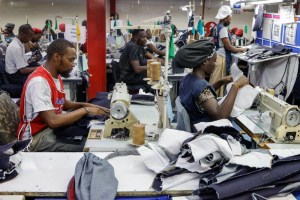
Lamar said AAFA hopes to see the administration focus on the “benefits of incentivizing investment in key regions to generate long-term prosperity and stability and mitigate illegal migration.” Textile and apparel manufacturing are industries that can generate significant economic opportunity in regions like Central America, Haiti, and Africa, creating long-term economic stability under the right conditions.
Calling the USTR’s experience in the space “welcome,” Lamar said the Washington trade group would like to see Greer “help reinvigorate Congress to reactivate and renew beneficial trade agreements and trade preference programs that leverage U.S. economic objectives while promoting predictable market access.”
Meanwhile, representing U.S. textile producers, National Council of Textile Organizations (NCTO) president and CEO Kim Glas said she strongly supports Greer’s confirmation and hopes the nation’s manufacturers will see the benefits of certain elements of Trump’s trade strategy.
“We look forward to working with Jamieson Greer, who was confirmed by the Senate as the next U.S. Trade Representative today. This is welcome news to the U.S. textile industry, which has faced economic headwinds that have led to 27 textile plant closures in the past 20 months,” she said.
A longtime critic of trade policy, like the de minimis exception, which has allowed Chinese firms to gain an upper hand with American shoppers to the detriment of domestic industry, Glas said the group is “excited to work with the entire Trump administration to address these pervasive predatory trade practices.”
The NCTO lead has, however, been critical of Trump’s plans to slap allies like Mexico and Canada with new duties, given the growing trend toward nearshoring and onshoring that is helping to bolster business across the region. She said the group aims to work with Greer and leaders in the space to promote “policies that bolster and expand this strategic supply chain, preserving our U.S.-Western Hemisphere production chain.”