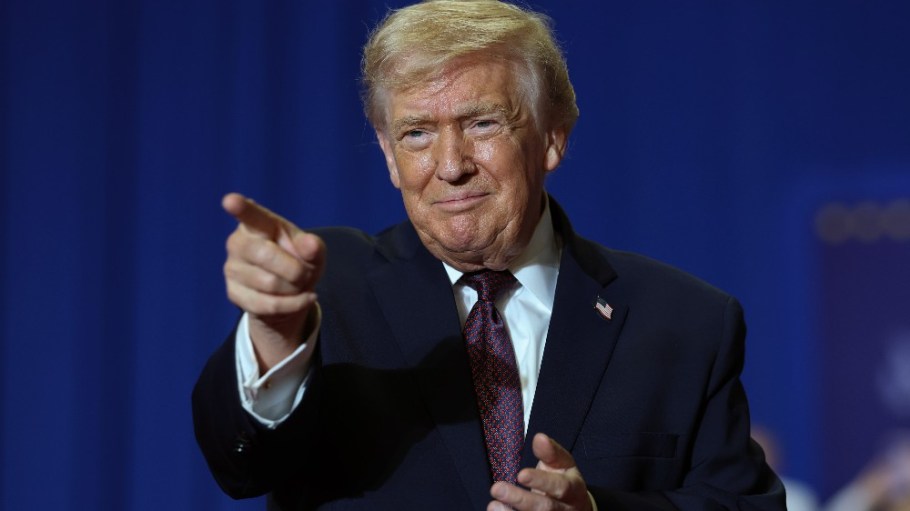
As Americans race to complete their Christmas gift hauls, President Donald Trump is strongly denying that his tariffs have had anything to do with the higher prices reported at retail. In fact, he’s crediting the duties with helping grow the economy.
The Commerce Department on Tuesday released better-than-expected economic reporting from the months of July, August and September showing that the United States economy grew at an annual rate of 4.3 percent in the third quarter.
That’s a significant change from the more muted performance seen between April and June, when the economy saw just 3.8 percent expansion. It’s also much better than the first few months of the year, when the economy contracted by 0.6 percent on the back of Trump’s sweeping tariff threats.
Related Stories
Worth noting, however, is the fact that consumer attitudes have shifted throughout the fall as holiday spending has ramped up. Shoppers have clocked markedly higher prices at their favorite stores, and have pulled back on spending on gifts in order to pay for basic necessities. The Commerce Department data, while new to the public, is also months late in its arrival, as the agency declined to release the data as scheduled in October due to the government shutdown.
Nonetheless, the president was buoyed by the announcement and took to Truth Social to tout the success of his tariff strategy in reinvigorating the economy.
“The TARIFFS are responsible for the GREAT USA Economic Numbers JUST ANNOUNCED…AND THEY WILL ONLY GET BETTER! Also, NO INFLATION & GREAT NATIONAL SECURITY. Pray for the U.S. Supreme Court!!!,” he wrote on Tuesday, referring to the impending ruling from the nation’s highest court on the fate of the “reciprocal” tariff scheme.
Trump’s recent public musings on social media have focused heavily on the legal challenges to his administration’s preeminent trade and economic policy, and his surrogates have taken up the mantle in its defense.
During a Sunday interview on CBS’ “Face the Nation,” White House National Economic Council Director Kevin Hassett responded to a question about what might happen if the duties are invalidated and the government becomes responsible for doling out tariff refunds.
“We really expect the Supreme Court is going to find with us, and I also think that if they didn’t find with us, that it’s going to be pretty unlikely that they’re going to call for widespread refunds, because it would be an administrative problem to get those refunds out to there,” he said.
Hassett appeared to admit that it’s American businesses—not foreign nations or suppliers—that bear the brunt of the tariff burden, though the administration has long claimed that the double-digit duties will level the playing field between the U.S. and its global competitors.
“The people who pay the tariff, if there is a refund, the people who actually paid for the good, the importer, in most cases, they’re the ones who would be the first line of defense for refunding the tariff,” he added. “But I really, really don’t think that’s going to happen, it’d be very complicated.”
Some businesses are already banking on the idea that Trump’s tariffs will be overturned in the Supreme Court, and that refunds will be coming their way.
Reuters reported Tuesday that American companies have been essentially selling their rights to collect refunds to investors, including Wall Street hedge funds, in order to improve their current cash flow situations.
An underground market is emerging for such transactions, the outlet, which spoke to a number of firms engaged in the practice, reported. Sometimes referred to as “special situations” trades, similar structures have been used to sell future payments from lawsuit settlements and lottery-winning annuities.
For importers that have been paying duty bills this year, sometimes to the tune of tens of millions of dollars, the idea of recouping some cash now—even in much smaller amounts—is appealing, especially when no one including the administration has a concrete understanding of what a refund process will look like.
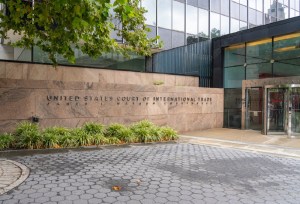
Some trade lawyers are urging businesses to preemptively file lawsuits with the Court of International Trade (CIT)—the first court to strike down Trump’s International Emergency Economic Powers Act (IEEPA) tariffs—to halt the liquidation of their tariff payments by Customs and Border Protection. Lawyers at law firm Holland and Knight said early last week that about 350 cases had been filed with the CIT, and that they expected another 350 cases to be filed by end of week.
Once customs liquidates the tariff payments, the lawyers said it could be more complicated to claw them back in the event that refunds are due. “Our view is the most conservative, the most prudent approach is to get up, get in front of the court, to file a lawsuit in order to preserve your rights,” Ron Oleynik, co-head of the firm’s International Trade Practice, said.