Nearly one-third of supply chain companies are culling their ranks amid protracted tariff uncertainty and rising costs.
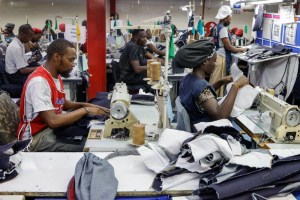
According to newly released data from the Association for Supply Chain Management (ASCM) and CNBC, 32 percent of managers within the sector reported that they’re seeing layoffs and a major pullback in hiring. That experience isn’t just anecdotal; supply chain employers cut over 1.2 million jobs in 2025—a 58 percent increase from 2024, the research showed.
ASCM’s research indicated that shrinking workforces can be “directly attributed” to the lack of predictability created by President Donald Trump’s tariff regime, which has seen near-weekly evolutions since it was first implemented a year ago upon his return to office.
Related Stories
Sixty-five percent of survey respondents said they experienced a 10 percent to 15 percent increase in costs last year, and that disruption to cash flow prompted them to review their budgets and revise their strategies, even throwing into question, for many, the viability of their business models. About 34 percent of survey-takers said costs increased more than 15 percent.
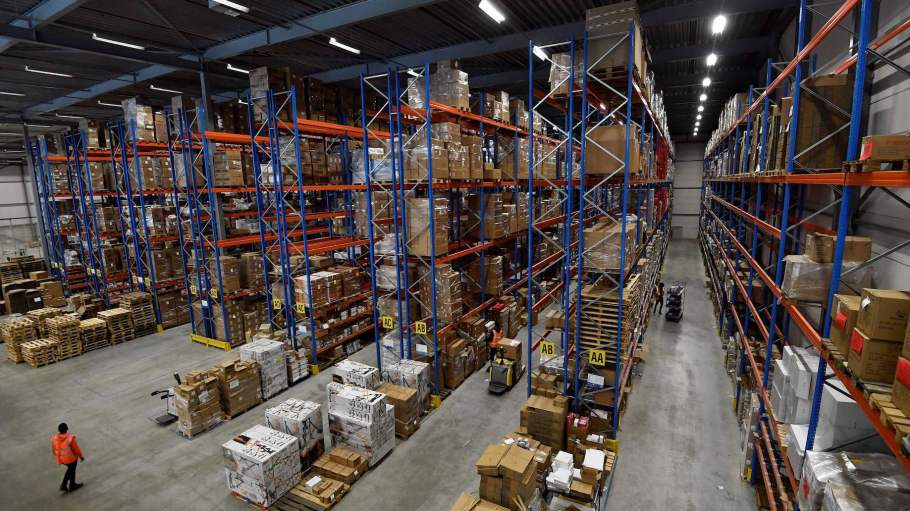
The shift has hit certain parts of the supply chain harder than others—for example, the warehousing industry, which has also seen changes due to the heavy deployment of automated technologies and robotics—saw a whopping 317 percent rise in job cuts from the year prior.
“Tariffs just don’t hit the balance sheet. They hit the people,” Abe Eshkenazi, CEO of ASCM, told CNBC, the group’s partner in the survey. “We’re seeing layoffs because of companies trying to manage their cost structure. If you don’t have the necessary resources and the capabilities and knowledge of talented staff, it will have a long-term impact.”
Amazon CEO Andrew Jassy spoke to the price of heightened supply chain costs for during an interview with the outlet on Tuesday from the World Economic Forum in Davos, Switzerland. Tariffs have started to “creep into some of the prices” of items on the e-commerce juggernaut’s massive online marketplace, he admitted, and consumers are trading down in an effort to mitigate the hits to their wallets.
“You see some sellers are deciding that they’re passing on those higher costs to consumers in the form of higher prices, some are deciding that they’ll absorb it to drive demand and some are doing something in between,” the executive said, noting that “more of that impact” is taking shape as time wears on.
Shoppers have thus far remained resilient to price hikes, spending record amounts over the holiday season despite their pervasive economic anxieties. However, Amazon’s third-party sellers have worked hard to shield them from the brunt of the tariff impact, and that may be untenable in the long term.
“At a certain point, because retail is, as you know, a mid-single digit operating margin business, if people’s costs go up by 10 percent, there aren’t a lot of places to absorb it,” Jassy said during the interview, adding, “You don’t have endless options.”
The mercurial nature of the Trump administration’s tariff strategy is unlikely to solidify into something predictable anytime soon, meaning that sellers, importers, supply chain operators and other players throughout the retail industry will continue to contend with uncertainty.
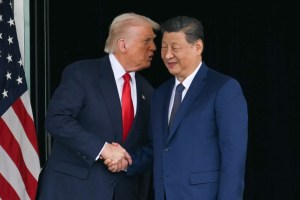
Over the weekend, Trump doubled down on threats to raise tariffs on European allies to Greenland and Denmark that attempt to stand in the way of his plans to annex or purchase the territory.
The president on Saturday took to Truth Social, writing that on Feb. 1, Denmark, Norway, Sweden, France, Germany, The United Kingdom, The Netherlands, and Finland will be charged a 10 percent duty on goods bound for the U.S.—a rate that will increase to 25 percent on June 1.
Following a call with NATO Secretary General Mark Rutte, Trump Truthed that he’d agreed to meet with concerned parties in the dispute at Davos. Over the weekend, he indicated that he was “open to negotiation with Denmark and/or any of these Countries” about the fate of Greenland and the tariffs.
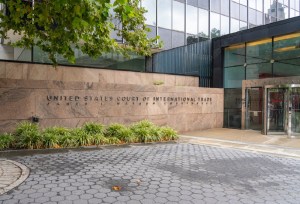
As the president continues to lob threats at U.S. allies, his tariff policy remains under threat at home. The Supreme Court, which heard oral arguments on behalf of small business importers and state attorneys general in November, has thus far remained mum on whether the tariffs will be allowed to continue as they currently stand.
Stakeholders waiting on pins and needles on the high court’s decision will have to wait a bit longer. The nine justices did not rule on the fate of the International Emergency Economic Powers Act (IEEPA) tariffs on Tuesday, the last workday before they plan to embark on a month-long recess. The next potential decision day for the Supreme Court is Feb. 20, though it does not announce which cases will see rulings before they are released.