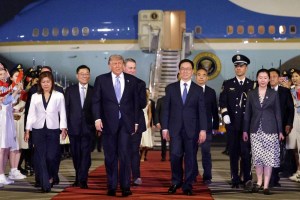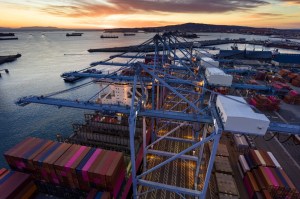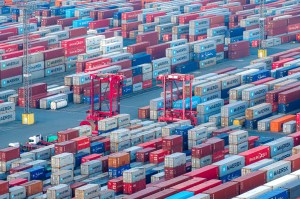
On Saturday morning, President Trump said the US would implement 10 percent tariffs on eight European countries that he alleges are getting in the way of a US purchase of Greenland.
The tariffs would begin Feb. 1 and apply to “any and all goods sent to” the US. from Denmark, Norway, Sweden, France, Germany, the UK, the Netherlands and Finland. Furthermore, the levies would increase to 35 percent on June 1 if a deal over Greenland had still not been struck by then.
At a White House event on health care that took place Friday, Trump spoke to his previous efforts to leverage the threat of tariffs against European countries when it came to the terms for trade of essential pharmaceuticals.
Related Stories
“I may do that for Greenland too,” the president said, adding, “I may put a tariff on countries if they don’t go along with Greenland, because we need Greenland for national security.”
The remarks came as a bipartisan Congressional delegation to Denmark tried to lower the temperature on the dispute. Meanwhile, earlier in the week, Vice President JD Vance and Secretary of State Marco Rubio met with foreign ministers from Greenland and Denmark. Greenland is a part of the Kingdom of Denmark, though it is a self-governing territory.
European heads of state have balked at the idea that the U.S. would suggest forcibly taking control of another NATO member. They have backed both Greenland and Denmark in their assertion that they alone will make decisions about the fate of the territory. Denmark also indicated that it plans to up its military presence in Greenland and will work with regional allies to do so.
As Trump continues to wield the threat of higher tariffs against those allies, the Supreme Court remains mum on the fate of his International Emergency Economic Powers Act (IEEPA) regime. The president and his cabinet have betrayed their anxieties about the forthcoming decision, however, and have indicated that they aim to pursue contingency plans should the current regime be invalidated by the high court.
Those plans include the levying of duties using other trade statutes, like Section 301 of the Trade Act of 1974, which addresses discriminatory trade practices, as well as Section 232 of the Trade Expansion Act, which allows for the imposition of tariffs in response to national security threats, according to National Economic Council Director Kevin Hassett.
Hassett said on Fox Business Friday that while the administration is “highly confident that [the Supreme Court is] going to side with us,” leadership also has “a backup plan that’s really solid.”
“We can put a 10 percent tariff right away to make up most of the room, and then use things like the 301 authorities, the 232 authorities, to backfill the things that we’ve already achieved with these great deals with countries,” he said.
“If you look at the Consumer Price Index, the last data that we saw showed the core over three months at an annual rate at only 1.6 percent, and so the idea that the tariffs would harm the economy and create inflation has been proven wrong by the data, and I think that the Supreme Court wouldn’t want to upend all of that great success either,” he said.
Meanwhile, one of the U.S.’ one-time greatest allies turned frenemy—Canada—has struck a trade deal with the nation’s most prominent competitor.
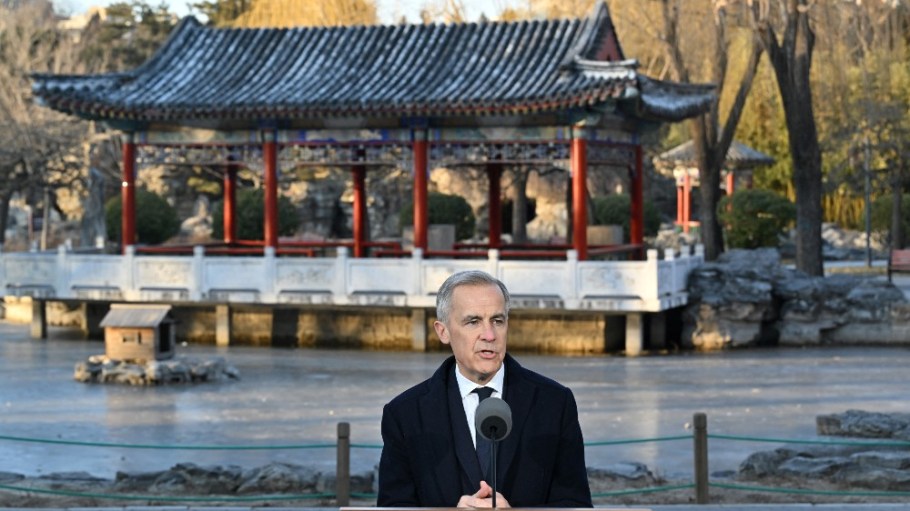
On Friday, Canadian Prime Minister Mark Carney announced that America’s neighbor to the north has reached a trade deal with China after weeks of negotiations, despite calling the country Canada’s biggest security threat during his campaign last year.
“Twenty billion dollars in wages are earned each year by Canadians because of our existing trade relationship [with China],” Carney said during a press conference from Beijing on Friday.
“This is a relationship that has been distant and uncertain for nearly a decade that has held back investment, it stalled business growth and cost Canadian workers good opportunities, and it has had the consequence of leaving us even more dependent on our largest trading partner,” he added, referring to the U.S., which currently imposes 35 percent duties on Canadian goods.
“And that’s why immediately after the election, Canada’s new government began to recalibrate our relationship with China strategically, pragmatically and decisively,” he added.
The deal will lower Canadian tariffs on China-made electric vehicles from the 100 percent levied last year in exchange for lower duties from China on Canadian agricultural goods. It will also bolster coordination between the nations to “jointly address global challenges,” Chinese President Xi Jinping told Carney Friday.
Watching the two countries strike a deal might very well have rankled Trump, but the president was reticent about any concerns.
“That’s what he should be doing. It’s a good thing for him to sign a trade deal,” he said of Carney. “If you can get a deal with China, you should do that.”