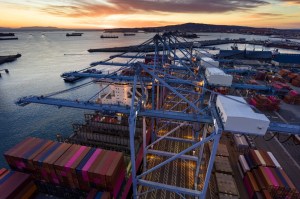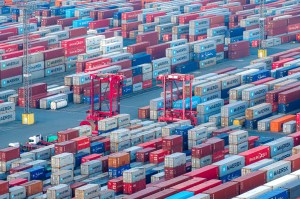
President Donald Trump appears to be pulling punches when it comes to China, and the markets are heaving a sigh of relief.
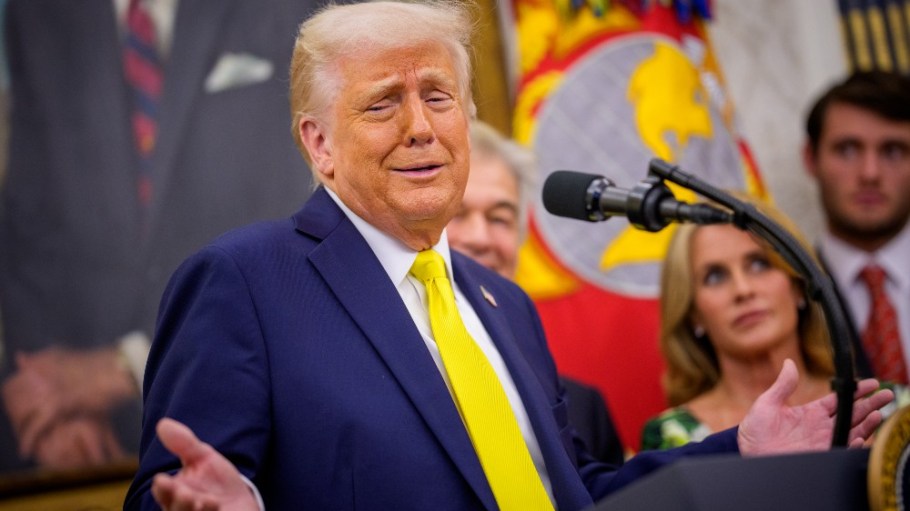
After U.S. Treasury Secretary Scott Bessent intimated yesterday that a deal with China could be imminent, the Commander in Chief told reporters at the Oval Office that he plans to bring down the triple-digit duty rate on imports, acknowledging, “145 percent is very high, and it won’t be that high” moving forward.
“It won’t be anywhere near that high. It’ll come down substantially, but it won’t be zero,” he added. The U.S. will set the terms of the forthcoming agreement, Trump said—“Otherwise they’re not going to be able to deal in the United States. If they don’t make a deal, we’ll set the deal, because we’re the ones that set the deal.”
Related Stories
The president’s comments were in response to questions from reporters about Bessent’s earlier assertion that a tit-for-tat trade war with China can’t go on indefinitely. The Treasury Secretary met with executives at a closed-door meeting for JP Morgan on Tuesday to answer questions about the administration’s trade policy and its impacts on U.S. businesses.
The Wall Street Journal reported Wednesday that an unnamed White House official hinted that tariffs on China-made goods could be lowered to a rate between 50 percent and 65 percent. Bessent reiterated his perspective at an Institute of International Finance (IIF) event, saying that there could be a “big deal” in the works.
“If China is serious on less dependence on export-led manufacturing growth and a rebalancing toward a domestic economy…. if they want to rebalance, let’s do it together. This is an incredible opportunity,” he said.
The tariffs have thus far not helped in rebalancing U.S. trade with China, with many American businesses pausing critical inventory shipments and forgoing sales as they await the next Truth Social missive from the president. The federal government isn’t raking in nearly as much as Trump has repeatedly promised, either; after saying reciprocal duties are bringing in $2 billion in government revenue each day, Customs and Border Protection (CBP) released data suggesting that the number rings in closer to $250 million.
X users called out Trump’s bluster, using words like “caved” and “folded” to describe the president’s posture when it comes to the tariffs on China. Meanwhile, CNN reported that the phrase “Trump chickened out” was trending on Chinese social media platform Weibo, generating more than 150 million views.
Following the comments from American officials, China Foreign Ministry spokesperson Guo Jiakun reiterated China’s position, saying, “We have said from day one that tariff and trade wars have no winners, protectionism leads nowhere, and to decouple is to self-alienate.”
“This tariff war is launched by the U.S. We have made it very clear that China does not look for a war, but neither are we afraid of it. We will fight, if fight we must,” he added at a press briefing on Wednesday.
“Our doors are open, if the U.S. wants to talk. If a negotiated solution is truly what the U.S. wants, it should stop threatening and blackmailing China and seek dialogue based on equality, respect and mutual benefit,” Jiakun said. “To keep asking for a deal while exerting extreme pressure is not the right way to deal with China and simply will not work.”
In the wake of a possible cooling of long-simmering trade tension, the markets rallied. On Wednesday, the Nasdaq Composite jumped 3.26 percent, or 535.5 points, while the S&P 500 was up more than 2 percent, or nearly 113 points. The Dow Jones Industrial Average came up 1.4 percent, a 575.8-point gain.
Wall Street’s sunnier disposition was also helped by Trump’s softening stance on longtime target Jerome Powell. After lambasting the Federal Reserve chairman ruthlessly for months, Trump told reporters Tuesday that he has “no intention” of removing Powell from his post. “None whatsoever, never did,” he emphasized—despite comments last week that if he “want[ed] him out of there, he’ll be out real fast.”
Trump has long been calling for the Fed to slash interest rates—an action Powell has thus far declined to take as inflation has remained above the central bank’s 2-percent target for four years. Last week, Powell warned of “higher inflation and slower growth” to come, citing the administration’s trade policies as the key reason for consumers’ growing concerns about the economy and spending.