Devastatingly high duties are on the brink of hitting India’s export market—and its garment sector—with full force on Wednesday.
As announced by President Donald Trump earlier this month, India will face an additional 25 percent punitive duty for its continued purchase of Russian oil amid the country’s ongoing assault on Ukraine.
Brokering peace between the two nations has become a pet project for the American president, though Russian leader Vladimir Putin has showed few signs that he’s amenable to a peaceful resolution on any terms that benefit Ukraine. Trump continues to put pressure on Moscow by urging United States trading partners to divest from Russia with the goal of kneecapping the nation financially.
Related Stories
India has found itself at the center of the geopolitical maelstrom, and is now on the precipice of its own economic conundrum.
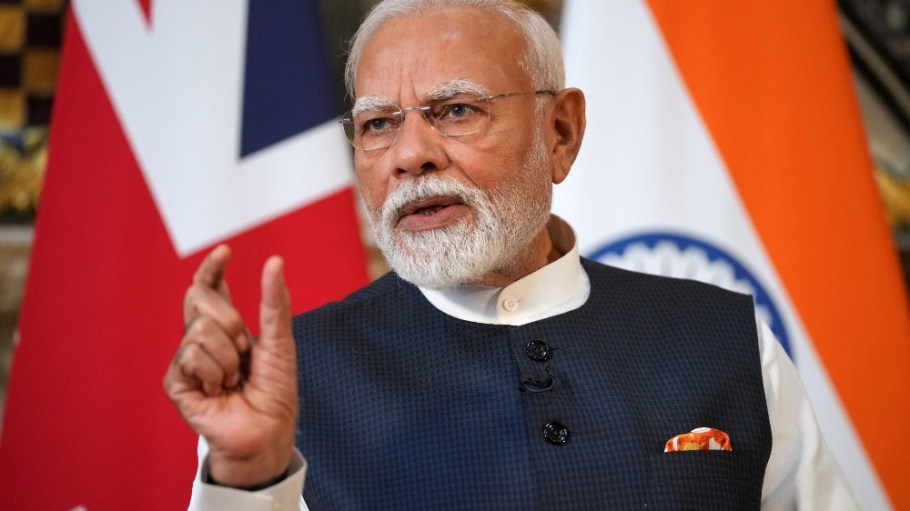
Prime Minister Narendra Modi has reportedly been meeting with his economic advisory council in recent days to seek guidance in safeguarding India’s business interests in the wake of 50 percent tariffs levied by the U.S.
According to the Times of India, Modi’s forward-looking economic strategy will rely on a throwback to the century-old principle of “Swadeshi”—an Indian independence movement established during the early 1900s as a means of driving self-sufficiency. Citizens were pushed to boycott foreign-made products as a means of bolstering domestic industry.
Modi channeled that spirit in an address to Indian citizens on Monday during a visit to his home state of Gujarat.
“I am asking our shopkeepers and traders. Do not sell foreign goods. This will provide a huge boost to the Make in India movement. Small contributions by each one will go a long way in achieving self-reliance,” he said, according to the Times.
Modi noted that “festivals are coming”—a reference to Indian holidays and celebrations like Navratri, Dussehra and Diwali which take place throughout September and October. These occasions will be opportunities to patronize Indian businesses, he said.
“From the land of revered Bapu Mahatma Gandhi, I am repeatedly urging the countrymen to make it their life mantra—whatever we buy will be Made in India, it will be Swadeshi,” he said. “Whatever items are for home decoration, let them be Made in India. If you want to give a gift to friends, let it be a gift made in India, made by the people of India.”
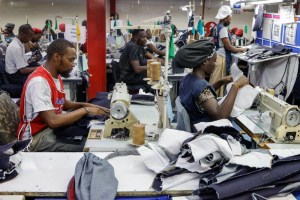
According to economic data from the Government of India’s Ministry of Commerce and Industry, India’s apparel and textiles sector stands to face disproportionately high impacts from the forthcoming tariff increase.
Knit apparel and woven apparel exports each account for $2.7 billion in exports to the U.S. market, and the U.S. makes up 34.5 percent and 32.2 percent of the respective export markets for those products. With the new 50 percent duty from the U.S. applied, knits will face total payable tariffs of 63.9 percent (due to existing 13.9 percent most favored nation tariffs) and wovens will incur duties worth 60.3 percent (with existing MFN tariffs worth 10.3 percent).
The made-up textiles sector exports $3 billion worth of product to the U.S. each year, and America accounts for almost half (48.4 percent) of the country’s total textiles exports. Now, textiles will face punishing 59 percent tariffs due to the new, 50 percent duties stacking upon an existing MFN rate of 9 percent.
In the wake of these jarring changes, Modi’s government has also hinted that changes to India’s Goods and Services Tax (GST) may be on the horizon as a means of lightening the burden on the country’s consumer base.
A group of state finance ministers has endorsed a proposal to drive down taxes on items from 12 percent and 28 percent to 5 percent and 18 percent, respectively, encouraging shoppers to spend on necessities like food and clothing, the Times wrote. A GST Council meeting is slated to convene on Sept. 3-4. The outlet reported that there is a proposal to push textile items into the 5 percent tax bucket—a 7 percent reduction from the current rate.
Meanwhile, following renewed threats from President Trump to levy triple-digit duties on China for apparently failing to lower trade barriers on magnets and rare earth minerals, Chinese senior trade negotiator Li Chenggang is expected to travel to Washington within the week to meet with the administration.
According to multiple reports from Bloomberg and Reuters, a government spokesperson said Li (the country’s premier trade negotiator along with Chinese Vice Premier He Lifeng) plans to visit and meet with U.S. officials, though it will not be a formal negotiation. He will likely meet with U.S. Trade Representative (USTR) Ambassador Jamieson Greer, along with members of the Treasury Department and U.S. business leaders.