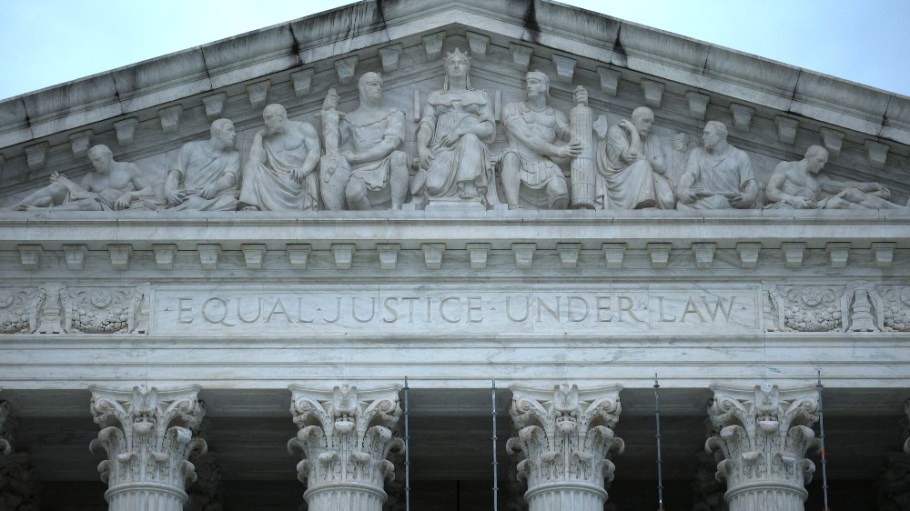
The United States Supreme Court has upheld lower court rulings that President Donald Trump overstepped his authority in imposing “reciprocal” tariffs on dozens of America’s trading partners, invalidating a significant portion of the administration’s trade agenda.
On Friday morning, the nation’s highest court released its highly anticipated decision that the president’s use of the International Emergency Economic Powers Act (IEEPA) to levy double-digit tariffs was unprecedented and unsupportable by law, with Chief Justice John Roberts delivering the court’s 6-3 ruling. Conservative Justices Clarence Thomas, Samuel Alito and Brett Kavanaugh dissented.
Related Stories
“The Framers did not vest any part of the taxing power in the Executive Branch,” Roberts wrote. “The Government thus concedes that the President enjoys no inherent authority to impose tariffs during peacetime.”
Joined by Justice Neil Gorsuch and Justice Amy Coney Barrett, Roberts concluded that, “When Congress has delegated its tariff powers, it has done so in explicit terms and subject to strict limits. Against that backdrop of clear and limited delegations, the Government reads IEEPA to give the President power to unilaterally impose unbounded tariffs and change them at will. That view would represent a transformative expansion of the President’s authority over tariff policy.”
The justices wrote that “in IEEPA’s half century of existence, no President has invoked the statute to impose any tariffs, let alone tariffs of this magnitude and scope.” The lack of historical precedent coupled with the breadth of authority now being claimed by Trump suggests that the tariffs extend beyond his legitimate reach, they wrote.
The court’s ruling doesn’t invalidate all of the administration’s tariffs, however. Targeted duties on steel and aluminum imports were imposed using Section 232 of the Trade Expansion Act of 1962, for example.
But the hefty tariffs on countries like China, for example, which faces 34 percent tariffs, and the 10 percent baseline tariffs on the rest of the globe, have been struck down. So too have the 25 percent tariffs imposed on non U.S.-Mexico-Canada Agreement-covered goods from Canada, China and Mexico for alleged smuggling of fentanyl precursors into the U.S. market.
The Supreme Court has not and will not issue a decision or guidance on the refunding of duties already paid by American importers. Members of the Trump administration have previously stated that paying back the money taken in through tariffs, which amounted to more than $200 billion in mid-December, would be a catastrophic expense for the federal government and a strain on the U.S. Treasury.