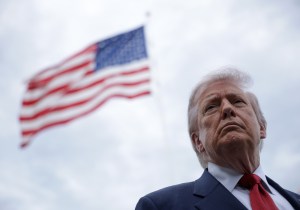
The Supreme Court has settled on Nov. 5 as the date it will hear oral arguments challenging President Donald Trump’s tariff agenda.
On Thursday, the high court released an updated fall calendar with a one-hour window scheduled for lawyers for American toy company Learning Resources to present a case against the president questioning whether the International Emergency Economic Powers Act (IEEPA) authorizes the tariffs he imposed—and if IEEPA does authorize the duties, “whether the statute unconstitutionally delegates legislative authority to the president.”
Related Stories
Learning Resources and another toy importer called Hand2Mind originally brought the lawsuit against the president to a federal court in Illinois in April, which ruled in their favor, saying that the government could not collect tariffs from them while the case against the president was being litigated. The companies at the time argued that the tariffs represented a “crushing burden” financially for small- and medium-size American businesses.
Another group of six plaintiffs (whose case is now known as V.O.S. Selections vs. Trump) brought analogous charges against the president around the same time. Their case, which was combined with lawsuits from more than a dozen state attorneys general and prevailed in a New York-based Court of International Trade (CIT), was appealed by the Trump administration shortly after the May decision.
In August, a Washington, D.C. federal appeals court also ruled in the plaintiffs’ favor, but put a stay on the decision, allowing the president’s tariffs to move forward while the administration sought to appeal the decision in the Supreme Court. Arguments in the V.O.S. Selections vs. Trump case will also be heard on Nov. 5.
Earlier this month, the Supreme Court agreed to review the case and expedite the process at the behest of the president, who is eager to see the matter decided. The federal government plans to file its opening brief on Friday, and the plaintiffs’ briefs will be filed a little over a month later.
As Trump’s tariffs face challenges on home soil, the country’s onetime closest allies may be joining forces in defense of American trade policy.
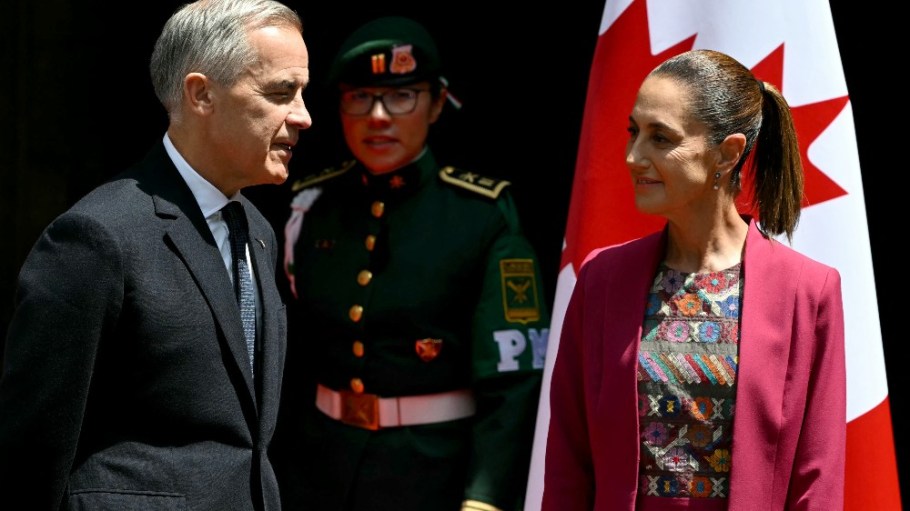
Canadian Prime Minister Mark Carney traveled to Mexico to meet with President Claudia Sheinbaum on Thursday. During the planned visit, the two leaders will discuss expanding ocean trade routes between Mexico and Canada by constructing new ports on the Atlantic and Pacific coasts, as well as opening up short-term Canadian work visas to Mexican workers, Sheinbaum said during her daily morning briefing.
According to the Canadian Press, Sheinbaum and Carney are expected to sign a two-way strategic partnership agreement related to trade, infrastructure development, agriculture, emergency response and more at some point during the visit.
While the Mexican president said the tete-a-tete was an opportunity to bolster bilateral trade with Canada, she noted that all three North American neighbors want to see Canada-U.S.-Mexico Agreement (USMCA) strengthened in the long run. The deal, brokered during Trump’s first term, replaced the North American Free Trade Agreement (NAFTA) and is due to be renegotiated in July of 2026.
Both countries have expressed the desire to deepen bonds and spur more trade in the wake of Trump’s tariffs, which stand to put a damper on trade with their biggest export market—the U.S.
After imposing 25 percent tariffs on Canada this spring, Trump upped the tax rate on Canadian goods that aren’t USMCA compliant to 35 percent in August. Canada drew down its retaliatory tariffs on most U.S. goods at the beginning of this month.
Meanwhile, Mexico also faced threats from the president to hike its duty rate from 25 percent to 30 percent, but that increase was deferred for 90 days after Trump and Sheinbaum had a productive conversation about continuing to work toward a resolution. The pause on heightened tariffs for non-USMCA-compliant goods ends Nov. 1.
The U.S. Trade Representative (USTR) this week posted a request for public comments in advance of the trade agreement’s 2026 review, with a public hearing on the matter scheduled for Nov. 17.
The agency is requesting input from the public—including businesses that utilize USMCA to facilitate duty-free import and export between the three nations—related to the trade agreements implementation, operations and compliance issues.
The USTR has asked for recommendations for specific actions that it should propose ahead of the joint review, along with information about factors that might affect the investment climate in North America and strategies for strengthening the partners’ competitiveness and collaboration. Comments are due before Nov. 1, along with requests to participate in the public hearing.
This week also saw the trade agency issue a request for public comments on whether any of the 178 current exclusions in effect for Section 301 tariffs on China warrant a further extension. The tariffs exclusions, which were most recently extended on Sept. 2, are set to expire on Nov. 29. The list includes many products and items related to the Covid-19 pandemic, which were excluded from duties due to limited availability in the U.S.
America is not the only nation leveraging tariffs to influence international policy.
On Wednesday, the European Union released plans to end its free-trade status with Israel and implement sanctions against two top officials due to findings about human rights abuses tied to the war in Gaza. The trade bloc’s 27 member countries must approve the measure, which would impose tariffs worth 5.8 billion euros ($6.8 billion) on imports from Israel.