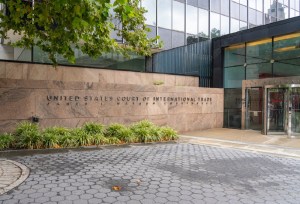
The Supreme Court is bucking protocol by agreeing to extend the time for oral arguments in the case against President Donald Trump’s International Economic Emergency Powers Act (IEEPA) tariffs, which will be heard on Nov. 5.
While oral arguments are typically constrained to an hour—30 minutes for each side—the high court on Thursday ordered that the hearings will be expanded to 80 minutes.
Forty minutes will be allocated to the solicitor general, 20 minutes reserved for a representative speaking on behalf of private parties (American small business plaintiffs), and 20 minutes reserved for the dozen states that sued the administration over the tariffs.
Related Stories
Two separate cases, Learning Resources, Inc. v. Trump and V.O.S. Selections, Inc v. Trump, each validated in lower courts last spring, were combined into a single case.
When the Supreme Court agreed to an expedited hearing of the issue at the behest of the administration, it ordered the parties to submit written briefs in advance of Nov. 5. The parties submitted those briefs earlier this week, reiterating claims that the president overstepped his authority in leveraging IEEPA to impose sweeping duties on American trade partners.
The case hinges on the fact that the 1977 trade law does not explicitly grant the Commander in Chief power to impose tariffs. IEEPA allows the president to regulate international commerce in the face of a national emergency caused by an “extraordinary” foreign threat to the nation’s security, but its language does not mention duties. In fact, during the 69 times it has been invoked since its inception, no president has leveraged IEEPA for that purpose.
Taking historical precedent into account, the plaintiffs also argue that the power to impose tariffs rests solely with Congress. They wrote that the changeability of the administration’s tariff strategy has created massive uncertainty for U.S. businesses, and will amount to a $3 trillion-plus tax on Americans over the course of the next 10 years.
The president and his surrogates have been waging an all-out public relations campaign on behalf of the administration’s favored trade tool.
“Tariffs are vital to this country,” Trump told reporters at the White House on Wednesday. “If this country is not allowed to have tariffs, if this country is not allowed to have the president of the United States negotiate on behalf of it with tariffs, we are put in a position where we’re going to be a third-world country. We can’t let that happen.”