Importers hit hard by the Trump administration’s hefty duties have been singularly focused on one issue since Friday’s Supreme Court announcement: refunds.
A highly anticipated decision by the nation’s highest court rendered President Donald Trump’s International Economic Emergency Powers Act (IEEPA) tariffs moot, and those that paid the IEEPA tariffs over the past year are intent on clawing back capital from the federal government as fast as possible.
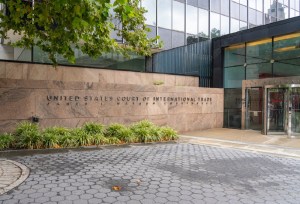
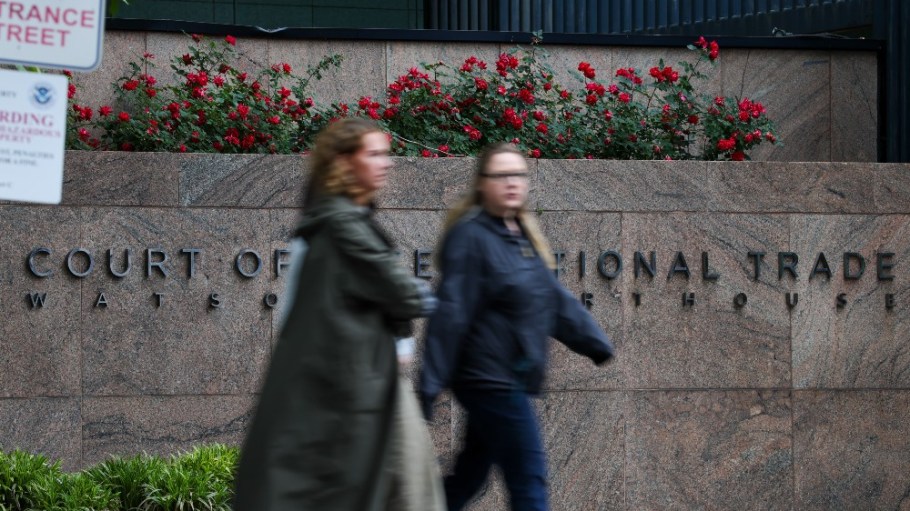
Hundreds of companies have filed preemptive lawsuits in the Court of International Trade (CIT) to secure their access to refunds over the past few months, a likely response to the prevailing opinion among government officials—including the president—that the refund process will be a “mess.”
Related Stories
Asked about the issue following the SCOTUS announcement, Trump seemed to imply that the justices should have addressed the issue in their decision. “It’s not discussed,” he said. “We’ll end up being in court for the next five years.”
Treasury Secretary Scott Bessent echoed the timeline during an engagement at the Economic Club of Dallas, saying that the Supreme Court “pushed [the issue] back down” to the CIT. “And my sense is that could be dragged out for weeks, months, years.”
U.S. Trade Representative Ambassador Jamieson Greer also put the onus on SCOTUS to devise a path forward. “We need the court to tell us what to do,” he said in an interview with ABC News. “They’ve created a situation where they struck down the tariffs and gave zero guidance on this.”
In the meantime, lawsuits against Customs and Border Protection (CBP) and the federal government are stacking up.
Delivery provider FedEx became the first large scale American company to sue the federal government for a “full refund” of the IEEPA tariffs following Friday’s announcement, following in the footsteps of major corporations like Costco and fashion players like Prada, J. Crew and Tom Ford.
Nate Herman, executive vice president of the American Apparel and Footwear Association (AAFA), said dozens of the trade association’s members have filed lawsuits of a similar nature in recent months. “I would not be surprised if we see many dozen more do the same over the next few weeks,” he added.
Herman views the administration’s statements about the complexity of the refund process—and the need for the CIT’s intervention—as a bit of a cop out. “The Supreme Court made a very clear decision that the IEEPA tariffs were illegal, therefore any tariffs collected under that illegal action should be refunded immediately,” he said.
In other words, the administration and CBP have the ability to enact a process for issuing refunds without the input of the court. “There is a decision that’s being made by the Trump administration to make this process harder, more drawn out and possibly a lot more complicated,” he added.
This stance could end up adding months to the refund process before it’s even begun. If the administration does indeed leave it up to the CIT to provide a protocol for paybacks, the court could potentially take several months to respond.
In the meantime, AAFA is urging its members to file protests with CBP to halt the liquidation of tariffs that were paid to the agency for entries to the U.S. market over the course of the past year—and most of them have. Typically, liquidation takes place within a period of 314 days, but companies have just 180 days from the time an entry is processed to file a protest to stay the liquidation.
“The protests right now are extremely important—and particularly on any customs entry that’s already been liquidated by customs, to do a post-entry protest,” Herman said. “Once CBP has liquidated an entry, basically, they’re saying, ‘The entry is closed in our books,’ and so the only way to then get that back is saying, ‘Well, no, you shouldn’t have liquidated in the first place.’”
Do importers need to file both lawsuits and protests? Guidance is scant and the path forward is murky.
Herman said there’s a chance (though not a big one) that the CIT could rule that only importers that have filed suit are eligible for refunds. “It would be a very odd ruling, especially with the Supreme Court being very clear that imposing tariffs under IEEPA was illegal, period. It would be a surprise for the Court of International Trade to then say, ‘Well, only those who filed suit will benefit from refunds,’ but it’s possible,” he added.
Prepping for these scenarios is no small feat for brands and retailers. “Some are hiring legal counsel, you need to furnish your customs staff, your trade compliance staff. It’s a lot of time, a lot of resources,” Herman said—and protests must be filed on each entry individually.
Many importers are well-versed in filing protests for entries under other trade statutes. But the scope of the IEEPA tariffs was so massive (to date, CBP and administration officials estimate IEEPA revenue rings in at up to $175 billion) that the process is bound to hit some snarls. “CBP has experience with it. Importers have experience with it. It’s the magnitude of it that’s so different this time around,” Herman said.
Senate Democrats are keen to bypass any prospective roadblocks to refunding American importers.
Monday saw a group of 22 liberal lawmakers including Senate Minority Leader Chuck Schumer and Senators Ron Wyden (Ore.), Edward Markey (Mass.) and Jeanne Shaheen (N.H.) introduce legislation that would require the Trump administration to refund IEEPA tariff revenue to importers in full—and with interest—within 180 days, even if the entries have already been liquidated. Under the proposal, CBP would have to prioritize small businesses, which could be struggling to stay afloat under the disruptions to cash flow caused by the double-digit duties.
“Senate Democrats will continue fighting to rein in Donald Trump’s price-hiking trade and economic policies,” Wyden said in a statement Monday. “A crucial first step is helping people who need it most, by putting money back into the pockets of small businesses and manufacturers as soon as possible.”
House Speaker Mike Johnson (R-La.) said the lower chamber is eager to stay out of the fray.
“The White House is going to sort that out, and we have to give them the time and space to do it. This is an unprecedented event, of course, so there’s no playbook to follow,” he told reporters.
Johnson said he believes the Trump administration has “good arguments on their side,” adding, “We’ll see how it shakes out. That’s not something that really involves the House at this point.”