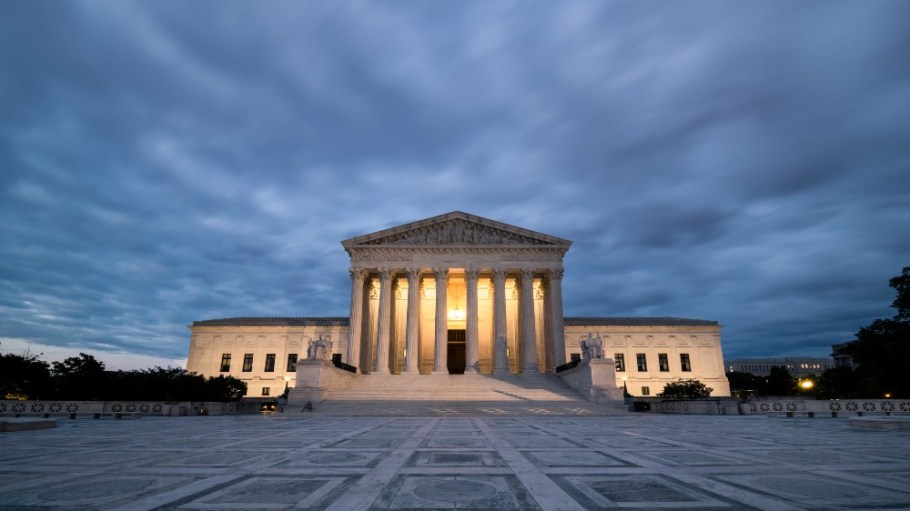
The Supreme Court could deliver a decision on the fate of President Donald Trump’s “reciprocal” tariff scheme as soon as Friday at 10 a.m., according to new scheduling details released on its website Tuesday.
The nation’s highest court added Jan. 9 as a non-argument/conference date to its formal schedule—a sign that it may hand down its ruling on the legality of the Trump administration’s International Emergency Economic Powers Act (IEEPA) tariffs.
However, the Supreme Court doesn’t announce which decisions it plans to release ahead of time, meaning that importers and other stakeholders eagerly awaiting the ruling may have to wait longer still to hear how whether the duty framework will remain in place—or whether they’ll be owed tariff refunds from the federal government.
Related Stories
The speedy timing of a ruling on IEEPA isn’t out of the question, though. The Supreme Court agreed to the Trump administration’s fervent September request to expedite its appeal of the lower courts’ decision that the president overstepped his executive authority by imposing the tariffs using the IEEPA statute. The court heard oral arguments on Nov. 5 in an 80-minute session.
The nine justices heard from Solicitor General John D. Sauer, who argued that Trump was within the bounds of presidential power when he imposed the widespread duties on more than 100 American trading partners. They also heard from counsel representing the plaintiffs (a dozen state attorneys general, and a handful of American small businesses) who argued that IEEPA’s verbiage does not explicitly grant the president the right to impose tariffs, and that that responsibility rests with Congress.
Conservative- and liberal-leaning justices alike scrutinized the administration’s arguments in favor of the IEEPA tariffs. Chief Justice John Roberts said that while tariffs are indeed tools for dealing with foreign powers, “the vehicle is imposition of taxes on Americans, and that has always been the core power of Congress.” Justice Amy Coney Barrett appeared dubious that the dozens of nations hit with double-digit duties represent “unusual” or “extraordinary” threats to national security or the U.S. economy.
Whether the Supreme Court rules for or against the tariff strategy, Treasury Secretary Scott Bessent said before the holidays that he was confident the justices would deliver their ruling “in early January.”
During a Sourcing Journal webinar last month, Nicole Bivens Collinson, managing principal of the operating committee at Sandler, Travis & Rosenberg, P.A.’s International Trade and Government Relations division, said Jan. 9 could indeed be a key date, given that it’s the first day the high court is slated to begin to announce decisions on expedited cases heard last year. However, a ruling could still be deferred until later in 2026, which many Beltway insiders believe could be more realistic.
Washington’s trade lawyers and talking heads largely also believe that the administration will ultimately lose its appeal, and that the Supreme Court will side with the judges at the New York-based Court of International Trade (CIT) and the Washington, D.C.-based Court of Appeals for the Federal Circuit (CAFC) that previously ruled against the tariffs.
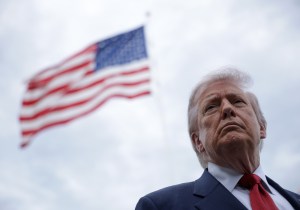
The president himself has, in recent weeks, appeared glum about his chances of winning the appeal and maintaining the IEEPA tariffs. Frequent posts to Truth Social have revealed an uneasy attitude about the pending ruling.
“We have taken in, and will soon be receiving, more than 600 Billion Dollars in Tariffs, but the Fake News Media refuses to talk about it because they hate and disrespect our Country, and want to interfere with the upcoming Tariff decision, one of the most important ever, of the United States Supreme Court,” Trump Truthed on Monday.
On Tuesday, he asked followers to “PRAY THAT THE UNITED STATES SUPREME COURT ALLOWS OUR COUNTRY TO CONTINUE ITS UNPRECEDENTED MARCH TOWARD UNPARALLELED GREATNESS!” adding that economic and national security have never been stronger.
Should Trump’s tariff policy be invalidated, the fiscal consequences for the country could be severe. Trade lawyers are urging importers that have paid duties over the course of the past year to file lawsuits with the CIT in hopes of preemptively securing their rights to tariff refunds. According to data from Customs and Border Protection, $133.5 billion in IEEPA tariffs have been collected as of Dec. 14, and the government faces the possibility of having to pay back that substantial sum in the event of a Supreme Court loss.