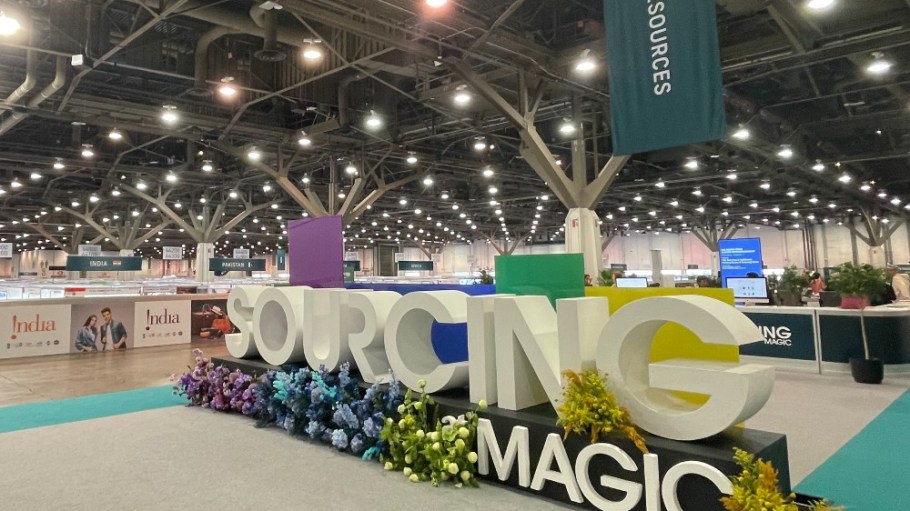
The Sourcing at Magic trade show in Las Vegas this week drew exhibitors from across the globe, signaling a full return to in-person browsing and buying on the expo’s 20th anniversary.
The trade event’s footprint reached more than 200,000 square feet this August, up from about 112,000 square feet in February. The show drew over 1,600 exhibitors—its largest turnout yet, surpassing pre-pandemic numbers.
The Sourcing event has undergone both growth and transformation over the course of two decades. “It has evolved, and we will continue to evolve into the future,” vice president of Sourcing at Magic at Informa Markets Fashion Andreu David said. “The focus is responding to the market—listening and addressing the needs of our audience.”
Related Stories
When it comes to sourcing relationships, “Buyers have become more in tune with what their true needs are, and they’re much more focused in what they’re looking for,” David said. Where brands were once almost entirely driven by capacity and cost when developing partnerships, their checklists now prioritize social and environmental performance. Sustainability legislation, the UFLPA and tariffs are also contributing to the evolving mindset, David said.
Notably, for the first time since the health crisis abated and global Covid travel restrictions relaxed, Chinese mills and manufacturers made up the vast majority of exhibitors. “China was in lockdown for several years, and their exhibitors are hungry to get back to business,” David said. With the country’s export volumes down and its economy edging toward deflation, vendors, (along with China’s government, which subsidized participation) were eager to recapture market share at the event.

Governments and trade associations from across the globe help make participation possible for most vendors, David added. Bangladesh, Turkey, India, Pakistan and Vietnam were all strongly represented, along with several African nations and South American countries like Peru and Colombia. Meanwhile, Central American suppliers, along with Mexico, have been hindered from attending by a lack of such support. David said he believes buyers came to the show this week “looking for diversity,” especially small-to-medium size enterprises looking to scale.
Today’s event offers more opportunities for connection than it did in its earliest days, when it drew just several hundred manufacturers to a corner of the Magic showroom floor called the Sourcing Zone. The phasing out of import quotas under the World Trade Organization (WTO) Agreement on Textiles and Clothing in 2005 liberalized global textile trade among WTO members, and gave more nations greater incentive to attend the show, organizers said.
The development also marked the start of China’s competitive rise in the textile and apparel sourcing space—a trend that has continued until the present day. Outreach to governments and industry associations across the world has also continued as show runners seek to strike a balance in representation, and offer buyers more options.
Buying and selling are also no longer the event’s sole focus. Since taking the reins in 2019, David said he has been committed to providing more education surrounding sustainability and carving out a domain for retail technology, both areas that brands and retailers have been prioritizing heavily in recent seasons. “We’ve moved sustainability to the forefront,” transporting the show’s Sustainability section from the back of the Sourcing hall to the entrance, accounting for more than 6,000 square feet of event space.
Three years ago, the show brought on Hey Social Good, a social impact analytics firm that assesses and verifies businesses’ efforts surrounding social impact and sustainability, as a partner. Spearheaded by founder and CEO Cindy J. Lin, the integration of sustainability content began with the creation of a Sustainability Gallery which showcased the work of suppliers vetted by the organization, from textile mills to material innovators, cut-and-sew operations and other artisans.
In its early seasons, the area represented a resource for conscious buyers looking for sustainable sourcing, but its mission has grown as issues surrounding social and environmental compliance have become a part of everyday industry discussions. While about a dozen verified suppliers were featured in the first Sustainable Alternatives gallery, that number has more than doubled to 30, Lin said. Suppliers that invest in areas like circularity, green energy and material innovation want to stand out from a pack of thousands and attract brands that are willing to invest in what they have to offer. Undergoing verification by Hey Social Good has help put them in front of “the right buyers,” Lin said.
The show has also invested in creating a platform specifically for discussions with brands and innovators, as well as compliance-focused organizations and educational institutions. This week, panels focused on designing for circularity, sustainable fibers, end of life solutions for apparel, and more. Lin said she believes engaging with both buyers and suppliers through these talks has led to greater understanding about the need for sustainable advancement in the supply chain and the importance of investment on the brand side. “We’re seeing more educated questions,” she added.
Spaces for emerging designers have also been integrated into the Sourcing experience, including a sewing and draping workshop hosted by experts from the Garment Learning Studio, Fashion & Trade Academy, Viking Sewing Gallery and Ragfinders of California. Nearby, nine alumni of Otis College of Art and Design showcased their final projects. Students were mentored by industry experts from labels like Nike and True Religion, and some were tasked with developing capsules inspired by the brands using upcycled scrap materials. “A key pillar of our event is entrepreneurship,” David said.